Coil Slitting Line
1/2026 India Steel Coil Slitting Line Project
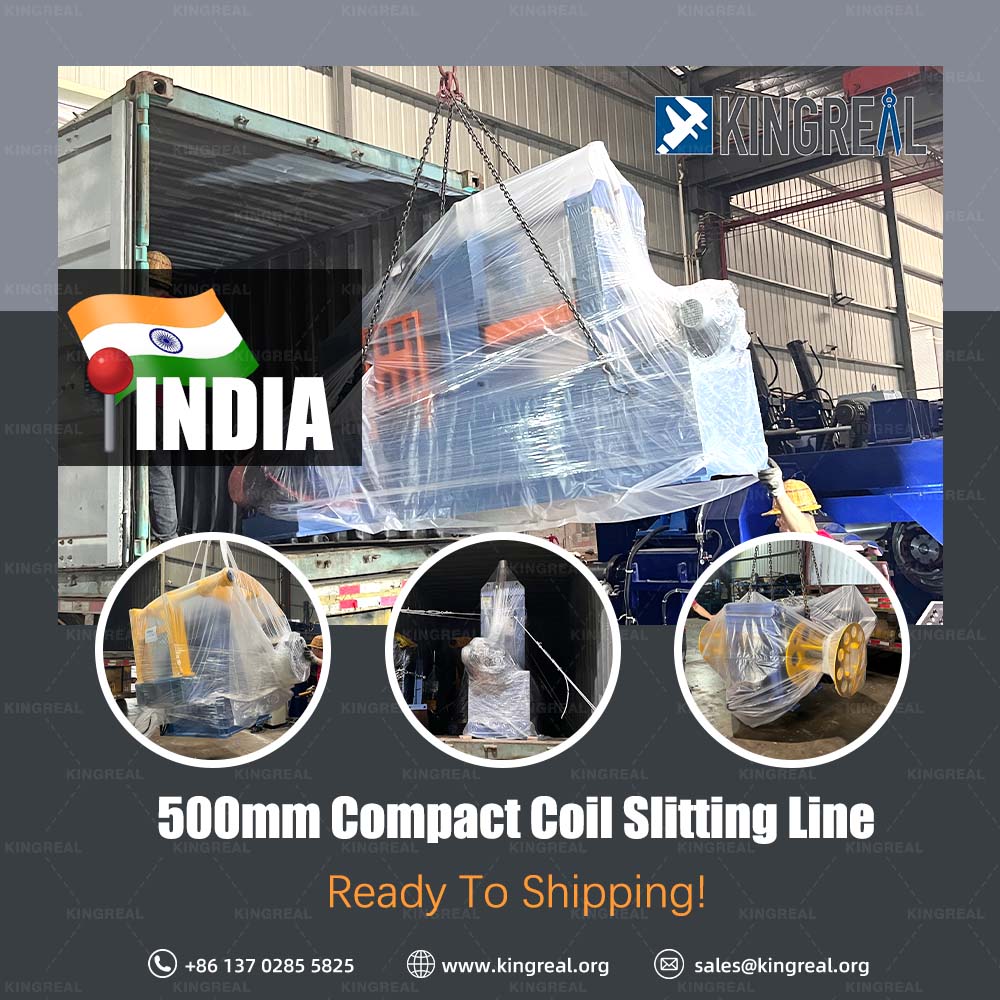
In 2026, KINGREAL SLITTING successfully executed a customized steel coil slitting line project for a client in India. The project encompassed the entire workflow—from specialized solution design and precision manufacturing to performance testing and on-site calibration.
The steel coil slitting line has been successfully delivered and is ready for stable production, marking KINGREAL SLITTING successful entry into the Indian market. This achievement further expands the KINGREAL SLITTING global footprint and demonstrates its robust capabilities in the R&D and manufacturing of steel coil slitting line.
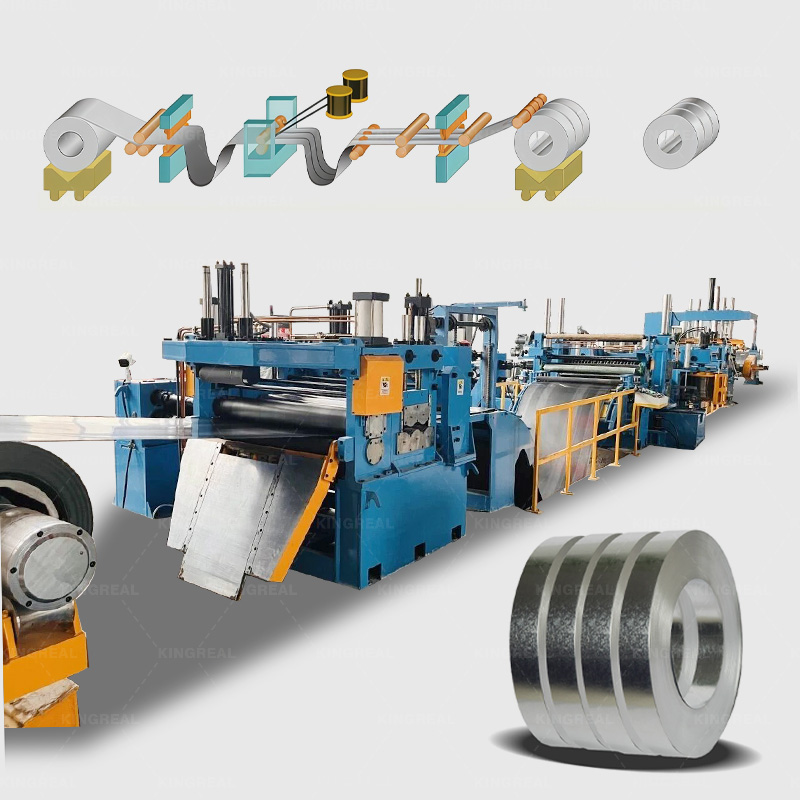
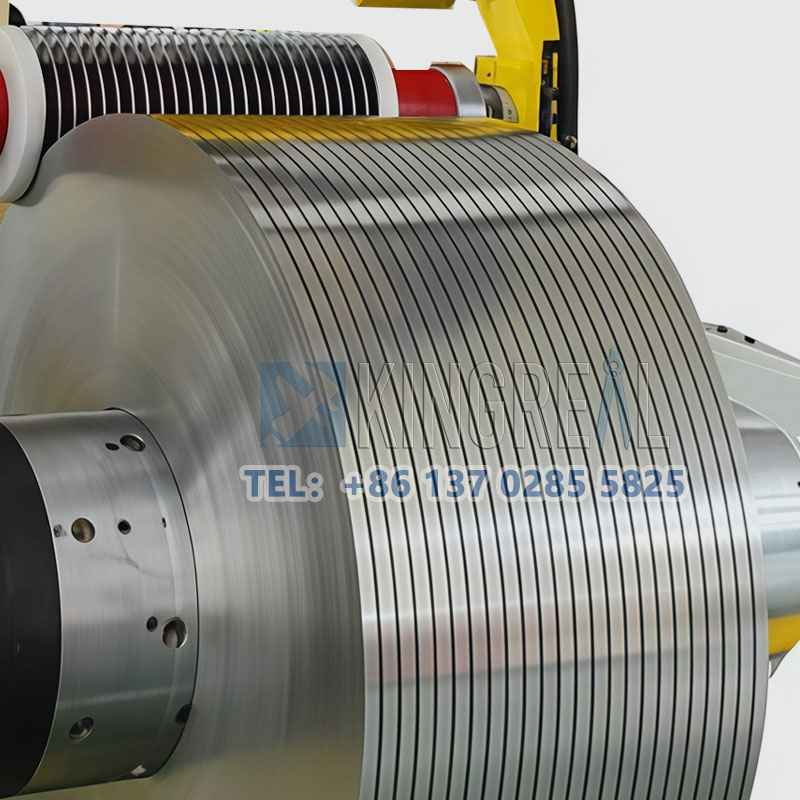
Tailored to address specific production challenges in the local Indian cable industry, this steel coil slitting line excels in adaptability and processing precision. It is capable of precisely processing various metal coils with thicknesses ranging from 0.5 mm to 1.0 mm. In a single pass, it can stably produce 32 narrow metal strips, with a minimum strip width of 12 mm.
Featuring high parameter precision and processing flexibility, the steel coil slitting line perfectly meets the cable industry's requirements for precision slitting and diverse coil specifications.
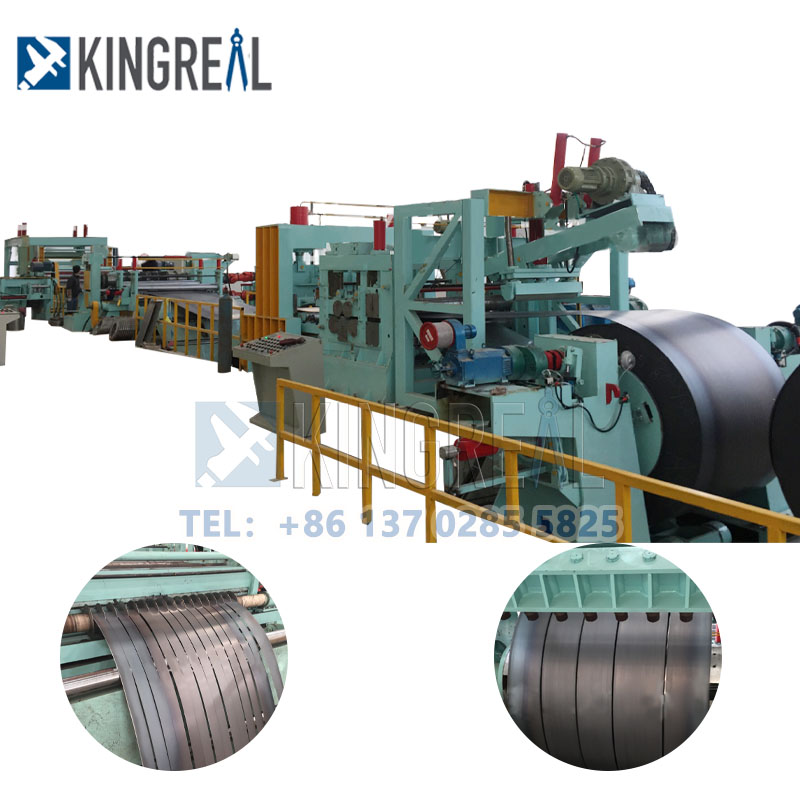
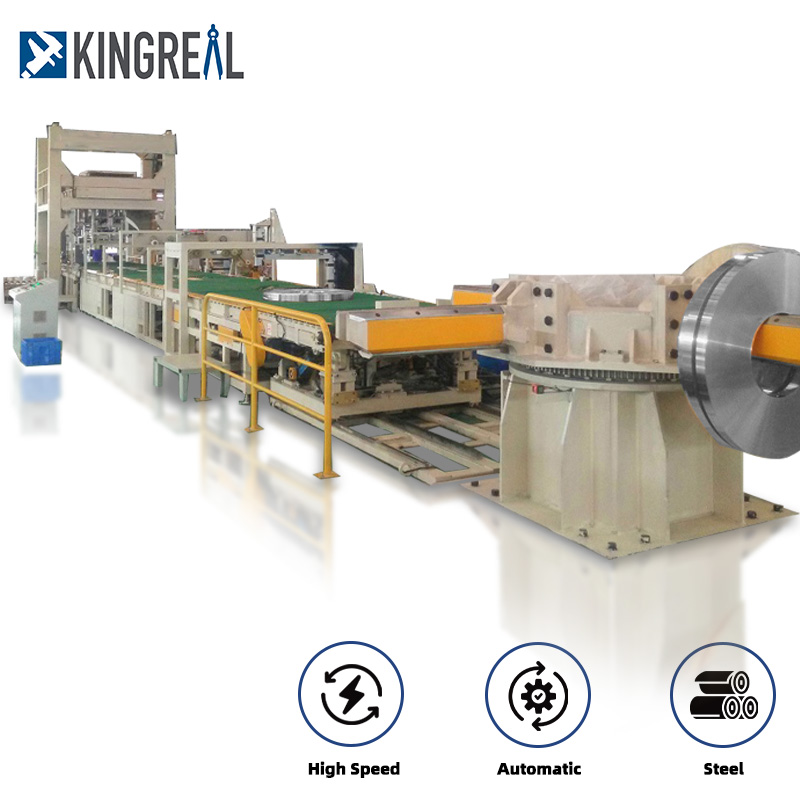
A steel coil slitting line performs high-precision longitudinal cutting on wide metal master coils. Integrated with a heavy-duty recoiling mechanism, it ensures neat winding and mass-produces narrow metal strips with uniform dimensions and excellent flatness. The narrow strips produced by modern steel coil slitting lines are of high quality and consistent specification, making them directly suitable for various downstream deep-processing operations and providing standardized raw materials for the industry.
With its stable processing performance, the KINGREAL SLITTING steel coil slitting line handles metal coils of varying thicknesses and is compatible with diverse metal materials. It offers customized slitting solutions tailored to specific production needs, precisely meeting the exacting standards of various industries.
The narrow metal strips produced by the steel coil slitting line can undergo secondary processes—such as bending, welding, stamping, and roll forming—to create a wide range of industrial finished products. These products serve mainstream metal manufacturing sectors worldwide, catering to diverse industrial production requirements.
●In the field of pipe and tube manufacturing, the high-precision narrow strips produced by steel coil slitting lines serve as the core raw material for welded pipe production. They ensure uniform wall thickness and dimensional accuracy, making them widely applicable to the manufacture of water supply and drainage pipes, industrial fluid piping, and construction tubing.
●In the fields of roll forming and profile manufacturing, narrow strips custom-slit by these steel coil slitting lines can be processed into various specialized metal profiles—such as structural steel components for construction and profiles for doors and windows—significantly enhancing profile flatness and forming precision.
●In the fields of hardware stamping and precision component manufacturing, the standardized, defect-free, and low-tolerance narrow strips produced by steel coil slitting lines enable the mass production of hardware fittings, mechanical parts, and precision stamped components, effectively increasing the yield rate of finished products.
●In metal processing service centers, steel coil slitting lines handle the precision cutting of large, wide coils, standardizing coil specifications for distribution. They provide customized raw material supply services to small and medium-sized processing enterprises, greatly improving metal material utilization and circulation value.
3/How Do Steel Coil Slitting Lines Work In Metal Manufacturing?
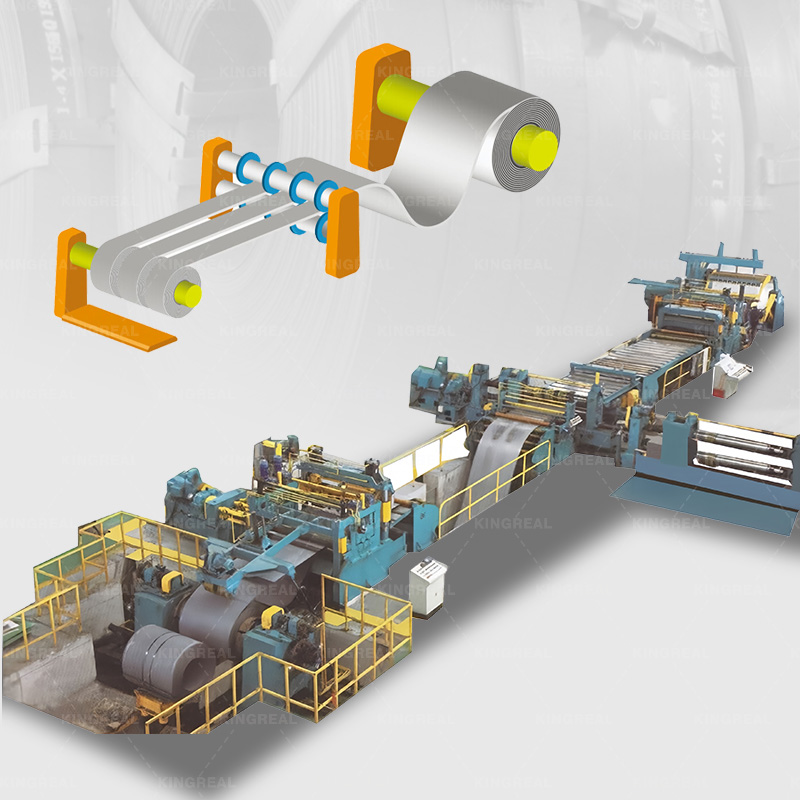
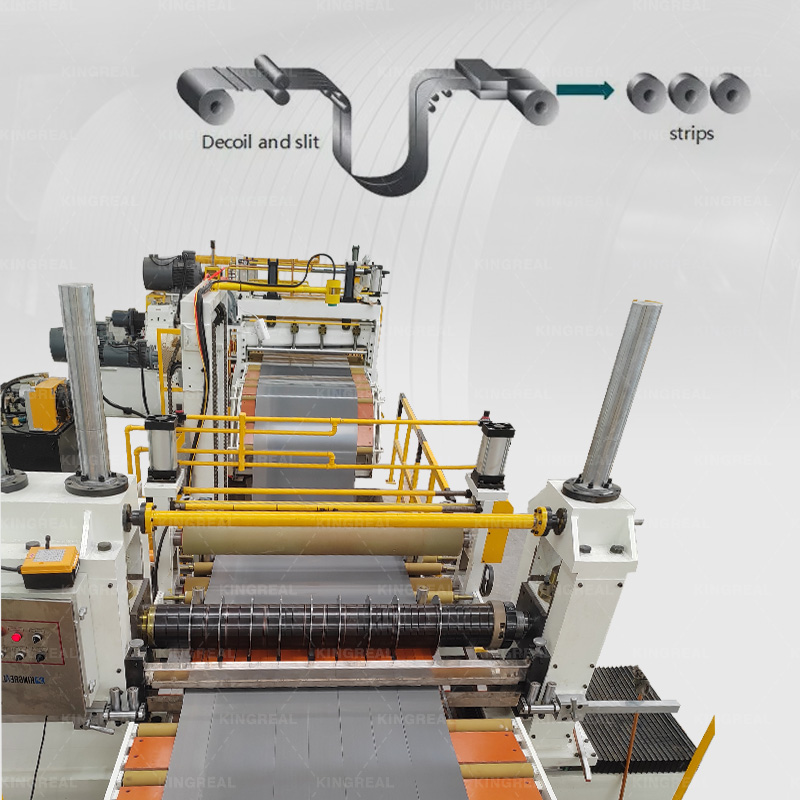
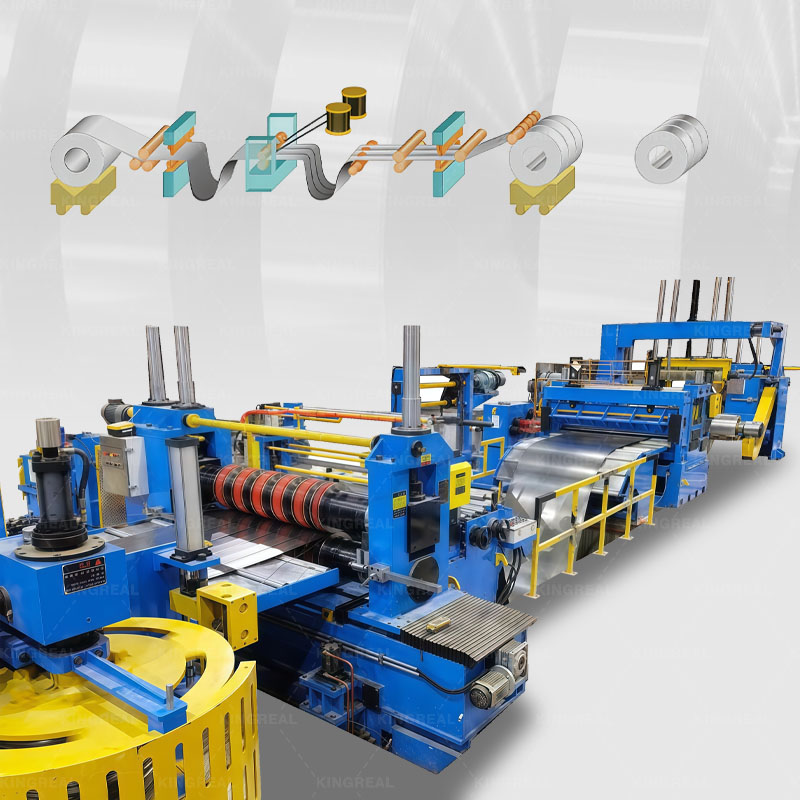
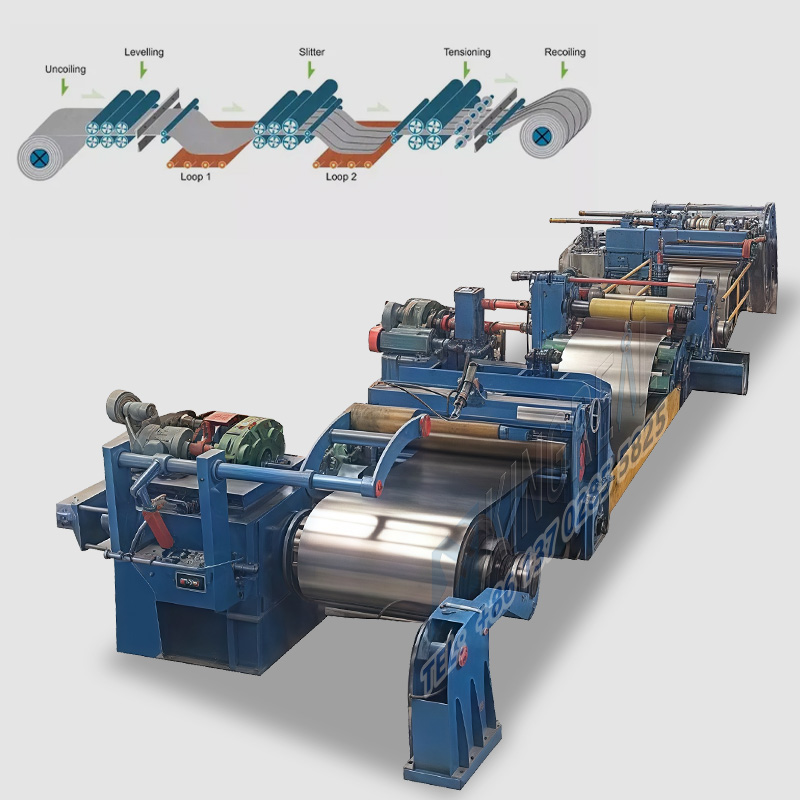
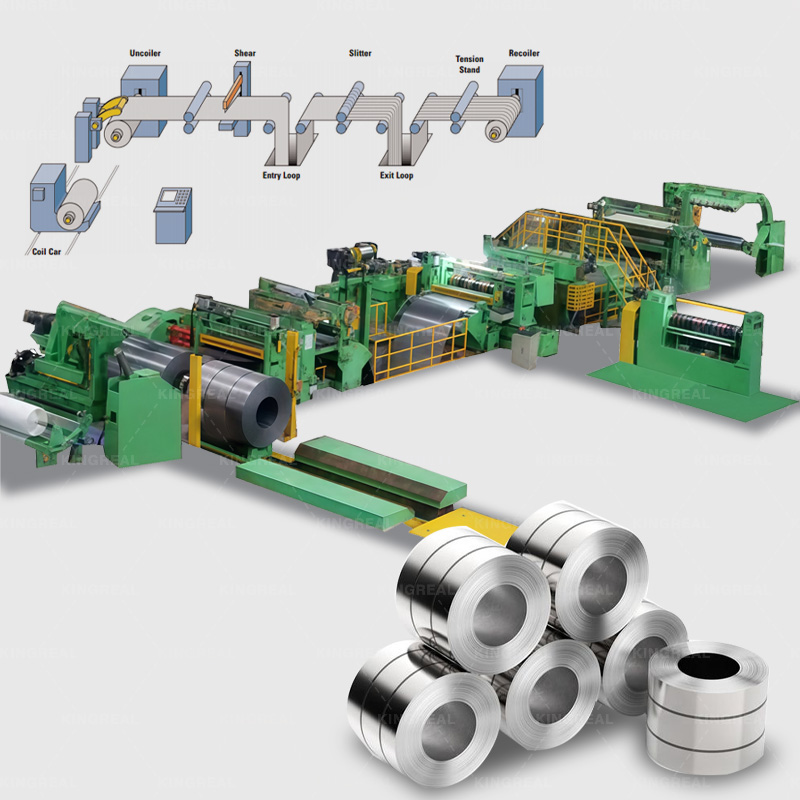
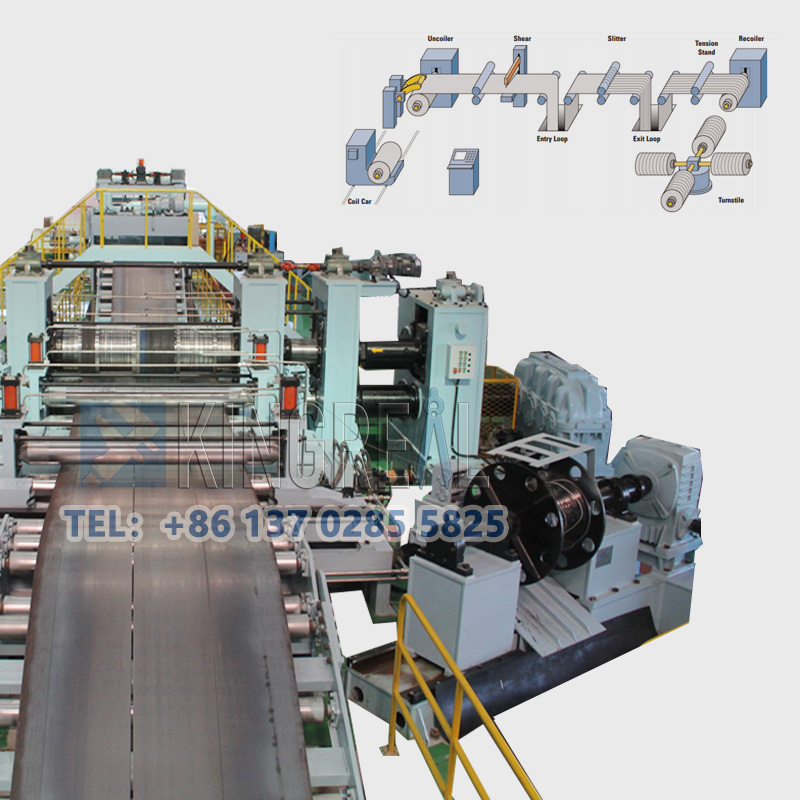
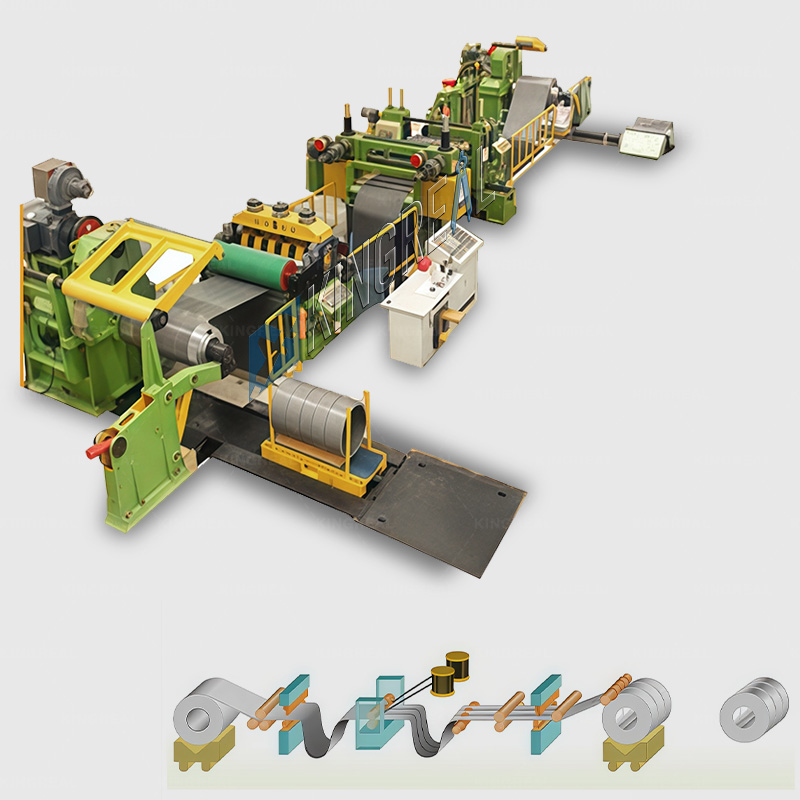
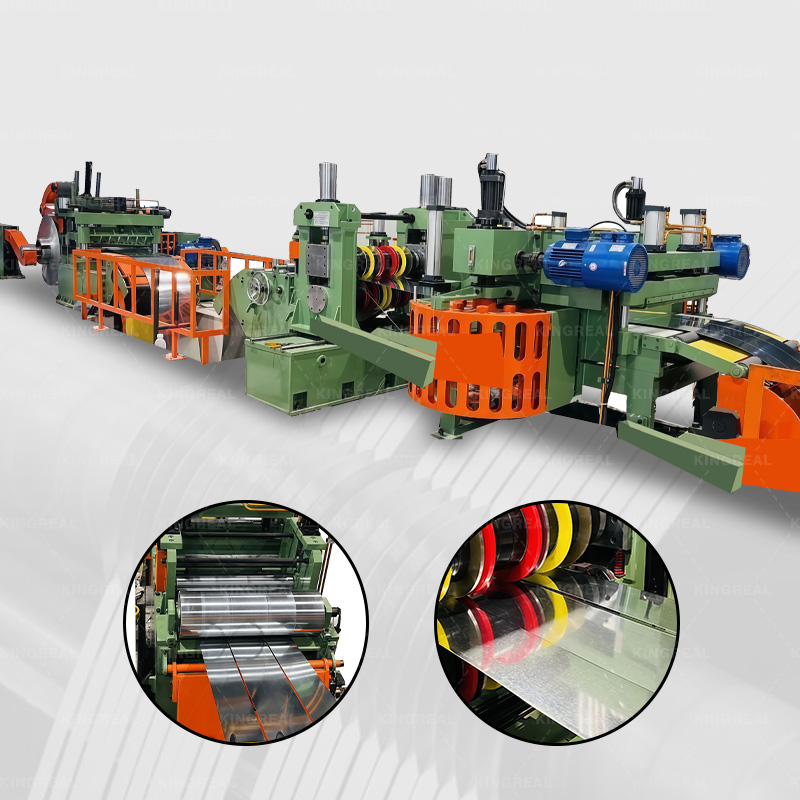
The standardized process flow of KINGREAL SLITTING steel coil slitting lines consists of three core stages: uncoiling, longitudinal slitting, and rewinding. These processes work in concert to form a complete metal coil slitting system, capable of consistently performing high-volume, precision slitting to perfectly meet the demands of industrial-scale production.
1
Uncoiling Process
During operation, the operator smoothly loads the master metal coil onto the steel coil slitting line's dedicated decoiler mandrel.
A hydraulic expansion mechanism secures the coil to prevent shifting or loosening during processing.
The automated control system is then activated to unwind the coil at a steady speed, smoothly feeding the wide metal coil into the next stage.
Equipped with a variable-speed buffering device, the uncoiling system adjusts feed rates based on the coil's material and thickness; this effectively prevents issues such as stretching deformation or surface scratching, ensuring stable and intact material delivery and laying the groundwork for precise longitudinal slitting.
2
Slitting Process
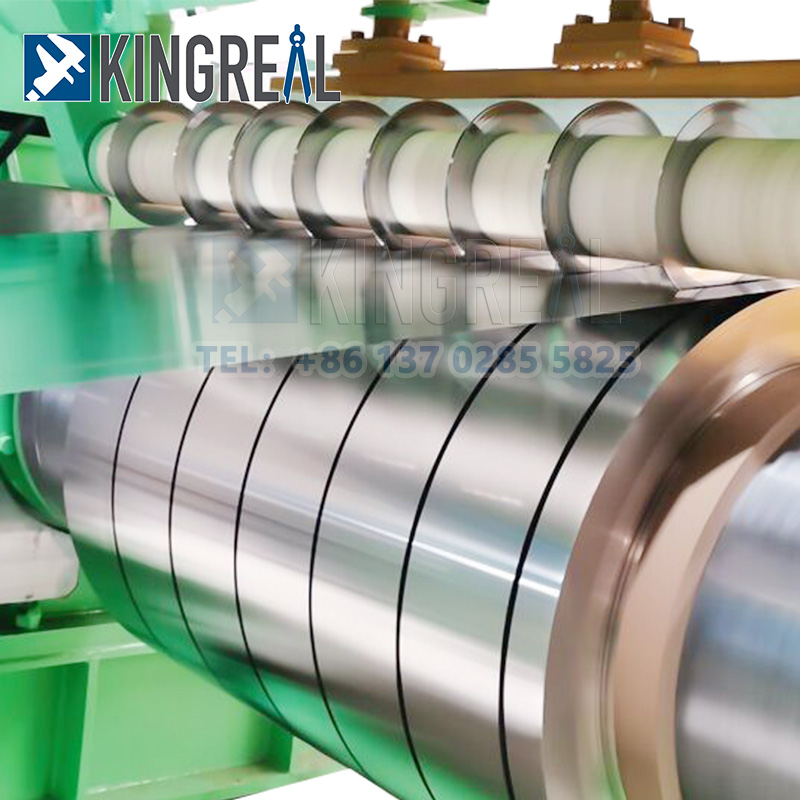
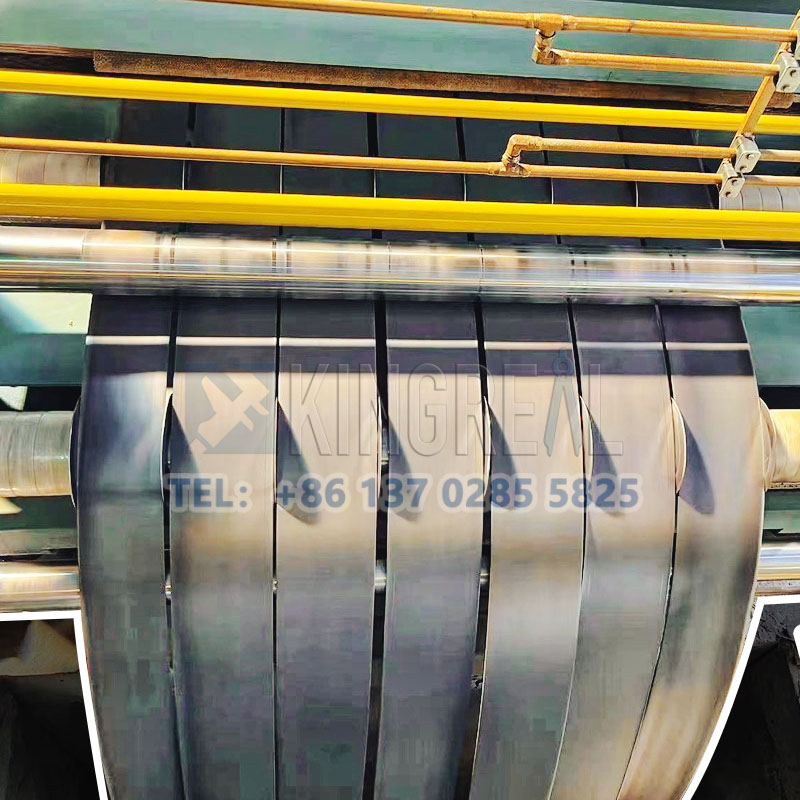
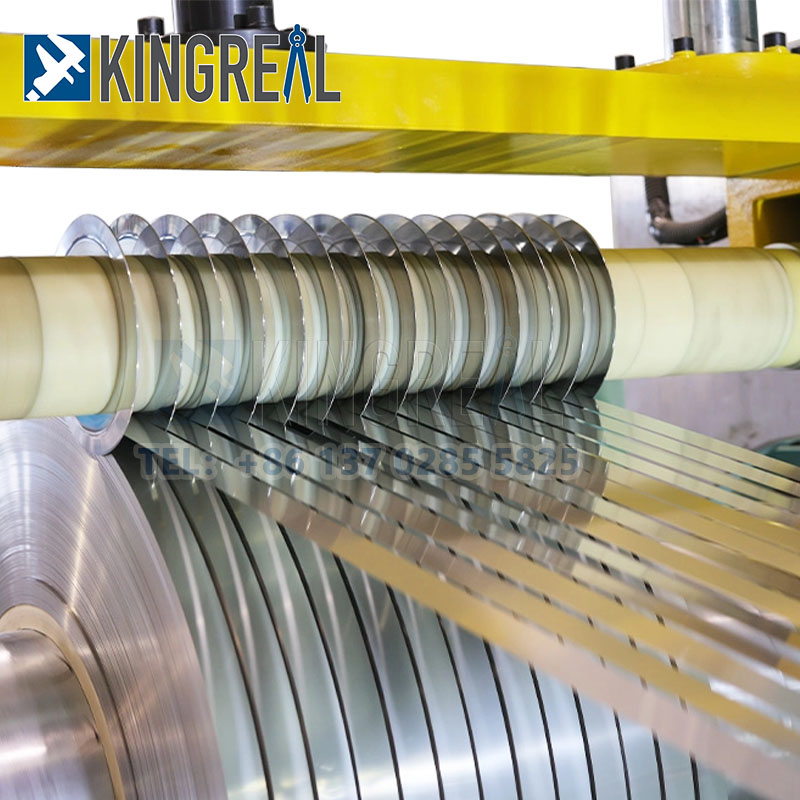
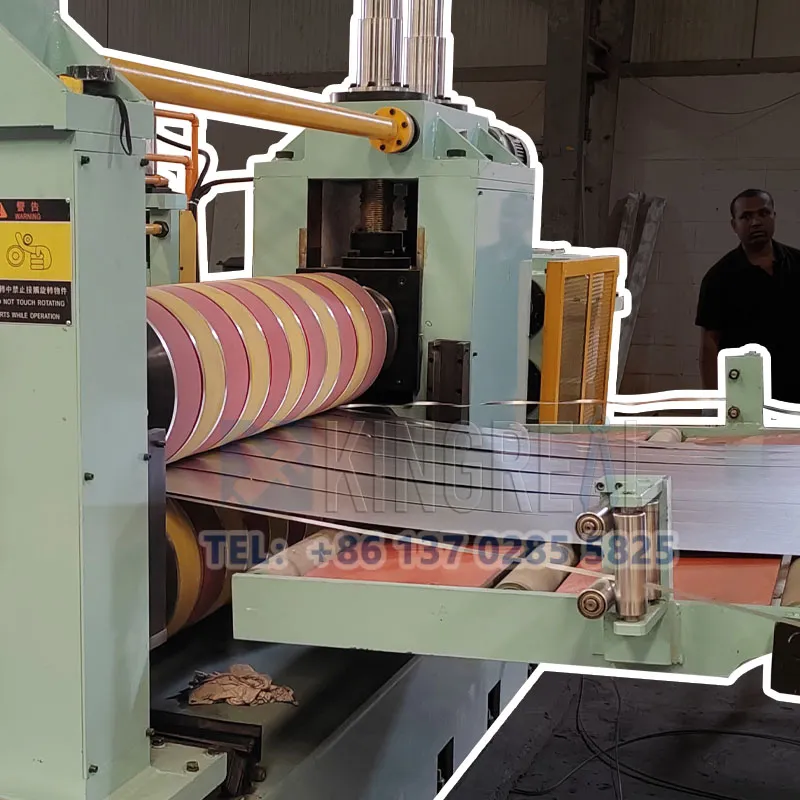
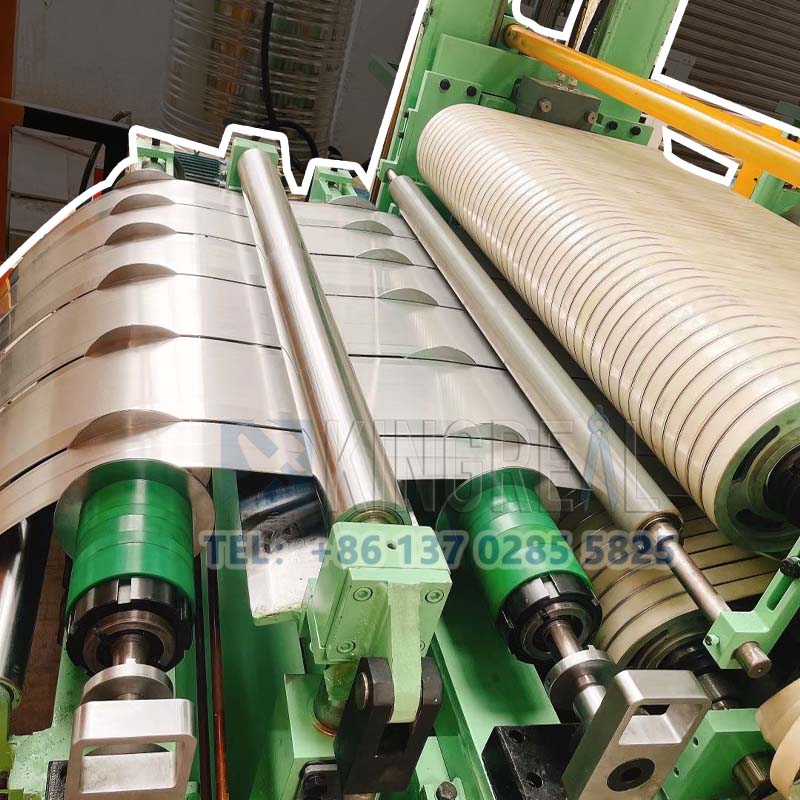
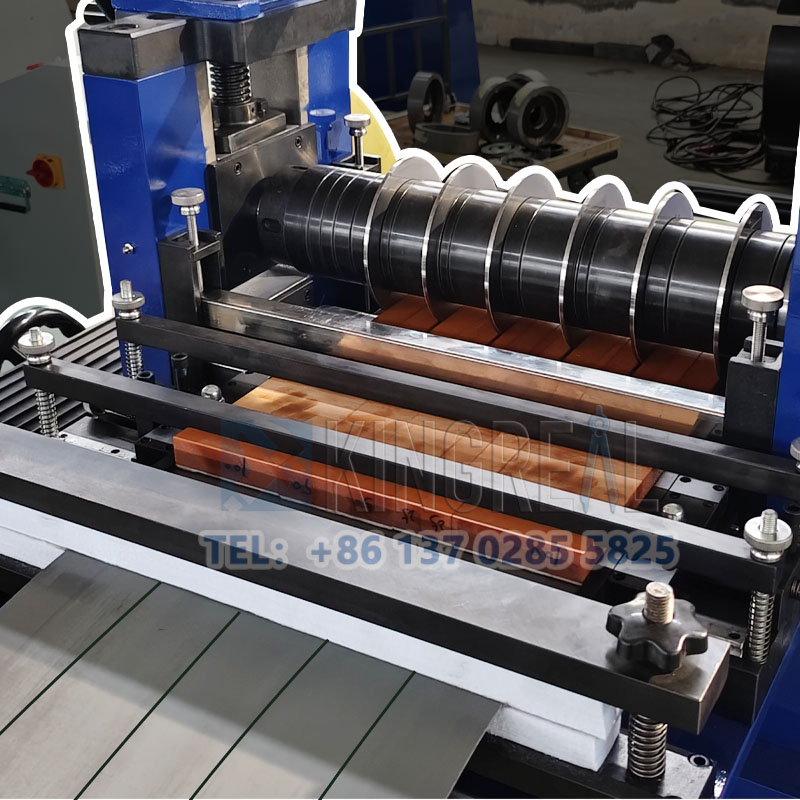
After uncoiling, the continuous metal strip is precisely positioned by a guiding and leveling mechanism and fed at a constant speed between the parallel cutter shaft assemblies of the steel coil slitting line. Equipped with multiple sets of high-precision, sharp rotary circular blades, the machine performs precise positioning based on preset width parameters.
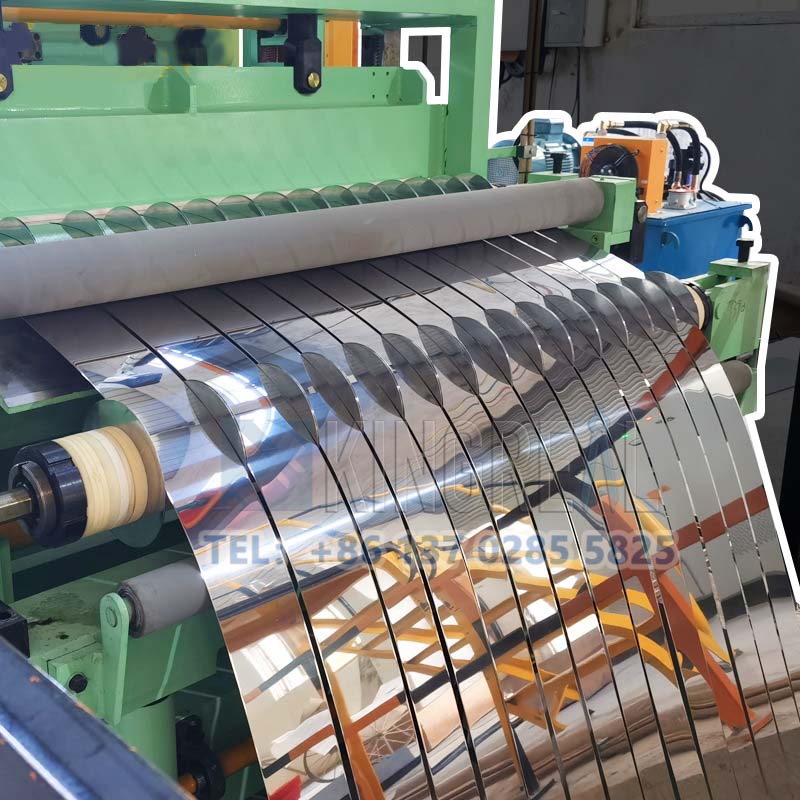
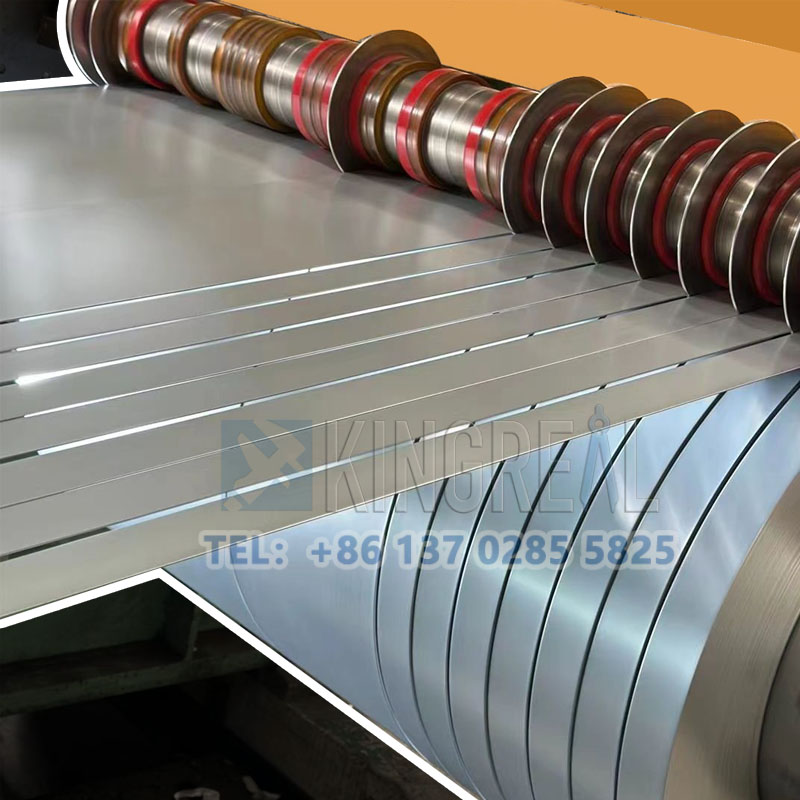
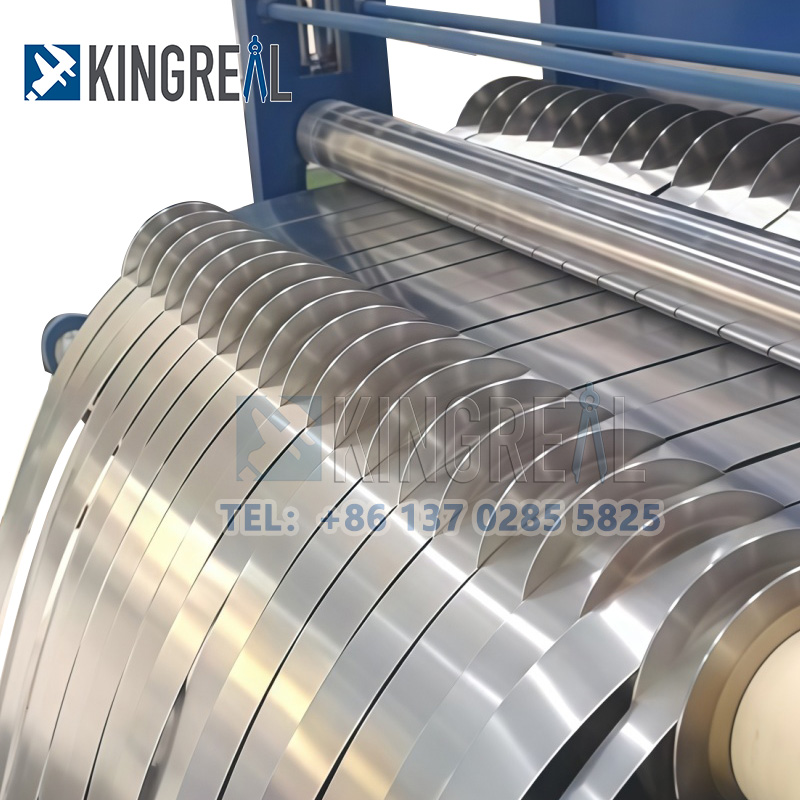
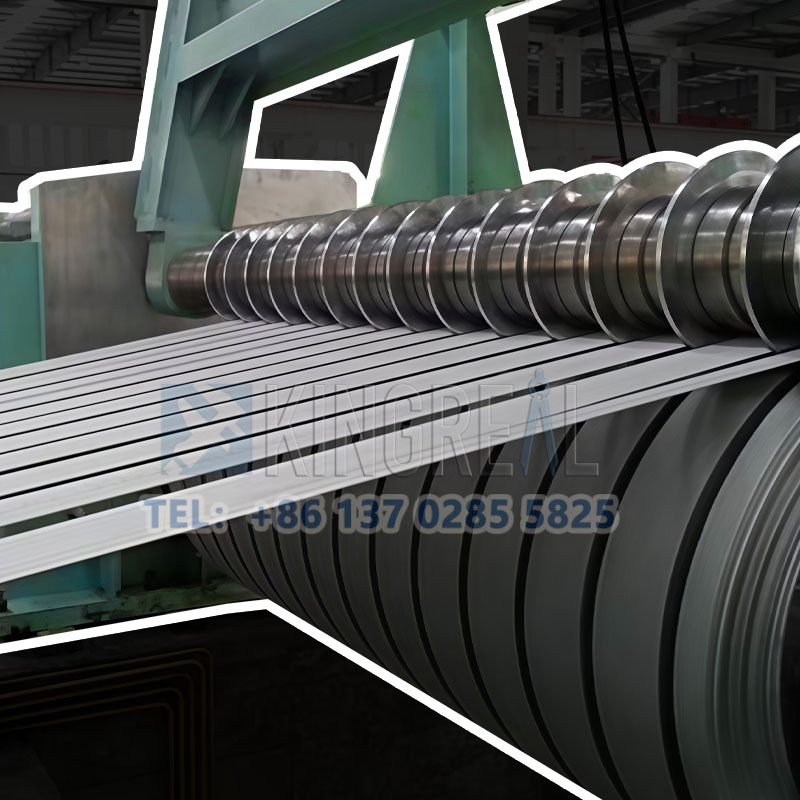
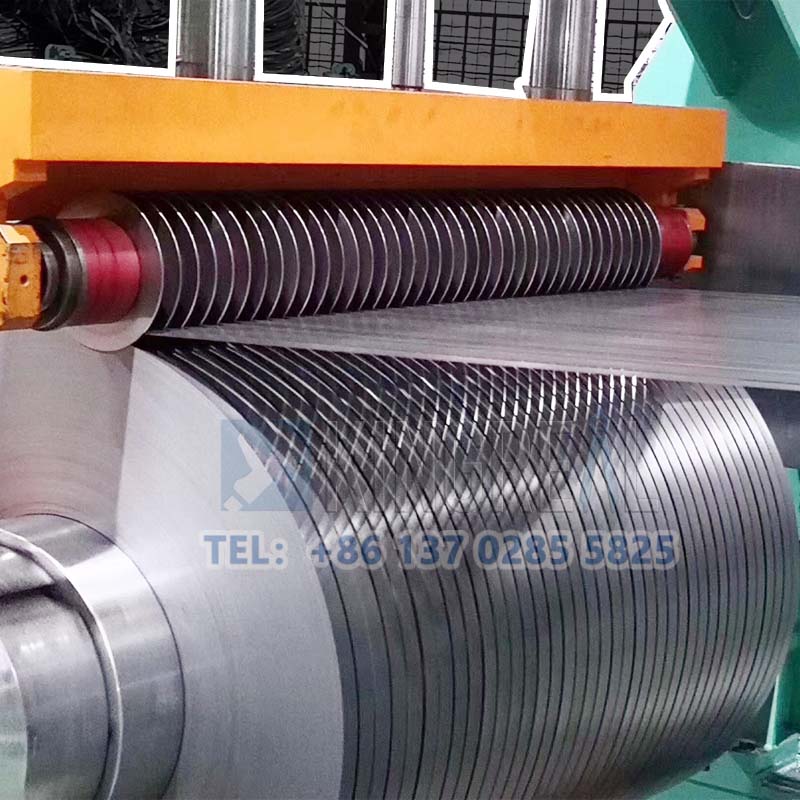
Through the synchronized, high-speed rotation of the upper and lower cutter shafts, the strip undergoes continuous longitudinal shearing, simultaneously dividing the wide coil into multiple narrow strips of uniform specifications.
KINGREAL SLITTING steel coil slitting lines feature high-precision cutter shafts and highly wear-resistant blades, minimizing slitting errors and ensuring that the edges of each narrow strip are smooth and burr-free, with precise, uniform dimensions that meet high-end precision processing standards.
3
Recoiling Process
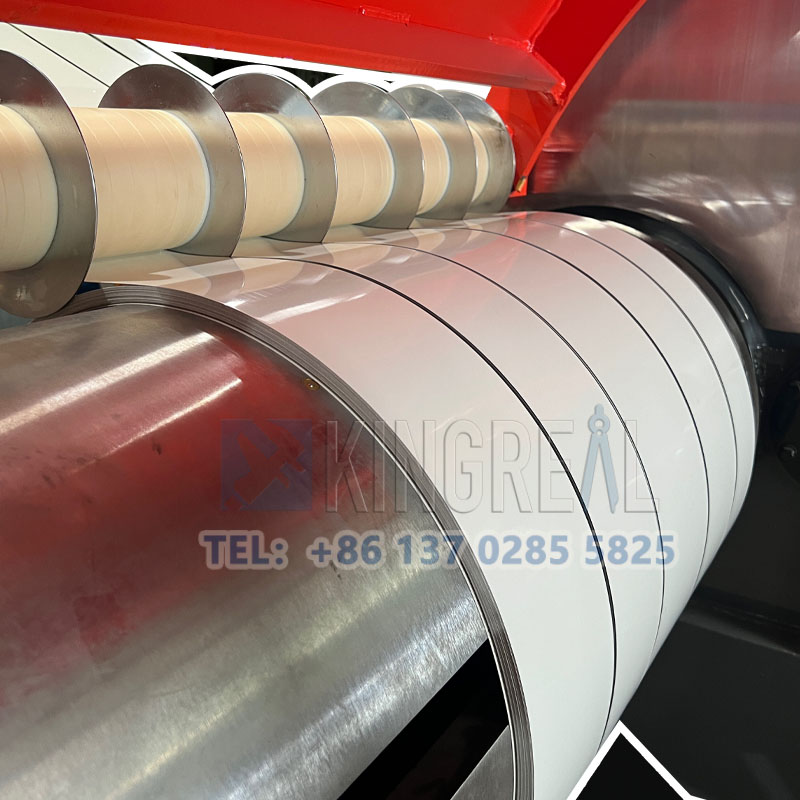
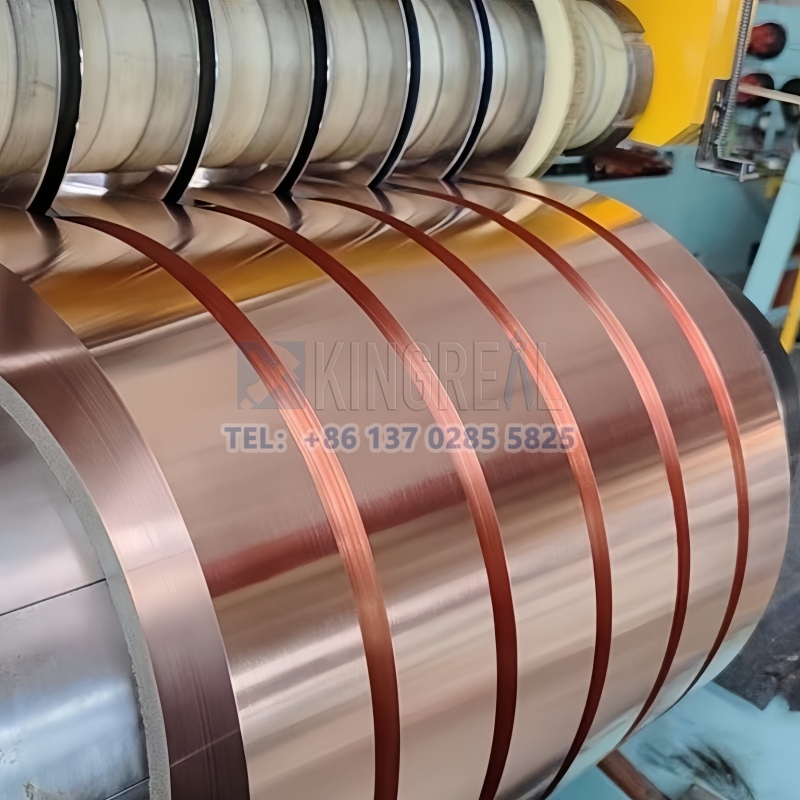
The multiple narrow metal strips resulting from the slitting process are orderly separated via the steel coil slitting line's dedicated guiding, strip-separating, and tension-regulating systems—preventing friction, tangling, or deformation between the strips.
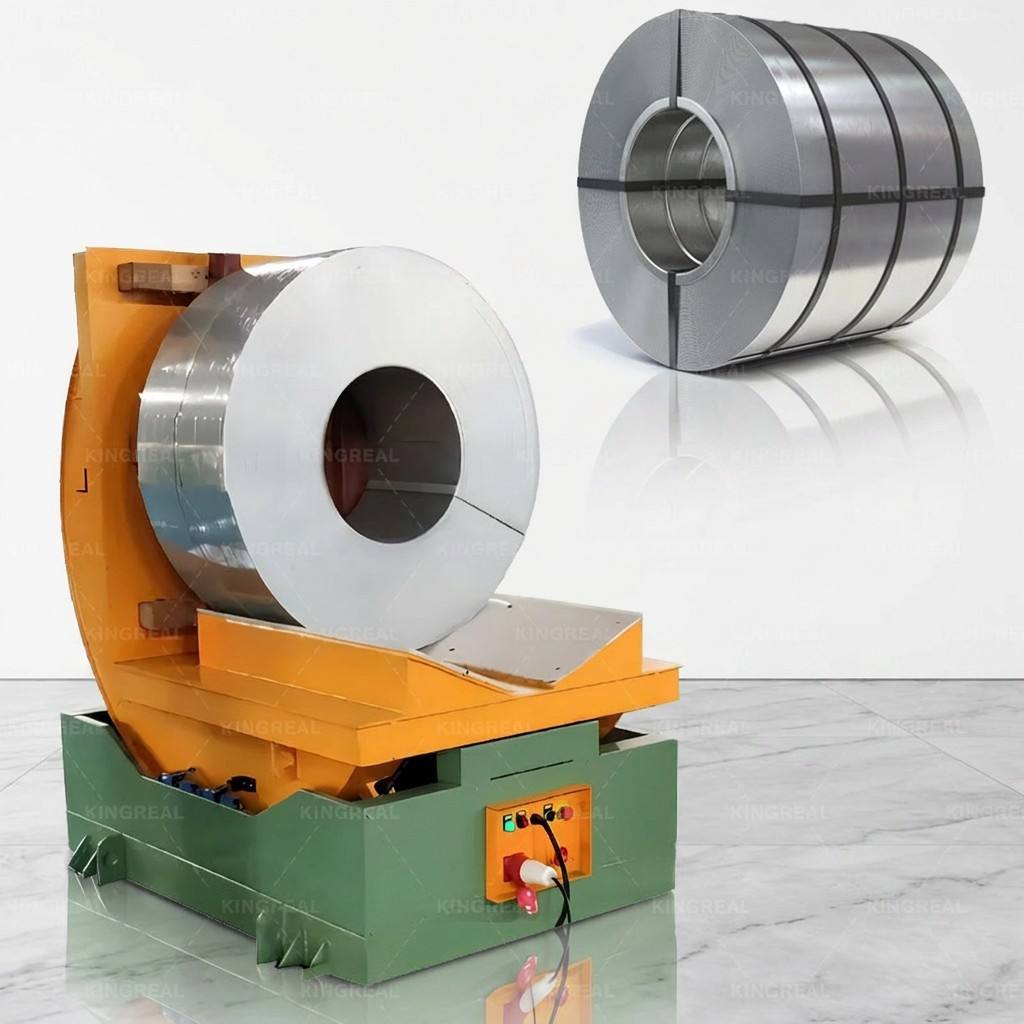
They are then smoothly fed into the recoiler, where a constant tension control system ensures steady winding, transforming the separate narrow strips into tight, neat, and secure finished coils.
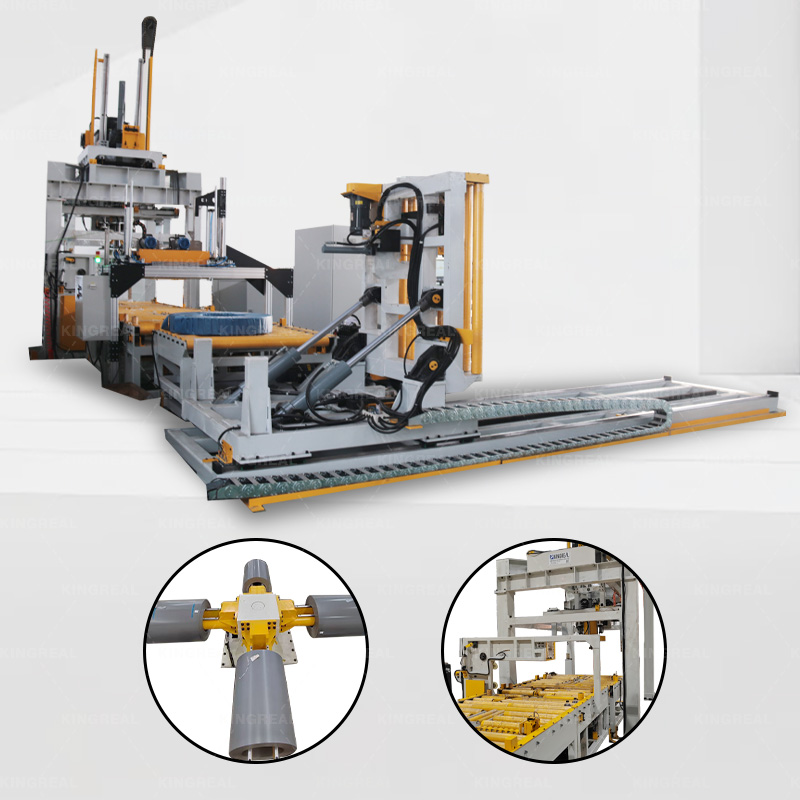
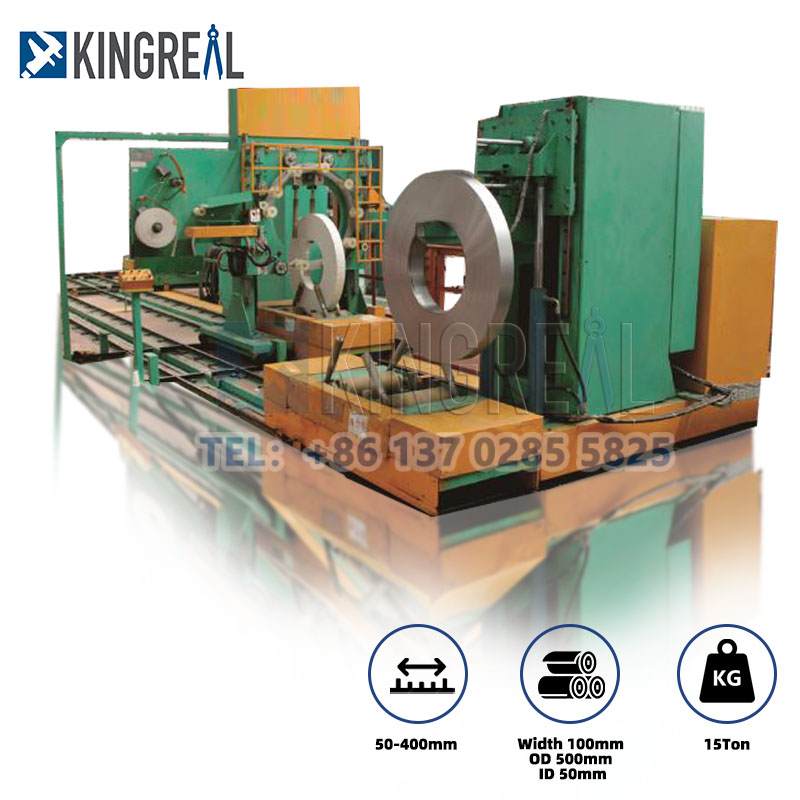
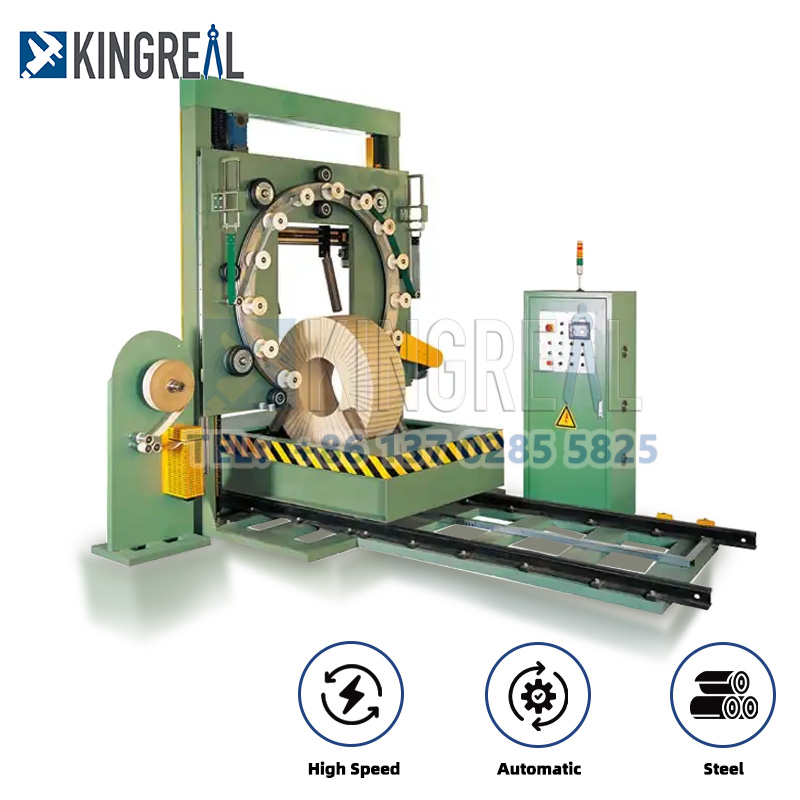
The resulting coils feature uniform specifications and a compact structure, facilitating standardized packaging, warehousing, and long-distance transportation.
4/Comprehensive Steel Coil Slitting Line Solutions
Leveraging years of experience in the R&D and manufacturing of steel coil slitting lines, KINGREAL SLITTING offers customized slitting solutions tailored to various industries and applications. We provide not only bespoke designs and manufacturing for individual machines but also comprehensive factory-wide production line planning services.
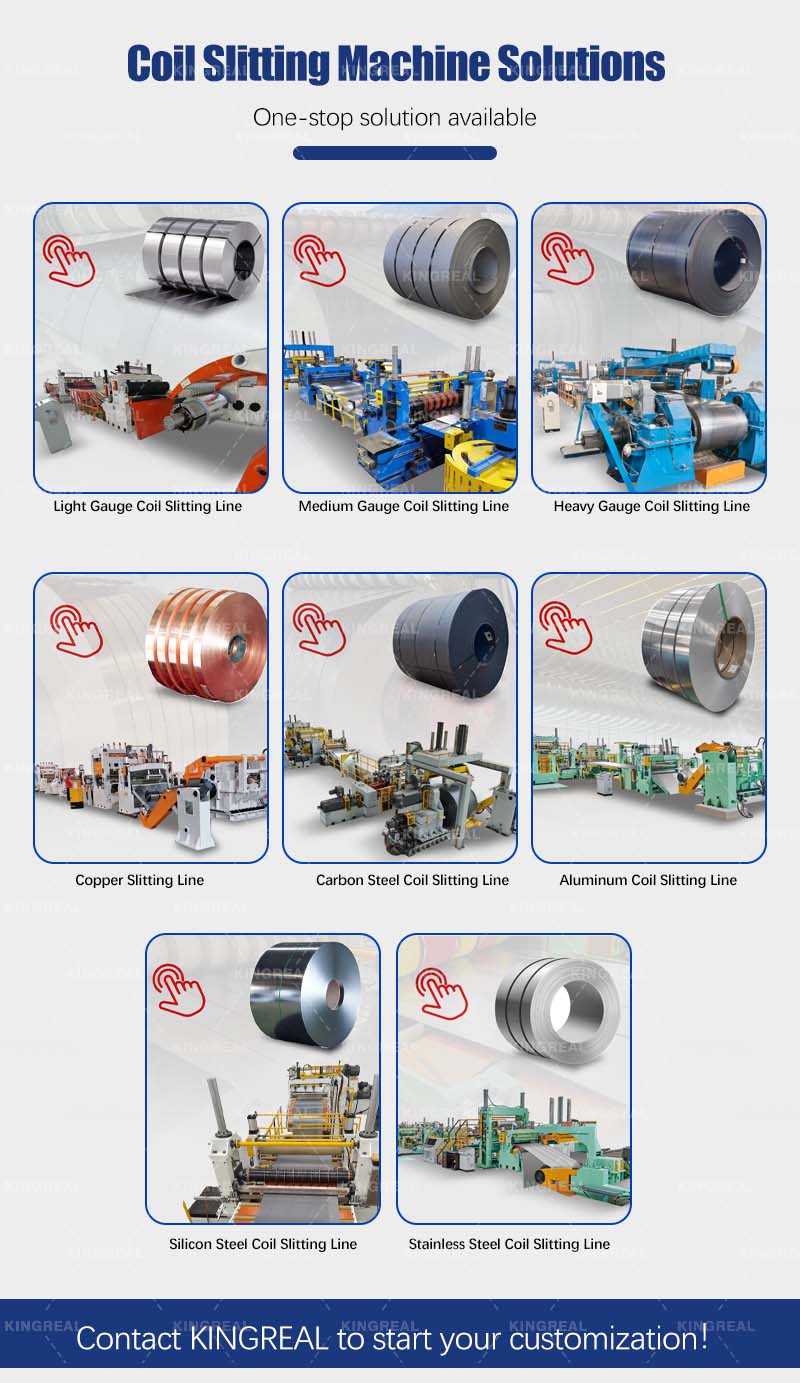
In terms of processing thickness, KINGREAL SLITTING offers customized steel coil slitting lines for thin, medium, and thick sheets, fully covering the slitting requirements for coils of varying gauges.
Regarding materials, the steel coil slitting lines are compatible with mainstream metals such as carbon steel, stainless steel, aluminum, copper, color-coated sheets, silicon steel, and cold/hot-rolled steel; they support mixed-material production and allow for parameter optimization based on specific materials to ensure processing stability.
Furthermore, KINGREAL SLITTING can upgrade and optimize core machine configurations to meet specific customer requirements for production capacity and precision, offering a range of high-performance steel coil slitting lines.
Among them, the high speed slitting machine operates at speeds of up to 230 m/min, significantly boosting production capacity; the belt tension coil slitting machine precisely controls tension for narrow strips, eliminating issues such as loose winding and dimensional deviations to ensure product accuracy; and the dual slitter head slitting machine effectively reduces the time required for blade changes and setup, continuously enhancing production efficiency.