

Automatic cut to length machines process various metal coils into standardized, high-precision metal sheets through integrated processes including uncoiling, leveling, shearing, and stacking. They are widely used in steel structures, hardware processing, home appliance manufacturing, and automotive parts industries.
In the production layout of modern steel coil processing centers, automatic cut to length lines are core equipment. However, their complete sets require a large floor space. For most small and medium-sized processing enterprises with limited space and compact workshops, the large footprint of these automatic cut to length machines reduces the space available for material storage, personnel operation, and other supporting equipment, significantly limiting workshop layout and capacity expansion.
Currently, the mainstream and mature floor space optimization design solutions for automatic cut to length lines fall into two main categories: compact cut to length line and automatic cut to length line without looping design. Both solutions are suitable for different processing scenarios and can effectively reduce the floor space required for the automatic cut to length machine. This article will discuss these solutions in detail.
Compact Cut to Length Line
The compact cut to length line is an optimization of the conventional standard automatic cut to length machine, addressing its redundant structure and large footprint. It retains core production components while eliminating auxiliary parts, maximizing the simplification of the equipment structure and reducing the overall footprint of the automatic cut to length line from the source while maintaining its basic automated operation.
Conventional automatic cut to length lines, designed for high-precision, high-speed, and thick sheet metal processing, are equipped with numerous auxiliary components for speed boosting, fine-tuning, and inspection. The compact cut to length line eliminates these unnecessary components, retaining only the main components: decoiler, leveler, cut-to-length machine, and stacker, fully covering the basic processes of uncoiling, leveling, shearing, and collecting.
This simplified component design is directly linked to the automatic cut to length line's processing parameters and operational performance, which is also the core logic behind its optimized footprint. A complete automatic cut to length machine, supported by various auxiliary components, can process thick metal coils and boasts higher operating speeds and shearing precision, adapting to all types of sheet metal processing.
The compact cut to length line, however, eliminates auxiliary devices such as precision calibration, high-speed acceleration, and thick-plate adaptation, resulting in a more compact overall structure. The length and width of the machine are significantly reduced, effectively minimizing the overall footprint. Due to the simplified components, the compact cut to length line's processing parameters are tailored to a specific range, stably processing only thin metal coils of 0.5-2.0mm, with a typical operating speed of around 50m/min.
This parameter configuration is highly matched to the component design. By simplifying the transmission and calibration components, the equipment load is reduced, eliminating the need for a heavy machine body and large transmission structure, further optimizing the automatic cut to length machine's space requirements. For companies that do not need to process thick plates and do not have strict requirements for ultra-high shearing precision and ultra-high-speed operation, the compact cut to length line can fully meet daily production needs while significantly saving workshop space, making it a cost-effective and efficient solution for optimizing the automatic cut to length line's footprint.
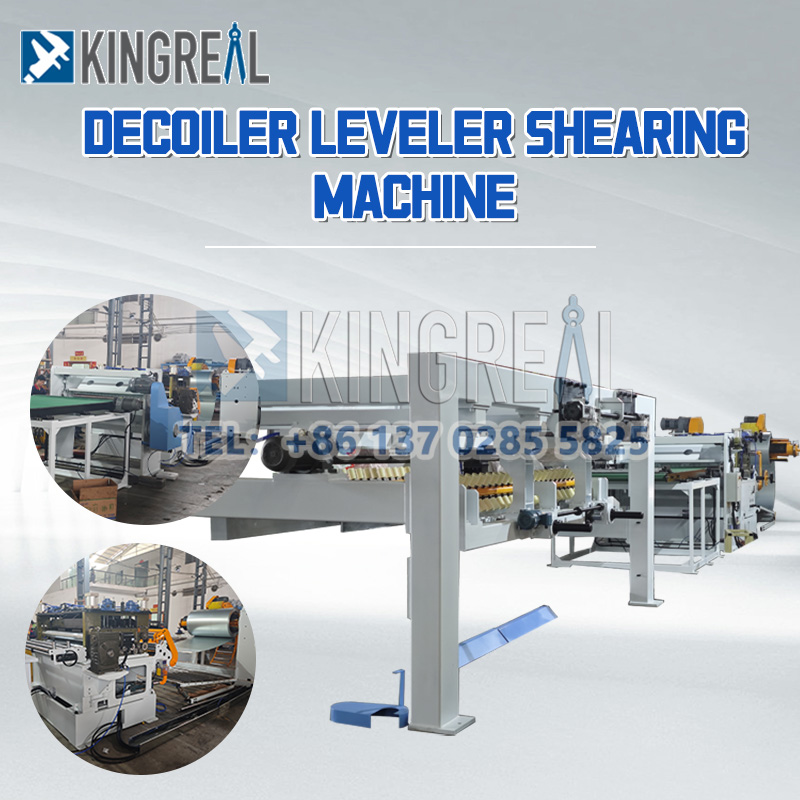
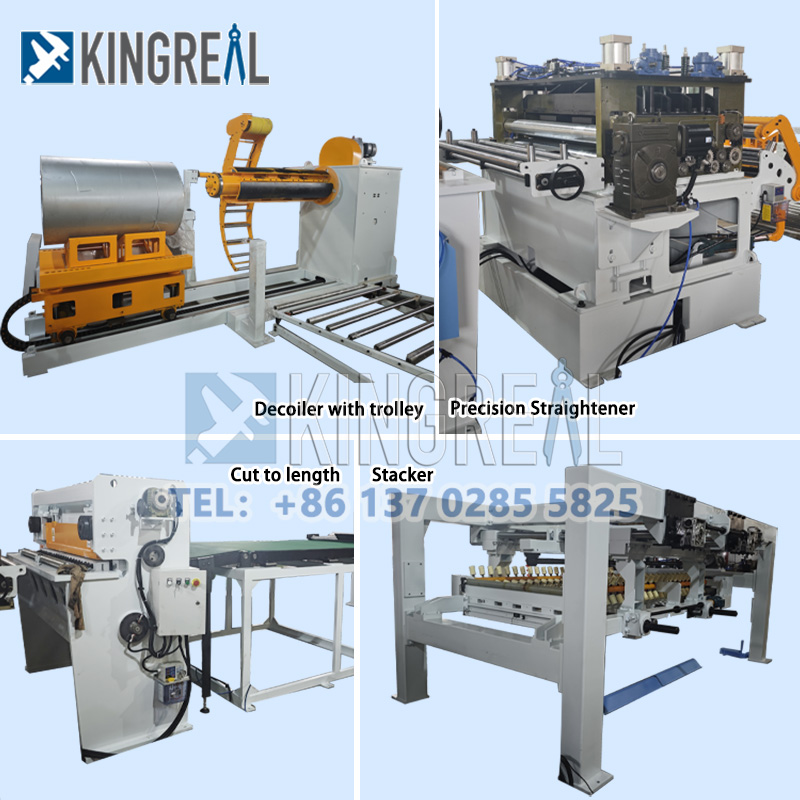
Automatic Cut to Length Line without Looping
Conventional automatic cut to length machines generally employ a pit design, which is a key reason for their large footprint and poor site adaptability. To achieve continuous, uninterrupted shearing operations and ensure material circulation, automatic cut to length lines typically reserve material storage space in the pit, allowing the steel strip to circulate and store material during the shearing process without frequent shutdowns for feeding, thereby improving continuous production efficiency.
However, this design requires excavating a dedicated pit in the workshop floor or reserving sufficient overhead space for material buffering and storage. This not only results in high construction costs and long construction periods but also significantly increases the overall footprint of the automatic cut to length machine, placing strict requirements on factory floor conditions and ceiling height.
To address this pain point, a pit-free optimized design for automatic cut to length lines has emerged. This solution abandons the traditional pit storage structure, eliminating the need for excavation and modification of the workshop floor. It thoroughly optimizes the footprint of the automatic cut to length machine from a spatial layout perspective and is currently one of the most significantly optimized solutions in the industry.
To ensure continuous production capacity of the automatic cut to length line without a pit, the automatic cut to length machine is equipped with a dedicated short looper synchronous buffer system, replacing the traditional pit for steel strip storage and buffering. Its core working principle involves a dedicated motor driving the intermediate frame to raise and lower the frame, suspending and supporting the steel strip. The frame's vertical movement adjusts the strip's slack, transferring the storage space previously required by the pit to above the automatic cut to length line itself.
This suspended storage mode completely eliminates the need for sunken ground space, eliminating the need for an additional pit area. This significantly reduces the length of the automatic cut to length machine's floor space, saving 60%-70% compared to traditional looping cut to length line, resulting in a remarkable space optimization effect.
Meanwhile, the short looper precisely controls the steel belt conveyor speed between the leveling machine and the CNC measuring machine, achieving synchronous speed across the entire process of feeding, leveling, measuring, and shearing. This effectively avoids problems such as steel belt pulling, accumulation, and deviation, maximizing the floor space of the automatic cut to length machine while ensuring continuous and stable equipment operation. It balances space utilization and production efficiency, offering exceptional economic practicality.
As a professional automatic cut to length line manufacturer and supplier, KINGREAL SLITTING designs machines specifically to meet the floor space optimization needs of various customers. Combining the customer's workshop size, sheet metal processing specifications, and production capacity requirements, KINGREAL SLITTING tailors automatic cut to length machine optimization solutions to maximize floor space reduction while ensuring processing accuracy and operational stability.
Furthermore, the KINGREAL SLITTING team continuously iterates and optimizes the automatic cut to length line structural design, constantly exploring more efficient and adaptable floor space optimization technologies. Balancing automatic cut to length machine space dimensions, production performance, and equipment costs, KINGREAL SLITTING provides highly adaptable and cost-effective floor space optimization solutions for customers in different scenarios.
For more information on optimizing the footprint of automatic cut to length lines and customizing exclusive automatic cut to length machine solutions, please feel free to contact KINGREAL SLITTING.