

Steel coil-to-sheet cutting machines are widely used in the hardware manufacturing industry, specifically designed to process metal coils through uncoiling, leveling, precision cutting, and automatic stacking. They provide a continuous supply of metal sheets—characterized by uniform dimensions and smooth, flat surfaces—for the mass production of items such as brackets, base plates, mounting components, and structural hardware.
Compared to traditional cutting methods, steel coil cutting machines effectively resolve industry pain points such as significant dimensional deviations, poor surface flatness, low production efficiency, and high scrap rates, comprehensively helping hardware manufacturers enhance production efficiency, processing precision, and operational stability.
Why are Steel Coil Cutting Machines Important for Hardware Manufacturing?
The vast majority of finished hardware products rely on the secondary processing and forming of metal sheets; the fundamental quality of the sheet directly determines the outcome of subsequent processes and the final product yield. Metal sheets produced by steel coil cutting machines offer key advantages: flat, scratch-free surfaces, precise cut lengths, and strong batch-to-batch consistency. Such high-quality sheets serve as excellent base materials for hardware manufacturing.
Standardized sheets processed by these steel coil-to-sheet cutting machines can go directly into subsequent finishing operations—such as stamping, bending, punching, and welding—to create finished products like architectural hardware brackets, mechanical base plates, equipment supports, and industrial structural hardware. These products are widely used in fields ranging from construction and machinery to municipal infrastructure.
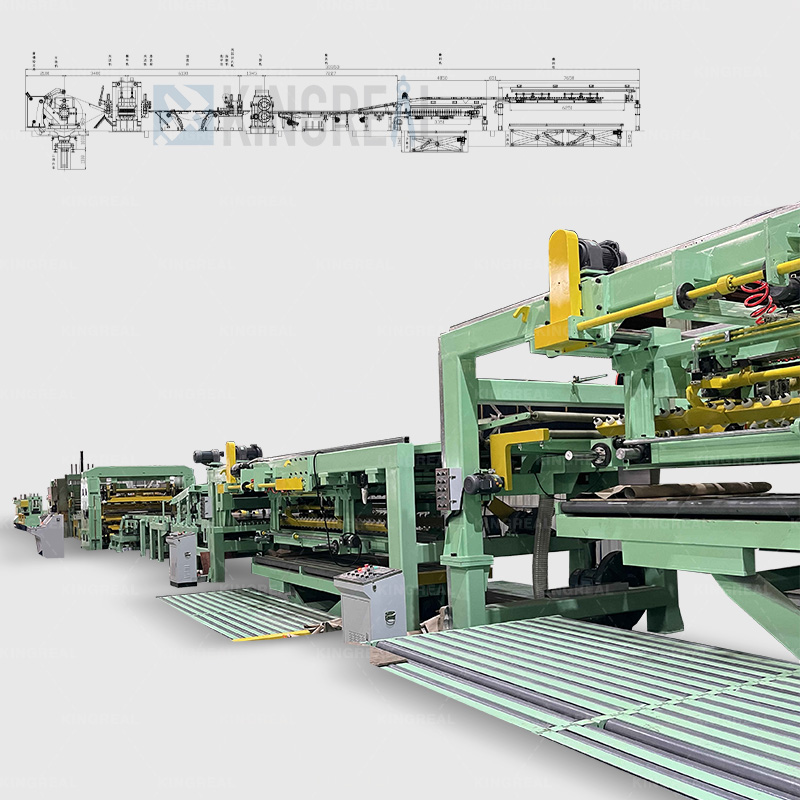
Advanced steel coil cutting machines are integrated, intelligent production systems combining automatic uncoiling, precision leveling, cutting, and automatic stacking. The entire system eliminates the need for manual material handling, completing the full process from coil to sheet in a single, streamlined operation.
Compared to traditional manual cutting methods, steel coil-to-sheet cutting machines offer comprehensive competitive advantages.
1
Production Efficiency
Steel coil cutting machines enable continuous processing of metal coils. They eliminate the cumbersome steps associated with traditional methods—such as frequent loading, material handling, alignment, and downtime for adjustments—thereby drastically reducing material turnaround and equipment idle time.
This effectively boosts single-shift output, meeting the demands of mass-production orders in the hardware industry.
2
Processing Precision
The steel coil-to-sheet cutting machine is equipped with an encoder-based length control system and a servo-driven feeding system.
This ensures intelligent, precise length control throughout the process, eliminating dimensional errors caused by manual operation and guaranteeing high consistency in length and tolerance parameters for every processed sheet, thereby meeting the rigorous requirements for precision assembly of hardware components.
3
Production Stability & Costs
The steel coil cutting machine utilizes a fully automated closed-loop control process. This avoids quality fluctuations associated with manual operation, stabilizes the finished product pass rate, and significantly reduces metal material waste.
Advantages of Using Steel Coil Cutting Machines in Hardware Manufacturing
Steel coil-to-sheet cutting machines are perfectly suited to the production characteristics of the hardware manufacturing industry, which involves diverse order types, numerous part specifications, flexible batch sizes, and rapid product iteration.
Steel coil cutting machines offer exceptional production adaptability, easily handling frequent order changes and the need to process parts of various sizes. Powered by a smart servo feeding system and a high-precision length measurement module, operators can quickly adjust cutting parameters via the control system. This allows for seamless switching between sheet specifications, thicknesses, and dimensions without complex setup, resulting in rapid changeovers and minimal downtime, which greatly enhances production flexibility.
Furthermore, during high-volume continuous production, the steel coil-to-sheet cutting machine maintains consistent dimensional tolerances and surface precision. It avoids issues such as precision drift or surface deformation caused by prolonged operation, effectively balancing high-efficiency production with precision processing. This enables hardware manufacturers to respond quickly to fluctuating market demands, improving order delivery efficiency and market competitiveness while ensuring product quality.
Additionally, the automated stacking design ensures metal sheets are stacked neatly. This prevents dents, scratches, and deformations caused by manual handling, preserves the flatness and integrity of the sheet surface, reduces the need for rework, and further optimizes the hardware production process while increasing the product yield rate.
Applications of Steel Coil Cutting Machines in Hardware Manufacturing
Steel coil-to-sheet cutting machines are highly versatile, capable of meeting the sheet processing needs for a wide range of hardware products across various industries and covering mainstream hardware manufacturing operations.
Typical products processed by steel coil cutting machines include core hardware components such as structural support brackets for construction, specialized connecting base plates for machinery, support assemblies for electrical and piping systems, and structural metal parts for industrial equipment. The production of such hardware products demands not only precise dimensional tolerances for the sheet metal but also exceptional standards regarding surface flatness, evenness, and edge smoothness. Only when the base material meets these quality benchmarks can subsequent processes—such as stamping, bending, welding, and assembly—proceed smoothly.
Utilizing metal coils as raw material, the steel coil-to-sheet cutting machine integrates leveling and precision cutting into a single, continuous operation. The resulting sheets feature uniform thickness, consistent dimensions, and flat surfaces, providing a reliable foundation for downstream precision processing and serving as a crucial prerequisite for ensuring the quality and performance stability of the finished hardware products.
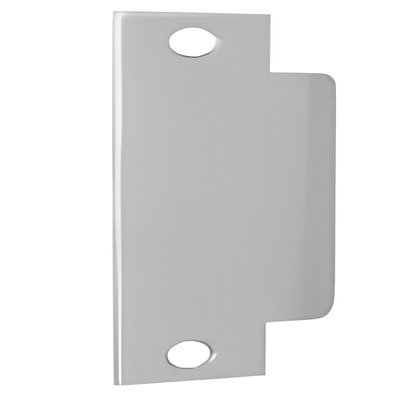
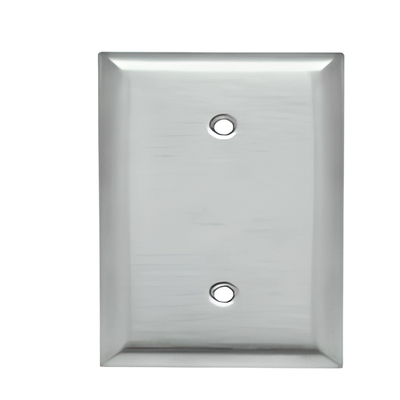
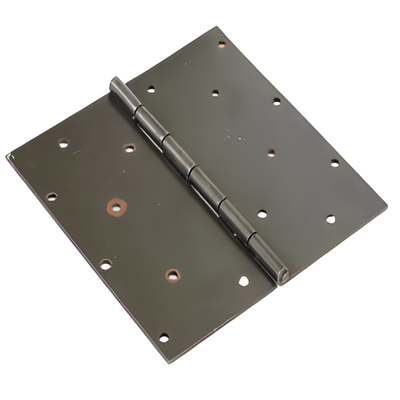
KINGREAL SLITTING Steel Coil Cutting Machines: Specialized Solutions for Hardware Manufacturing
Designed to align perfectly with the operational realities of hardware manufacturers, KINGREAL SLITTING steel coil-to-sheet cutting machines are compatible with common industry materials—such as carbon steel, galvanized steel, and stainless steel—and handle a wide range of sheet thicknesses, maintaining stable performance across both thin and medium-to-heavy gauge applications.
In terms of engineering, the steel coil cutting machine features a highly rigid mechanical structure and incorporates high-precision leveling modules alongside mature, stable servo-feeding systems. This robust hardware design ensures consistent dimensional stability and processing accuracy during long-term operation.
Addressing the industry's need to handle fragmented orders and frequent specification changes, the system supports rapid parameter switching and one-touch production changeovers. This significantly reduces setup times and boosts efficiency, making it an ideal fit for the hardware industry's typical production model characterized by small batches, multiple runs, and diverse specifications.
With precise market positioning, reliable performance, and an industry-focused design philosophy, KINGREAL SLITTING steel coil-to-sheet cutting machines offer a comprehensive, efficient, and cost-effective solution for sheet metal processing, helping manufacturers achieve automated production, standardized quality, and maximized profitability.
To learn more about the application of steel coil cutting machines in the hardware manufacturing industry, please contact KINGREAL SLITTING directly.