

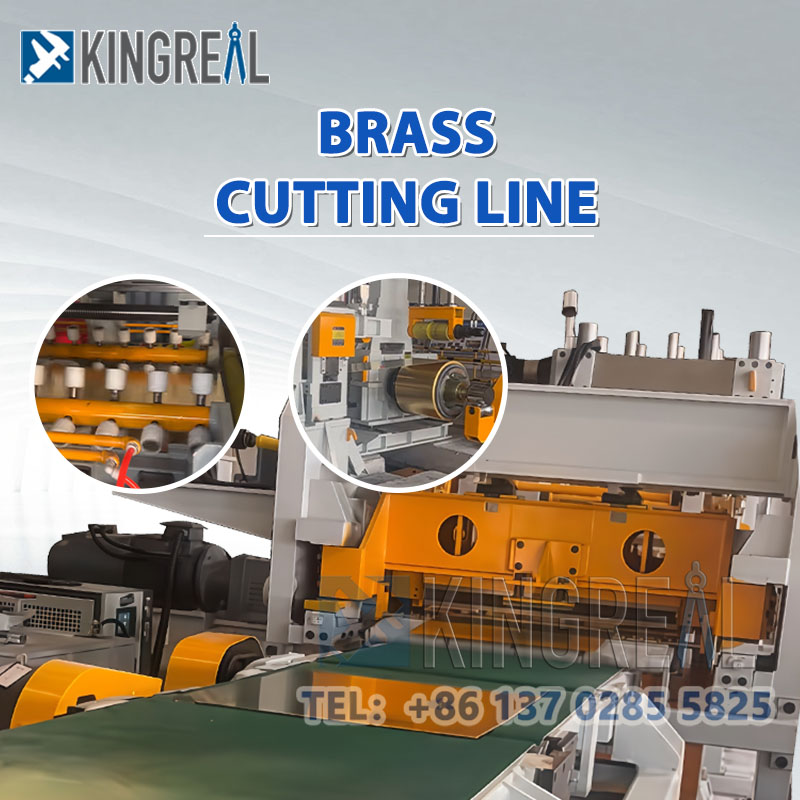
Brass is aesthetically pleasing, corrosion-resistant, and possesses excellent electrical and thermal conductivity, making brass sheets widely used in building exteriors, decorative signage, electrical components, musical instruments, and marine hardware. However, brass cutting can easily lead to problems such as deformation, edge burrs, and difficulty in controlling precision. This is where specialized coil processing equipment—brass cutting line—comes in.
This article will provide a detailed introduction to brass cutting methods and focus on explaining the specialized copper coil cut to length line suitable for this material, helping businesses efficiently solve cutting challenges.
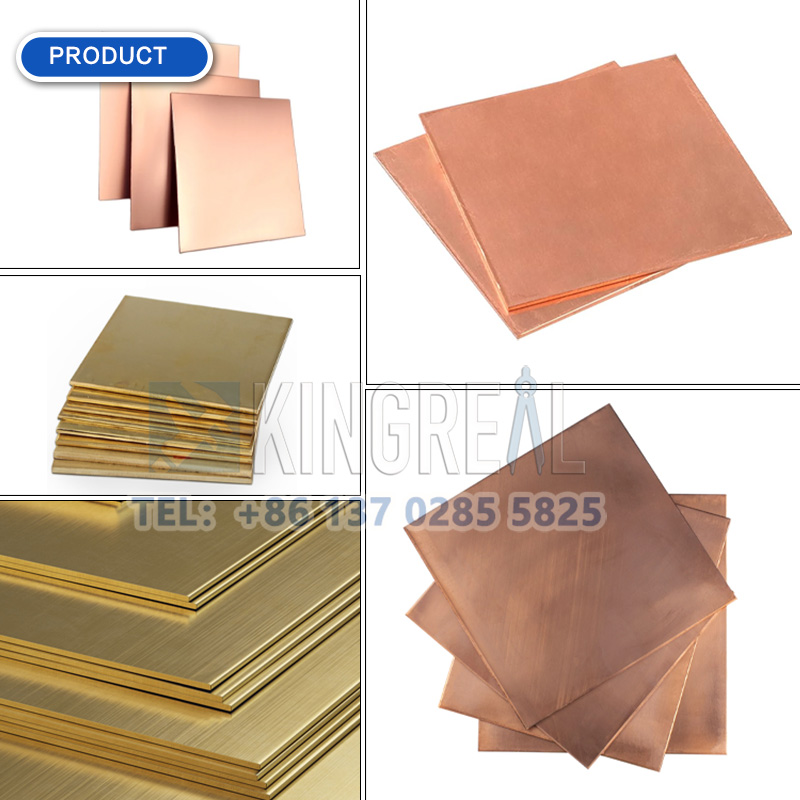
Brass Sheet Basics
The main component of brass sheet is a copper-zinc alloy, which, compared to other metal materials, is easy to process, corrosion-resistant, and possesses excellent thermal and electrical conductivity. Therefore, it is also mainly used in automotive trim, electronic components, musical instruments, and architectural decoration. Furthermore, due to these material characteristics, brass presents the following challenges in cutting:
1. Its softness makes it susceptible to deformation under pressure during cutting, requiring higher precision in clamping force and feeding speed, and avoiding scratches on the sheet surface;
2. Its high ductility makes the cutting edge prone to burrs during cutting, and it easily sticks to the tool at high temperatures, necessitating specialized tools and a heat dissipation design;
3. Its extremely high thermal conductivity means that the heat generated during cutting is quickly conducted to machine parts and the sheet itself, easily affecting cutting accuracy, requiring targeted heat dissipation design;
4. Its surface is easily damaged, requiring avoidance of surface scratches during cutting, and placing higher demands on the flexibility of the copper coil cut to length line's clamping and feeding components.
Design of Brass Cutting Lines
1. Cutting Precision
The copper coil cut to length line is designed for precise cutting. Whether you are manufacturing electronic components or decorative items, precise cutting ensures high-quality final products. Several points need attention when processing copper on a brass cutting line. First, the thickness of the copper coil is important. Most copper coil cut to length lines can handle copper coils of a certain thickness, but you need to ensure that the brass cutting line you are using is suitable for the specific thickness of copper coil you are processing.
2. Copper Coil Cut to Length Line Speed
The brass cutting line speed should not be too fast or too slow. Too fast a speed will result in inaccurate cuts, while too slow a speed will waste time and effort. The key is to find the optimal speed.
3. Blades
The type of blade used on the copper coil cut to length line is also crucial. For copper, you need a blade that can make clean cuts without producing excessive burrs or damaging the metal. Various types of blades are available on the market; choosing the right blade depends on the thickness and type of copper you are processing.
How to Cut Brass Sheet with Brass Cutting Lines?
- Preparation
Confirm the brass sheet specifications (thickness, dimensions). The setup process for the KINGREAL SLITTING copper coil cut to length line is very simple and easy to operate. Simply set the production parameters on the control panel, including the running speed, output, and the required sheet length. The KINGREAL SLITTING brass cutting line can adapt to processing different brass specifications.
- Practical Operation Steps
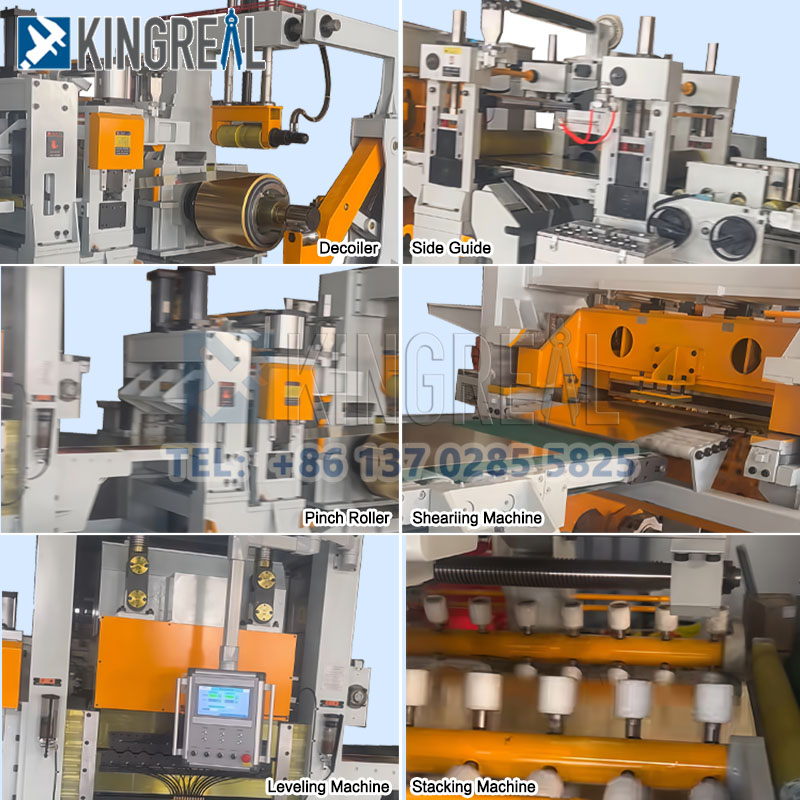
Hang the steel coil on the storage platform → Load the coil onto the transport trolley → Manually align vertically → Press down the coiling rollers → Unbundle the straps → Feed the coil from the uncoiler → Feed the coil from the clamping rollers into the leveler → Servo CNC sizing machine → Hydraulic shears → Belt conveyor → Stacking platform → Trolley output
The copper coil cut to length line processes brass coils into sheets of the required dimensions by horizontal shearing after leveling. During operation, the decoiler is in feeding mode. After the sheet enters the leveler and is leveled, the equipment stops feeding and sends a signal to the shears, which cuts the sheet. The cut sheets are conveyed to the stacking rack for neat stacking. The stacking platform automatically lowers as the stack height increases. When the number of stacked sheets reaches the set value on the touchscreen, the brass cutting line automatically stops. At this time, the operator manually lowers the platform, moves the discharge trolley out, and simultaneously moves in another discharge trolley, thus starting the next work cycle.
- Practical Precautions
Safety is paramount during copper coil cut to length line operation. KINGREAL SLITTING has equipped brass cutting lines with corresponding safety features to maximize production safety.
(1) Safety Alarm System;
A. Configure operation condition confirmation locks (safety locks) and alarm prompts for each workstation.
B. Each operating station, including loading, main operation, and unloading, can independently operate the alarm.
C. Alarm prompts are given when each moving piece of copper coil cut to length line is in operation.
(2) Safety Interlock Device
(3) Protective shields must be added to the moving parts such as the equipment's clamping rollers, connecting shafts, rotating chains, and exposed brake pads. Safety railings must be installed around the loops.
(4) Warning signs are placed on dangerous and important parts of the brass cutting line.
(5) Rotating parts are clearly marked with different colors from the main body of the equipment.
Advantages of KINGREAL SLITTING Brass Cutting Lines
1
High efficiency
Compared with traditional cutting methods, KINGREAL SLITTING brass cutting lines have faster cutting speeds and stronger batch processing capabilities.
2
High quality
The copper coil cut to length line boasts high cutting precision, smooth, burr-free edges, and requires no secondary processing, perfectly suited for high-end brass applications.
3
Fully customizable
KINGREAL SLITTING brass cutting lines can be tailored to meet the specific specifications and application scenarios of your brass sheets.
4
Comprehensive after-sales service
KINGREAL SLITTING can dispatch professional engineers to install, debug, and maintain the copper coil cut to length lines, providing full support for your production. Spare parts are also available.
If you have brass coil shearing needs, please contact KINGREAL SLITTING to learn more about brass cutting lines. The KINGREAL SLITTING team will provide a simplified machine selection guide based on your brass sheet thickness, production requirements, and application scenarios. Contact KINGREAL SLITTING now for a customized copper coil cut to length line solution!
