

The market has placed greater demands on the precision, efficiency, and intelligence level of carbon steel processing as industries such as automobile manufacturing, machinery processing, and building materials continue to upgrade. Low efficiency, poor accuracy, significant reliance on human labor, and great energy usage of traditional equipment make it unable to satisfy the needs of large-scale, sophisticated manufacturing. Against this backdrop, the carbon steel slitting machine has emerged. As a revolutionary slitting solution in the steel processing field, it not only breaks through industry development bottlenecks but also promotes the transformation of the carbon steel processing industry towards intelligence, efficiency, and green practices, becoming an indispensable coil processing equipment in modern steel processing production lines.
This article will provide a detailed explanation of the core value of the carbon steel slitting line, aiming to help you fully understand carbon steel slitting machines.
Basic Understanding of Carbon Steel Slitting Lines
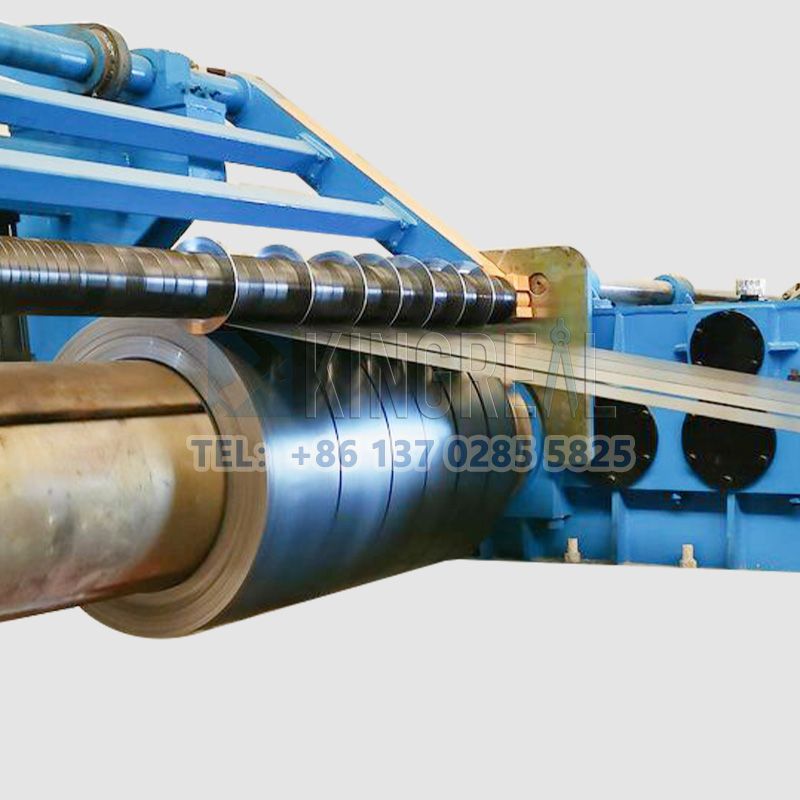
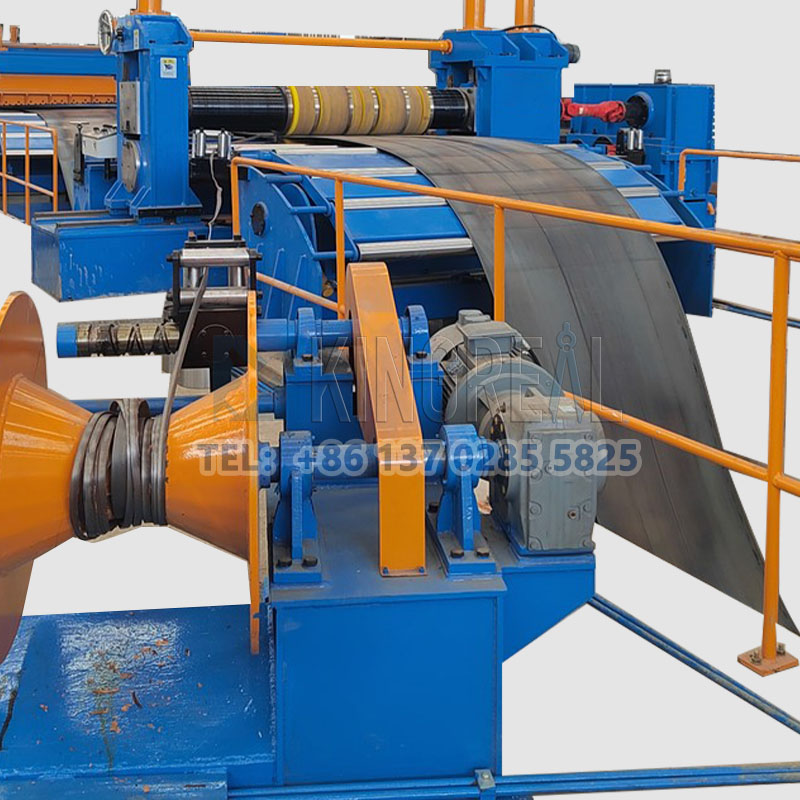
The carbon steel slitting machine is specifically designed for the longitudinal slitting of carbon steel materials. It cuts wide carbon steel coils longitudinally into narrow coils that meet production needs, providing standardized raw materials for the processing of various downstream carbon steel products. Unlike ordinary metal slitting machines, carbon steel slitting machines are specifically optimized for the material characteristics, hardness, and processing requirements of carbon steel. They are typically suitable for processing carbon steel coils with thicknesses ranging from 1-6mm, meeting the diverse processing needs of various industries.
A complete carbon steel slitting machine consists of main components such as a decoiler, a main slitter, and a recoiler, along with auxiliary components such as a straightening unit, guiding device, tension control system, and waste collection device. Through the precise coordination of these components, the carbon steel slitting machine achieves efficient and accurate slitting of carbon steel coils. Its operation is simple and easy to understand; operators can complete the daily operation and maintenance of the equipment after simple training. This further reduces the company's labor training costs, allowing the carbon steel slitting line to quickly integrate into various production scenarios.
Revolutionary Advantages of Carbon Steel Slitting Line
① Improved Production Efficiency
Traditional carbon steel slitting depends mostly on manual operation, which is not only ineffective but also prone to operational mistakes causing production disruptions. From uncoiling, straightening, slitting, to rewinding, the carbon steel slitting machine uses fully automated control throughout the whole process, needing minimum manual involvement and successfully lowering errors and disturbances produced by hand operation. At the same time, the carbon steel slitting line has an improved blade changing system with a modular design that allows for quick blade changes and greatly cuts downtime. Moreover, the carbon steel slitting machine's operating speed is significantly enhanced; for carbon steel coils ranging in thickness from 1 to 6 mm, the slitting speed may be flexibly adjusted to match the material thickness.
② High-precision breakthrough
The carbon steel slitting machine is equipped with an intelligent tension control system and an automatic centering correction system. Tension is adjusted via a magnetic powder clutch or servo motor to maintain constant tension on the material during slitting, with tension fluctuations controlled within ±1%. Simultaneously, photoelectric sensors monitor the material edge position in real time and automatically adjust lateral offset to ensure that the carbon steel coil does not deviate or stretch during slitting. In addition, the carbon steel slitting line has extremely high slitting precision, producing carbon steel strips with smooth, burr-free edges, eliminating the need for subsequent grinding and significantly reducing losses in subsequent processing, thus improving product yield.
③ Reduced Operational Difficulty
The carbon steel slitting machine integrates a PLC control system and IoT monitoring functions. Through the human-machine interface, operators can predetermine process parameters like slitting width, speed, and tension, so enabling exact parameter adjustment without several manual adjustments. At the same time, the IoT monitoring capability lets you keep tabs on the operating state of your equipment in real time, including tool wear, the temperature of a carbon steel slitting line, and changes in tension. If it break down, the carbon steel slitting machine will automatically sound an alarm and indicate the source of the problem, so allowing quick troubleshooting and reducing downtime.
④ High Adaptability
The carbon steel slitting machine has great flexibility since it works with carbon steel coils with varied tensile strengths, widths, and thickness (1-6mm). It can precisely slit hot-rolled, cold-rolled, and high-quality carbon steel, meeting various processing demands including automotive components, mechanical gears, and cutting tools. Moreover, the flexible adjustment of the cutter shaft spacing of the carbon steel slitting line enables quick changing of slitting specifications depending on production demands without device replacement, hence greatly increasing production versatility.
Practical Applications of Carbon Steel Slitting Machines
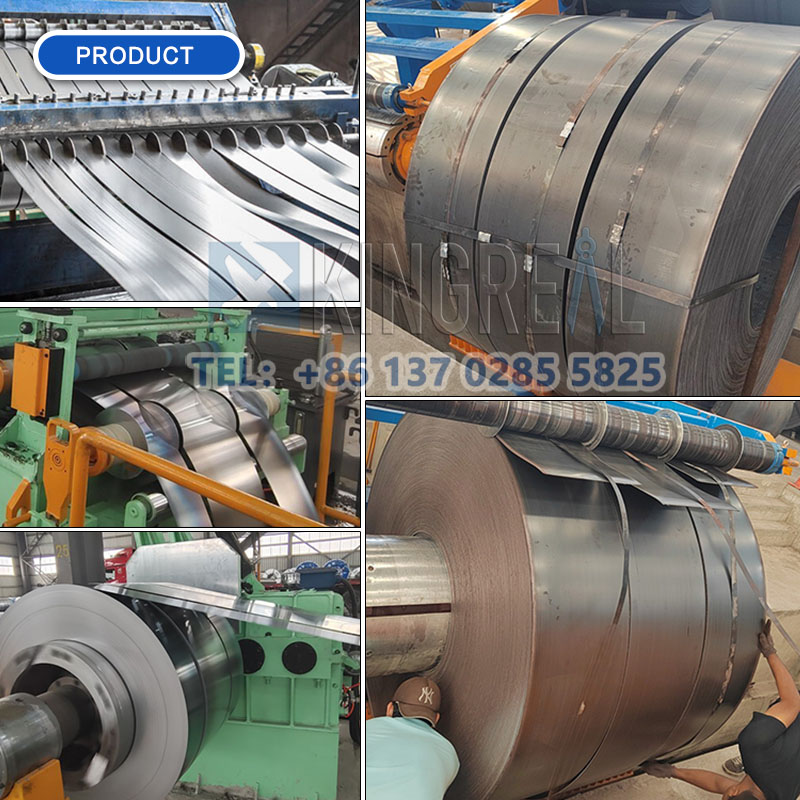
Low-carbon steel strip is the perfect raw material for car body panels, structural parts, chassis components, and other products in the automotive sector since it has great formability and weldability. Wide low-carbon steel coils can be sliced into thin coils satisfying automotive manufacturing criteria by carbon steel slitting lines. The slitting carbon steel strips have smooth edges and satisfy precision criteria, enabling them to be directly utilized in stamping, welding, and other processing phases without additional grinding, therefore enhancing the manufacturing efficiency and quality of vehicle components.
In the machining industry, medium-carbon steel strip combines strength and ductility, making it suitable for manufacturing mechanical parts such as gears, axles, and connecting rods. These parts have high requirements for the dimensional accuracy and mechanical properties of carbon steel strips. Carbon steel slitting machines, with their high-precision slitting capabilities, can ensure that the dimensional errors of the slitting medium-carbon steel strips are controlled within the allowable range, while avoiding any impact on the mechanical properties of the carbon steel strips during the slitting process, providing high-quality raw materials for subsequent machining.
Besides automotive manufacturing and machining, carbon steel slitting machines are also widely used in hardware products, building materials, and home appliance manufacturing industries. In the hardware industry, carbon steel slitting lines can cut carbon steel coils into narrow strips of varying widths for manufacturing products such as nails, wire, and hardware accessories. In the construction materials industry, the carbon steel strips slitted by these carbon steel slitting machines can be used to manufacture steel structures, color-coated steel sheets, scaffolding, and other building materials. In the home appliance manufacturing industry, the carbon steel strips slitted by these carbon steel slitting lines can be used to manufacture appliance casings, inner tanks, and brackets, meeting the production needs of various home appliances such as refrigerators, washing machines, and air conditioners.
For more information about the carbon steel slitting machines, please feel free to contact KINGREAL SLITTING!
