

In modern precision manufacturing, aluminum steel coil slitting machines are primarily used to precisely cut coils of raw material into narrower metal strips of varying widths. The strips are widely utilized across industries such as pipe manufacturing, roll forming and profile processing, hardware stamping, and metal processing service centers. Given the significant variations in processing standards, precision requirements, and production volumes across different industries and projects, the criteria for selecting the appropriate aluminum steel coil slitting line differ accordingly.
For precision manufacturing enterprises, selecting the right aluminum steel coil slitting machine directly determines the production line's efficiency, the precision of the finished product, material utilization rates, and long-term profitability. A high-performance, highly adaptable aluminum steel coil slitting line can effectively enhance slitting precision, minimize raw material waste, and reduce defect rates. Conversely, an improperly selected machine is prone to issues such as slitting deviations, material wrinkling, and excessive scrap generation; these problems not only disrupt production schedules but also increase equipment wear and production costs.
Therefore, when selecting a aluminum steel coil slitting machine for a precision manufacturing line, it is essential to comprehensively evaluate key factors such as processing performance, adaptability, automation level, service life, and operation and maintenance costs.
Clarifying Material Characteristics and Thickness
The primary principle in selecting an aluminum steel coil slitting line is to precisely match the equipment to the characteristics and thickness range of the materials to be processed. Precision manufacturing primarily involves aluminum, carbon steel, and stainless steel. These materials differ vastly in hardness, toughness, and wear resistance, imposing distinct requirements on the machine's structural rigidity, tooling material, and slitting power.
Aluminum, for instance, is relatively soft with moderate toughness; it causes minimal tool wear during slitting, allowing for precision processing without the need for ultra-high-rigidity configurations. In contrast, carbon steel and stainless steel are harder and more wear-resistant, demanding superior machine stability, higher tool hardness, and greater load-bearing capacity. Specialized, high-specification models are required to prevent issues such as burrs and edge deformation during the slitting process. Material thickness is a critical factor in the design of aluminum steel coil slitting machines; the equipment structure, arbor configuration, and drive systems required for processing thin versus thick materials differ significantly. KINGREAL SLITTING offers a comprehensive range of aluminum steel coil slitting lines tailored to various operational needs, capable of precision slitting for metal coils ranging from 0.3mm to 16mm in thickness. Our diverse machine models are precisely matched to specific production scenarios, such as precision slitting for thin materials or heavy-duty slitting for thick materials.
You can provide KINGREAL SLITTING with details regarding the material type, thickness, and precision requirements to identify the specific aluminum steel coil slitting machine model best suited to your needs.
Slitting Methods and Blade Configuration
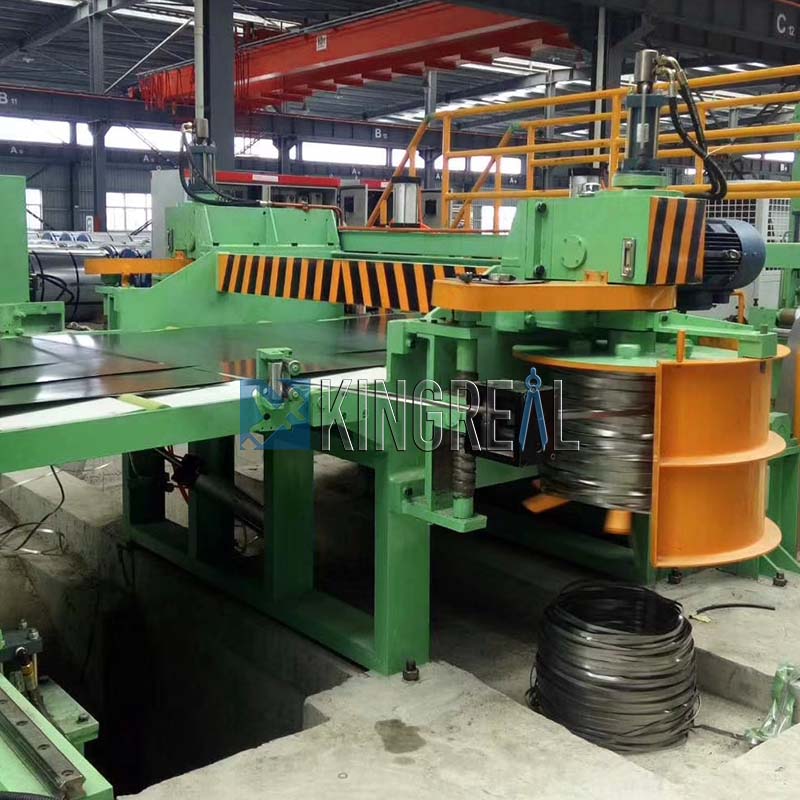
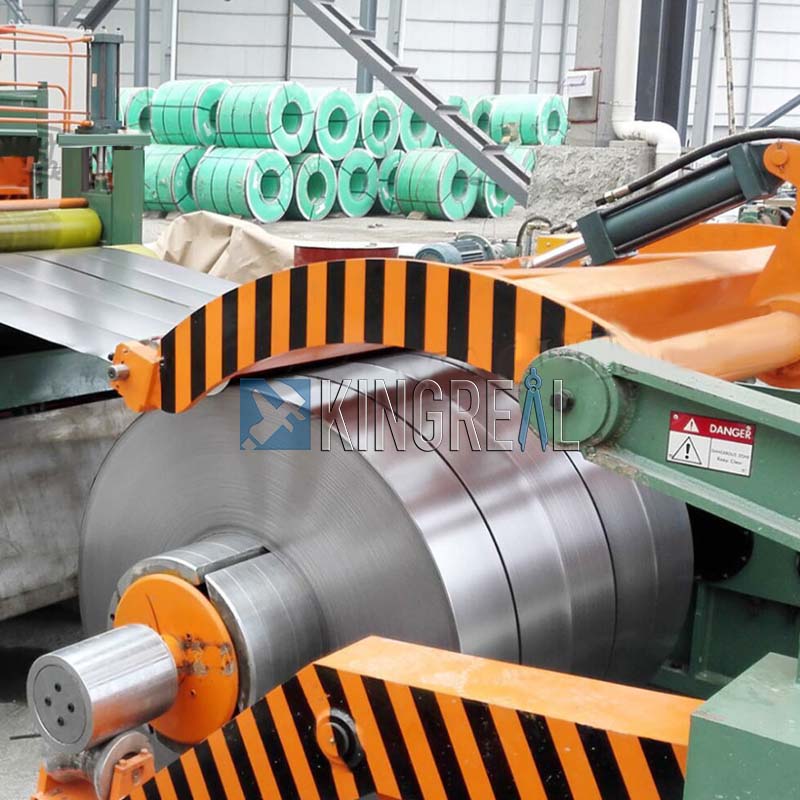
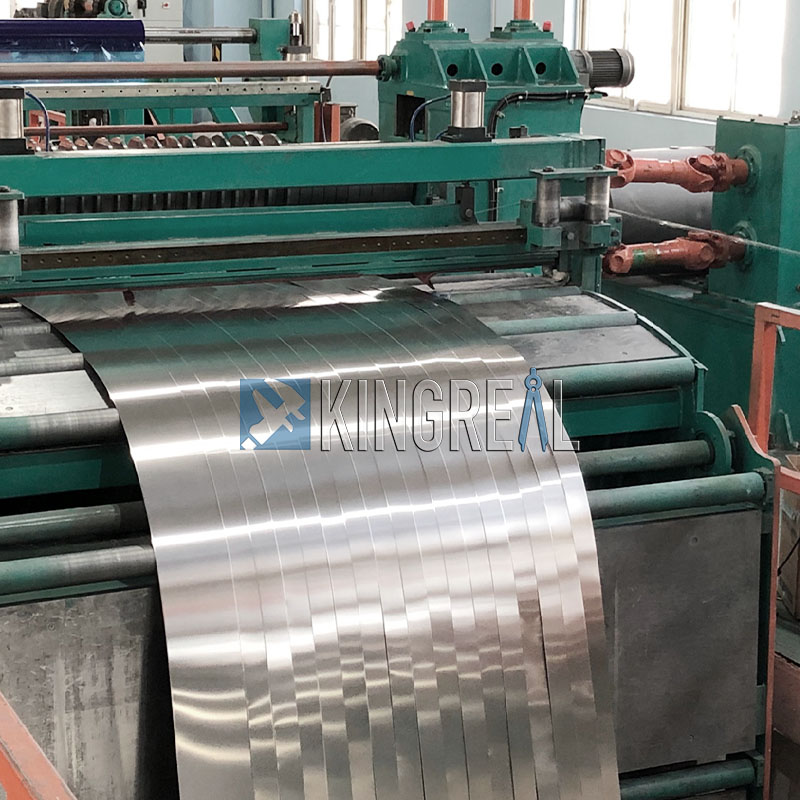
Precision manufacturing typically utilizes two main structural configurations for aluminum steel coil slitting lines: single slitter head and dual slitter head designs, each catering to different precision and output requirements. Single slitter head aluminum steel coil slitting machines are ideal for small-to-medium batch production with standard precision needs, while dual slitter head aluminum steel coil slitting lines allow for in-line blade changes, meeting the demands of high-volume precision manufacturing.
Furthermore, the choice of blade material is strictly determined by the material being processed. Common industry materials include Cr12MoV, 42CrMo, high-speed steel (HSS), and carbide alloys. Blade for carbon steel is cost-effective and suitable for softer materials like aluminum, though it offers lower wear resistance. Cr12MoV and 42CrMo alloy blades provide superior hardness and wear resistance, making them suitable for slitting harder materials such as carbon steel and stainless steel. High-speed steel blades offer excellent all-around performance, making them ideal for high-speed, high-volume precision production environments.
Emphasis on Automation Control and Safety Systems
KINGREAL SLITTING aluminum steel coil slitting machines are equipped with advanced automation control systems, featuring core capabilities such as automatic tension control, intelligent speed regulation, and real-time digital monitoring.
The automatic tension control system maintains uniform and constant tension throughout the process, effectively eliminating issues such as material misalignment, wrinkling, and stretching deformation during slitting;
The intelligent automatic speed control function enables programmed operation; the aluminum steel coil slitting line automatically and smoothly decelerates when the slitting length reaches the preset standard or when processing the tail end of the coil, and automatically stops when the material runs out;
A real-time digital monitoring system captures key data—such as rotational speed, tension, and slitting precision—throughout the operation, allowing operators to monitor the machine's status in real-time, anticipate potential faults, and precisely adjust process parameters.
Regarding safety, the KINGREAL SLITTING aluminum steel coil slitting machine offers optional protective shield and comes standard with an intelligent safety alarm system and safety interlocks to mitigate mechanical operation risks. To further ensure production safety, operators must wear appropriate protective gear (such as gloves and goggles), and enterprises must conduct regular safety training and workshop inspections.
Routine Aluminum Steel Coil Slitting Line Maintenance
Precision manufacturing enterprises should establish a three-level (daily, weekly, and monthly) routine maintenance mechanism for the aluminum steel coil slitting machine to ensure meticulous management of its core components.
Daily maintenance focuses on the condition of the cutting tools; they must be kept sharp and clean, with dull blades sharpened and damaged ones replaced promptly. Additionally, the alignment of blades and arbors must be calibrated to prevent slitting deviations and excessive burrs.
Weekly tasks involve calibrating the tension control system to ensure responsive adjustment and uniform output, thereby minimizing material waste. Comprehensive lubrication of transmission components—such as bearings and gears—is also required to prevent mechanical wear, jamming, or abnormal noise.
Monthly maintenance entails a systematic inspection of the electrical system, including cleaning control panels and sensors, as well as tightening electrical connections and mechanical fasteners to ensure circuit stability and fault-free operation.
As a professional manufacturer and supplier of aluminum steel coil slitting lines, KINGREAL SLITTING provides high-precision, highly stable, and adaptable equipment, along with customized selection solutions.
If you have any questions while selecting an aluminum steel coil slitting machine, or if you are looking for a high-end aluminum steel coil slitting line suitable for precision manufacturing applications, please feel free to contact KINGREAL SLITTING for professional service.