In the modern metal processing industry, metal coil slitting lines serve as a crucial bridge connecting upstream steel mills with downstream precision manufacturing. While metal coil slitting machines can theoretically process the vast majority of metal coils, there is a significant technical gap between merely processing a material and achieving high-quality results.
Variations in hardness, ductility, surface characteristics, and thickness among different metals dictate distinct requirements for blade configuration, tension control, and winding processes.
This article provides an in-depth analysis of the technical challenges associated with slitting mainstream materials, helping you assess the compatibility between materials and metal coil slitting lines.
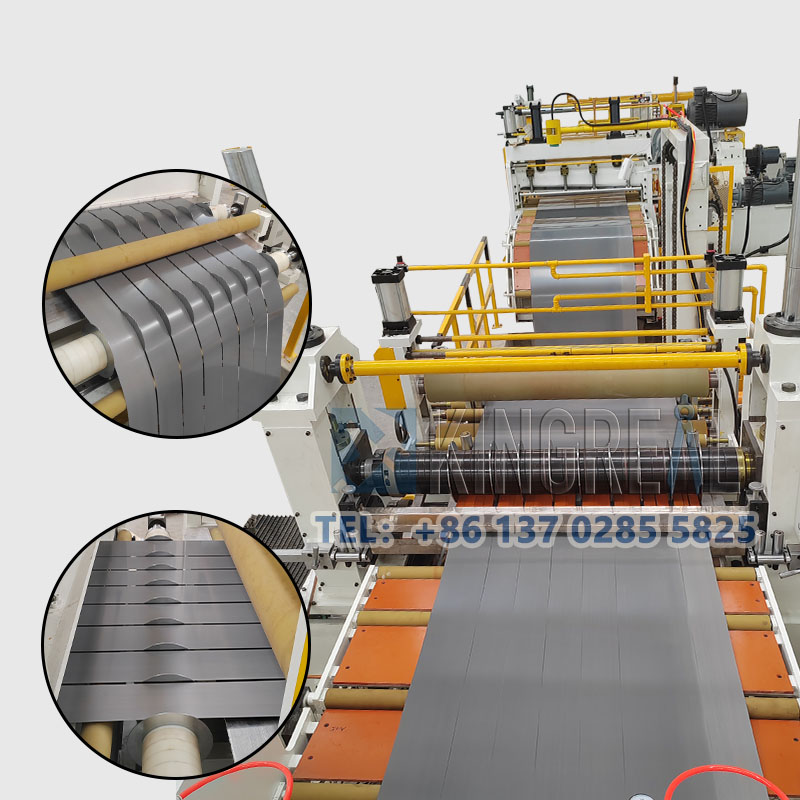
1. Metal Coil Slitting Machine for Ferrous Metals
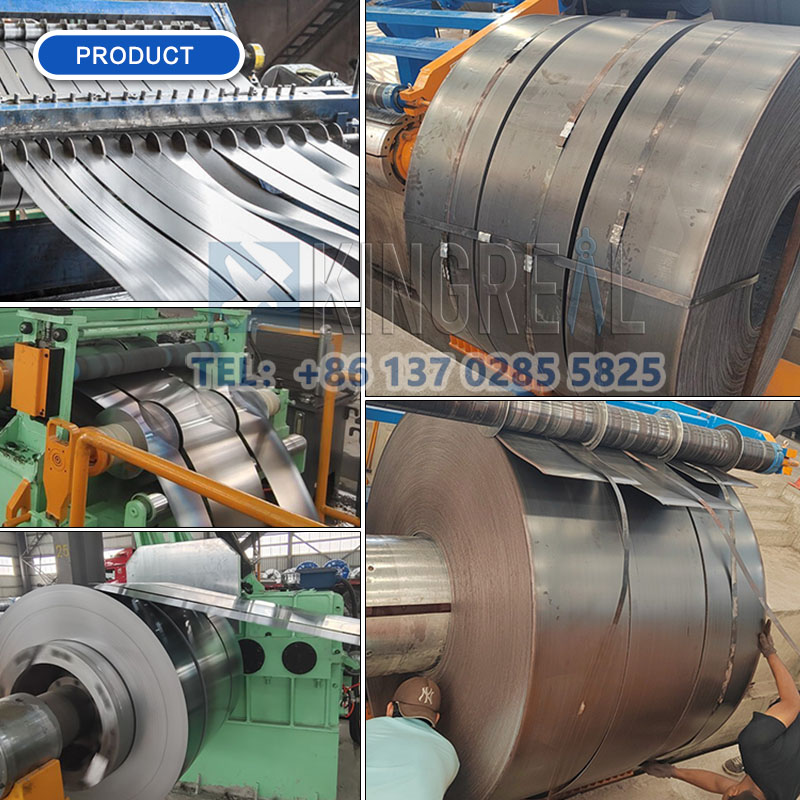
Ferrous metals represent the largest volume and most widely used category of materials in slitting operations, accounting for over 70% of orders for global metal coil slitting lines.
Carbon Steel Coils: Distinctions Between Hot-Rolled and Cold-Rolled
Hot-Rolled Carbon Steel: Typically ranges from 1.5 mm to 20 mm in thickness. It is characterized by good toughness and uneven internal stress distribution.
Processing Challenges: Slitting thick plates places extreme demands on machine frame rigidity. The release of internal stress makes the strip prone to wandering, necessitating a high-performance Automatic Edge Position Control (EPC) system.
Applications: Structural steel for construction, support brackets, and large-diameter welded pipes.
Cold-Rolled Carbon Steel: Typically ranges from 0.1 mm to 3 mm in thickness. It features a smooth surface finish and tight dimensional tolerances.
Processing Challenges: The primary focus is maintaining consistent width across the finished narrow strips. This requires circular slitting knives with exceptional radial and axial runout precision.
Applications: Automotive body panels, equipment casings, and precision hardware.
Stainless Steel Coils
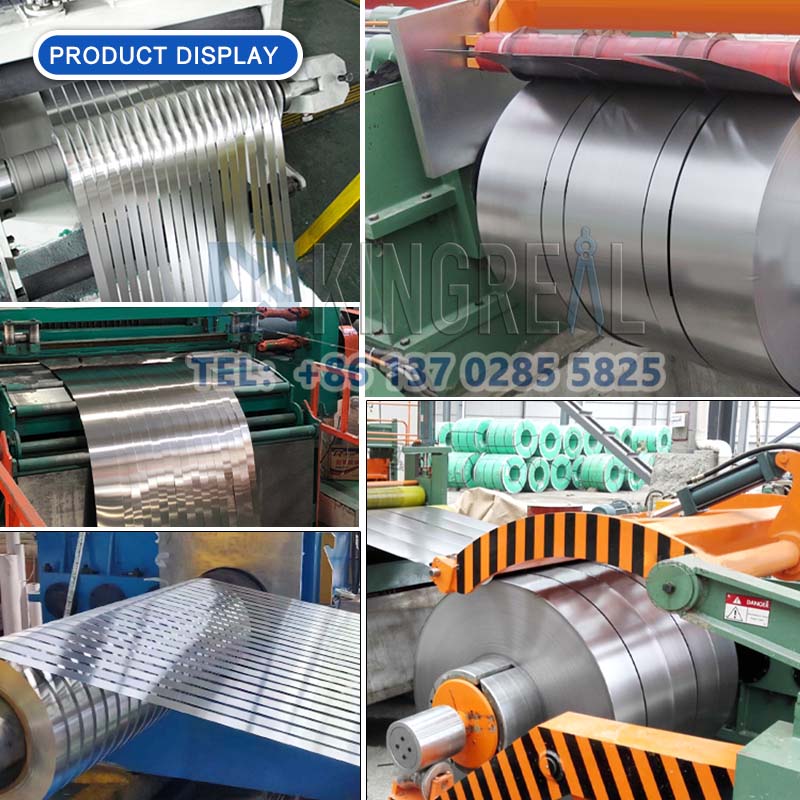
Stainless steel is known for its high hardness and susceptibility to work hardening.
Technical Requirements: Standard high-speed steel (HSS) blades wear out rapidly when processing 304 or 316 stainless steel, leading to excessive edge burrs. High-quality tungsten carbide blades are essential.
Surface Protection: Decorative-grade stainless steel requires a zero-tolerance approach regarding surface scratches. The metal coil slitting machine requires the installation of Bakelite rollers or felt-based tensioning stations at the feeding and recoiling ends to protect mirror-finish or brushed surfaces.
Silicon Steel
This represents one of the most challenging areas in the slitting process, encompassing both CRGO and CRNGO varieties.
Key Challenge: Magnetic properties are extremely sensitive to physical damage. Even minute edge burrs or scratches can increase eddy current losses.
Line Requirements: Precision knife gap adjustment (at the micron level) and a dust-free conveying environment are essential to ensure the flatness of the slit edge meets aerospace-grade standards.
Galvanized and Color-Coated Coils
Challenge: Preventing the zinc layer from cracking or the paint coating from peeling during the slitting process.
Solution: Utilization of specialized circular knife angles combined with scratch-resistant, cushioned rubber rings to ensure the corrosion resistance of the cut edge remains intact.
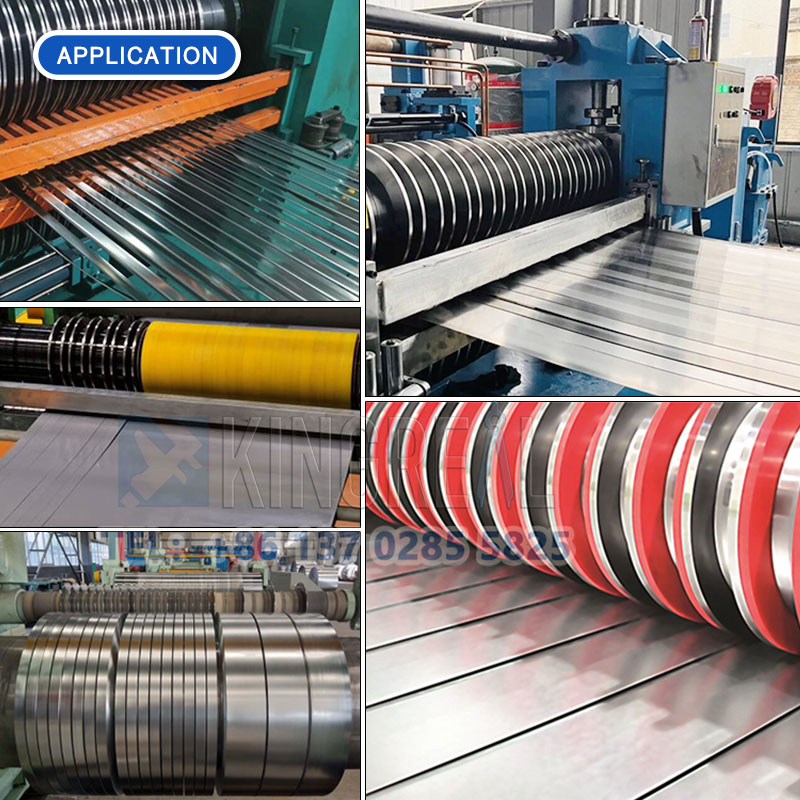
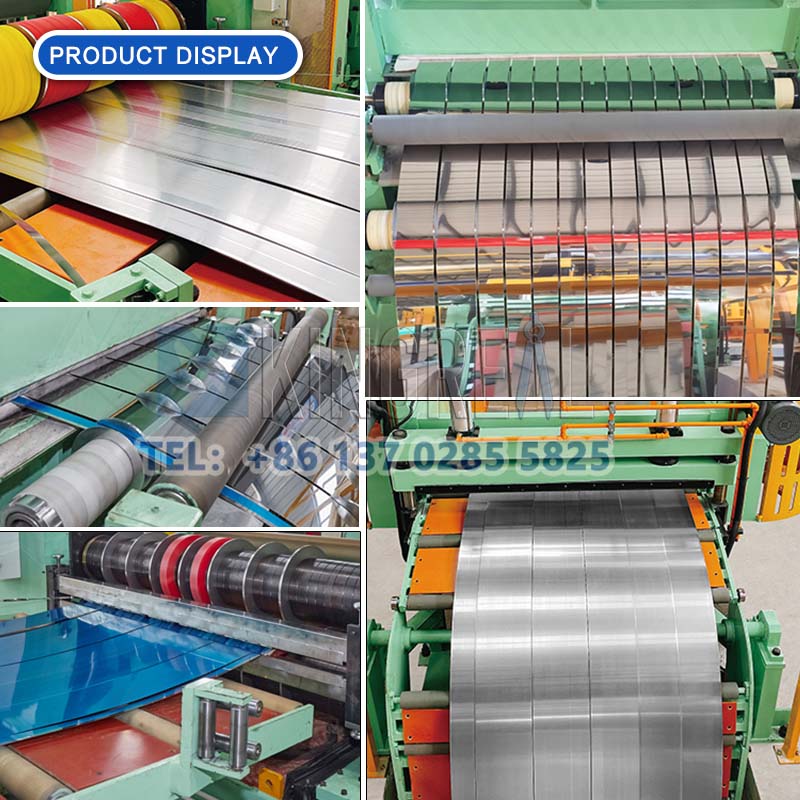
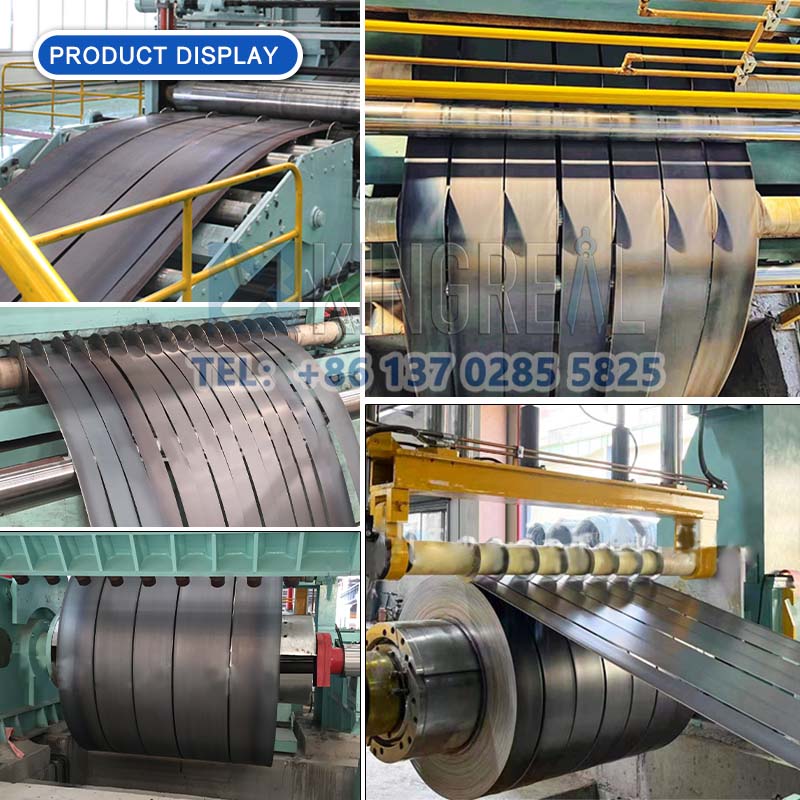
2. Metal Coil Slitting Line for Non-Ferrous Metal Coils
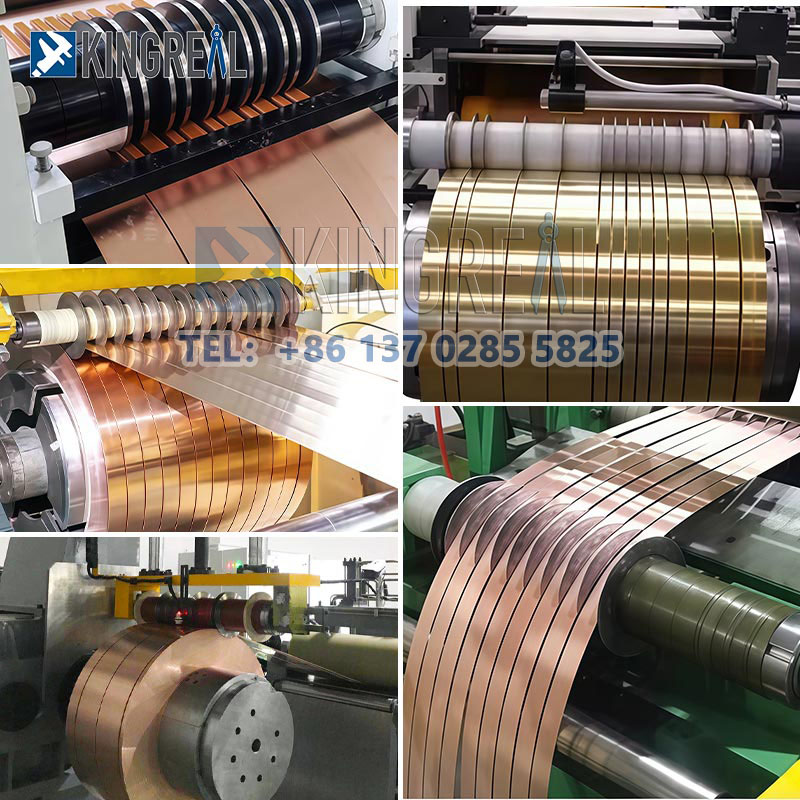
Materials such as aluminum and copper are relatively soft and highly ductile; the core of their processing lies in constant tension control systems.
Aluminum and Aluminum Alloys
The trend toward lightweighting has caused a surge in demand for aluminum in the new energy sector.
Challenge: The material tends to adhere to the blades and is highly susceptible to edge curling (burrs) and elongation deformation under shearing forces.
Configuration: High-frequency blade cleaning devices and closed-loop tension feedback systems are required to prevent the strip from thinning or developing wavy edges during recoiling.
Copper and Copper Alloys
Particularly ultra-thin copper foils (as thin as 0.03mm) used in lithium batteries and PCBs.
Challenge: The material is extremely brittle and highly prone to wrinkling.
Customized Solution: KINGREAL SLITTING provides high-sensitivity air-bearing tensioning stations and anti-static conveying components for these clients, ensuring that ultra-thin foils do not shed particles or snap during high-speed operation.
Technical Note: For niche specialty alloys such as titanium alloys and nickel strips, it is usually necessary to recalculate stand loads based on the material's shear strength and to customize specific heat-treated blade solutions.
3. Key Factors Determining Material Processability
Before finalizing the metal coil slitting machine configuration, the following three major aspects must be evaluated:
1
Tensile Strength and Hardness
These determine the main motor power and the rigidity of the slitter head. High-hardness materials require a shearing process characterized by low speeds and high torque.
2
Thickness Range
Blade overlap and clearance must be precisely matched to the material thickness. It is difficult for a single machine to perfectly handle the slitting of both 0.1mm and 10mm thick materials.
3
Surface Sensitivity
This determines whether the metal coil slitting line requires equipment such as laminators, rubber-covered pressure rolls, and non-contact length measurement systems.
4. How to Choose the Best-Fit Metal Coil Slitting Line?
When purchasing a metal coil slitting machine, please focus on the following details:
Material Type: What is the ratio of ferrous metals to non-ferrous metals in your orders?
Precision Requirements: Is a width tolerance of within ±0.05mm required for the finished narrow strips? What is the maximum allowable burr height?
Tool-Changing Efficiency: If you need to frequently switch between different materials, opting for a dual-head slitter is recommended to minimize downtime.
Modern metal slitting technology can perfectly handle materials ranging from carbon steel and stainless steel to aluminum and copper foils. However, consistent, high-quality output relies on a deep understanding of material properties. Customizing blade materials, tension control logic, and protective components for specific materials is key to improving production line yield.
If you are looking for a high-precision metal coil slitting line solution capable of handling complex materials, the engineering team at KINGREAL SLITTING can provide customized metal coil slitting machine evaluations and technical support.
Contact KINGREAL SLITTING to receive a professional quote and technical proposal for your metal coil slitting line!