In the food and beverage packaging industry, tinplate is widely used to manufacture various food cans, beverage cans, and twist-off caps due to its excellent corrosion resistance, weldability, and aesthetic appeal.
However, the material's extremely thin gauge and sensitivity to surface coatings place rigorous demands on processing equipment.
This article details the core design and configuration features of tinplate cut to length lines used in the food packaging industry, exploring how they meet the high standards required by can manufacturers.
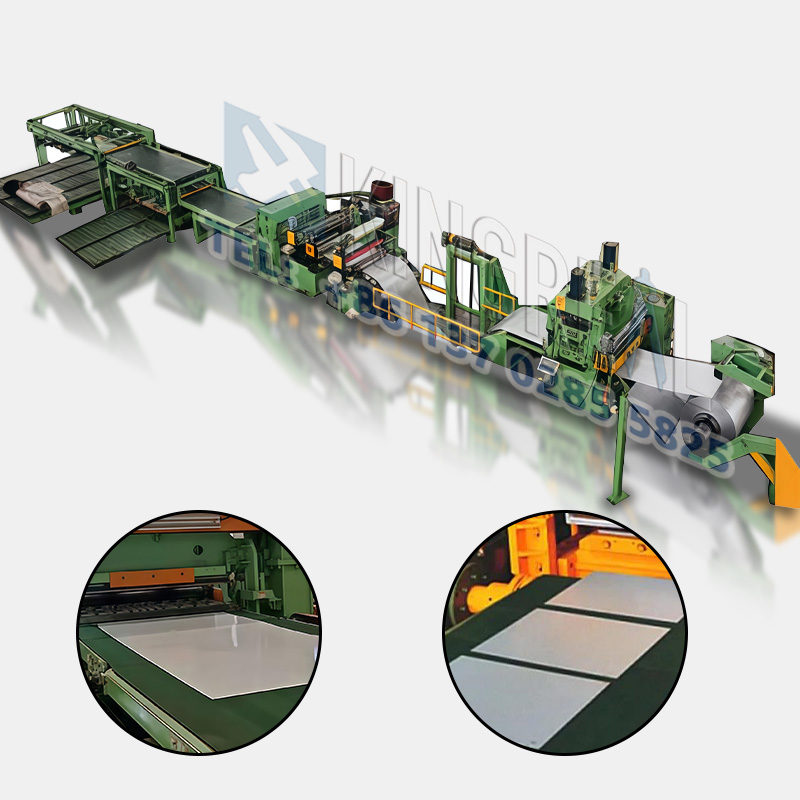
1. Roll System Design and Superior Surface Protection
Since tinplate comes into direct contact with food, any surface scratches, dents, or damage to the tin coating can lead to uneven subsequent spraying or corrosion of the can body. Consequently, surface protection is a primary consideration in the design of tinplate cut to length machines.
●Application of Polyurethane (PU) Coated Rolls
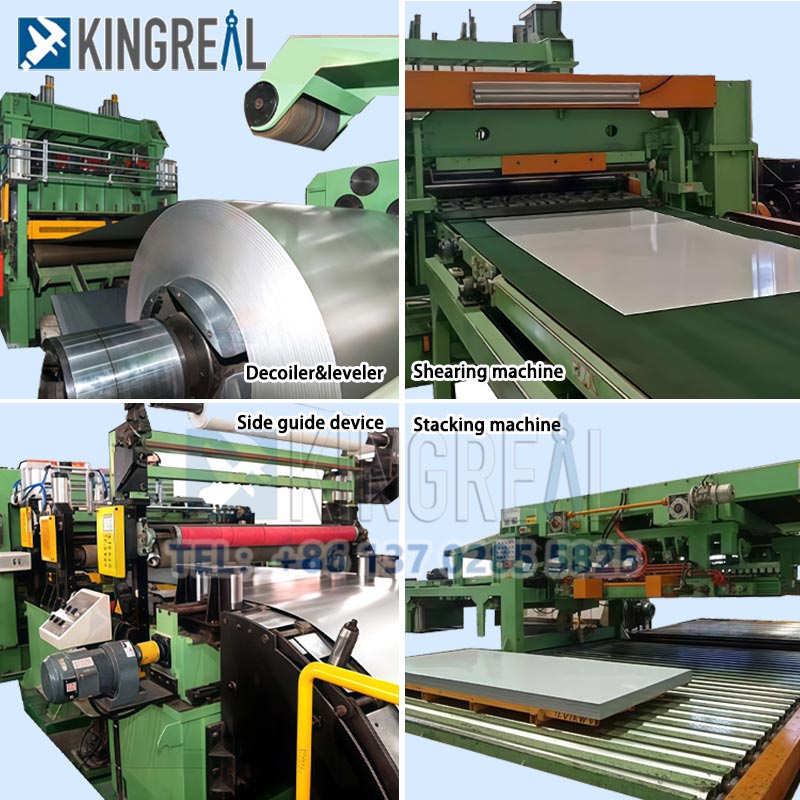
For feed pinch rolls, steering rolls, and transition conveyor rolls, all metal surfaces contacting the steel sheet are coated with high-hardness, wear-resistant polyurethane (PU).
High-Precision Polishing: After coating, roll surfaces undergo precision grinding and polishing to ensure the absence of sharp edges or corners.
Hardness Matching: Coating hardness is strictly calculated. If too soft, rolls deform easily during high-speed operation, causing indentation marks; if too hard, they fail to cushion foreign particles effectively, leading to scratches on the tin coating.
●6-High Leveler
Tinplate falls into the category of thin-gauge sheet metal; standard 4-high levelers struggle to eliminate internal stresses and are prone to leaving indentation marks on the sheet surface.
Intermediate Support Roll Structure: By incorporating intermediate rolls between the work rolls and backup rolls, the 6-high leveler allows for smaller work roll diameters, thereby providing more uniform pressure per unit area when leveling thin sheets.
Mirror Polishing Process: All leveling work rolls undergo mirror polishing, achieving a surface roughness of Ra ≤ 0.8 μm. This effectively reduces the risk of localized tin coating extrusion or flaking caused by point-like indentations, ensuring a flat sheet profile and a flawless surface.
2. Shearing Unit
The shearing quality of the tinplate cut to length line directly impacts downstream blanking/stamping and can-body welding processes. Significant burrs on the sheared edge can trigger a chain reaction of issues.
●Specialized Flying Shear System Design
Continuous High-Speed Production: Designed for the high-volume demands of the food industry, the flying shear system utilizes synchronous tracking technology to enable non-stop shearing, ensuring stable, high-speed operation for thin sheets.
High-Alloy Blades and Closed-Loop Control: Shearing blades are made from high-alloy cold-work die steel and precision-ground. A high-precision servo system controls the shear clearance, allowing for fine-tuning and closed-loop regulation to ensure clean cuts and minimize burr formation.
3. Conveying, Swing Loop, and Tension Management
Fluctuations in strip tension during the operation of the tinplate cut to length machine are a primary cause of surface scuffing.
●Swing Loop
A sufficient suspended material looper must be maintained between the decoiler and the leveling/feeding unit.
Slack Conveying: The strip should remain in a naturally slack, suspended state within the swing loop; forced tensioning is strictly prohibited. Excessive tension not only alters the sheet profile but also causes friction between the strip and guide mechanisms, leading to surface "friction whitening."
●Pressure-Free Suspended Belt Conveying
Traditional metal pinch rollers are eliminated in the discharge section following the shearing unit.
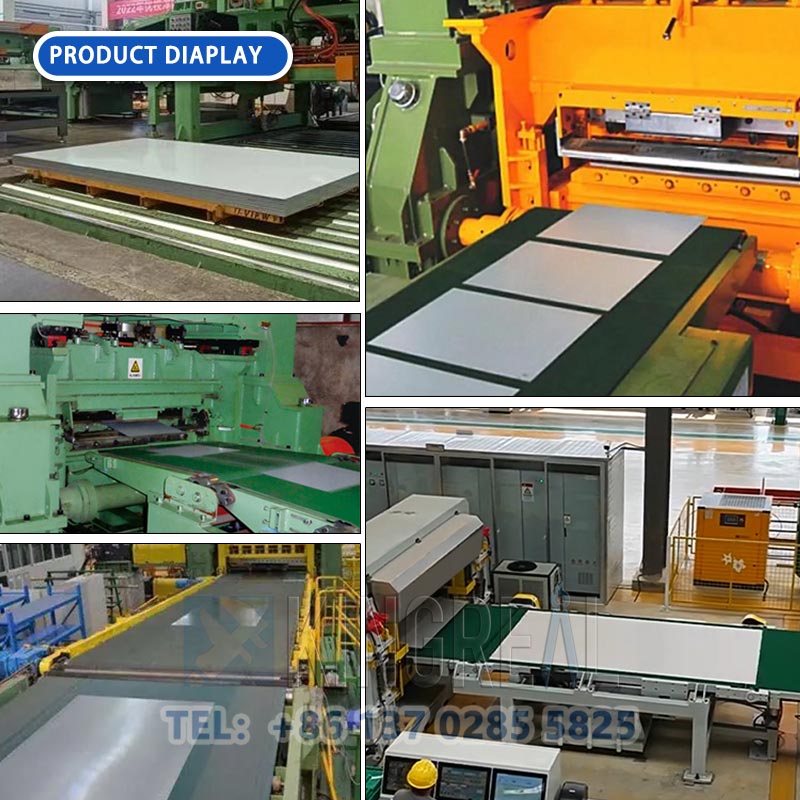
Belt-Supported Transport: High-friction suspended belts directly support the finished sheets, preventing scuffing on the underside caused by metal roller slippage.
4. Automated Precision Palletizing Station
●Flexible Air-Cushion Blank Handling
Integrated Air-Cushioning: The palletizer features an integrated airflow system that envelops the sheets in an air cushion as they descend.
Impact Deceleration: The air cushion significantly slows the descent of the sheets, ensuring smooth stacking and preventing scratches caused by hard impacts. Pneumatic Sheet Alignment: Synchronized pneumatic stops are used to gently guide and align the sheets, preventing high-speed, hard impacts against the stop blocks.
●Pallet Rubber Protection
The surface of the discharge pallet at the stacker must be covered with a thick rubber pad. This prevents the bottom layer of tinplate sheets from making direct contact with the hard steel pallet, thereby eliminating the risk of scrap loss due to bottom-layer damage.
5. Sheet Geometry, Dimensional Accuracy, and Servo Control
High-speed metal stamping lines in food can manufacturing plants typically require tighter blank tolerances—often by one grade—compared to the general construction materials industry.
Length Tolerance: Must be controlled within ±0.15 mm.
Diagonal Error: Must be kept at ≤0.3 mm to ensure edge consistency during subsequent stamping and blanking operations.
Flatness: Deviation must not exceed 0.3 mm per meter to prevent feeding jams caused by sheet warping.
●Servo Closed-Loop System
Equipped with an advanced servo closed-loop feeding system, the tinplate cut to length line supports dynamic coordination between speed and tension. During low-speed startup or emergency stops, the system ensures smooth transitions, preventing surface scuffing caused by steel strip slippage.
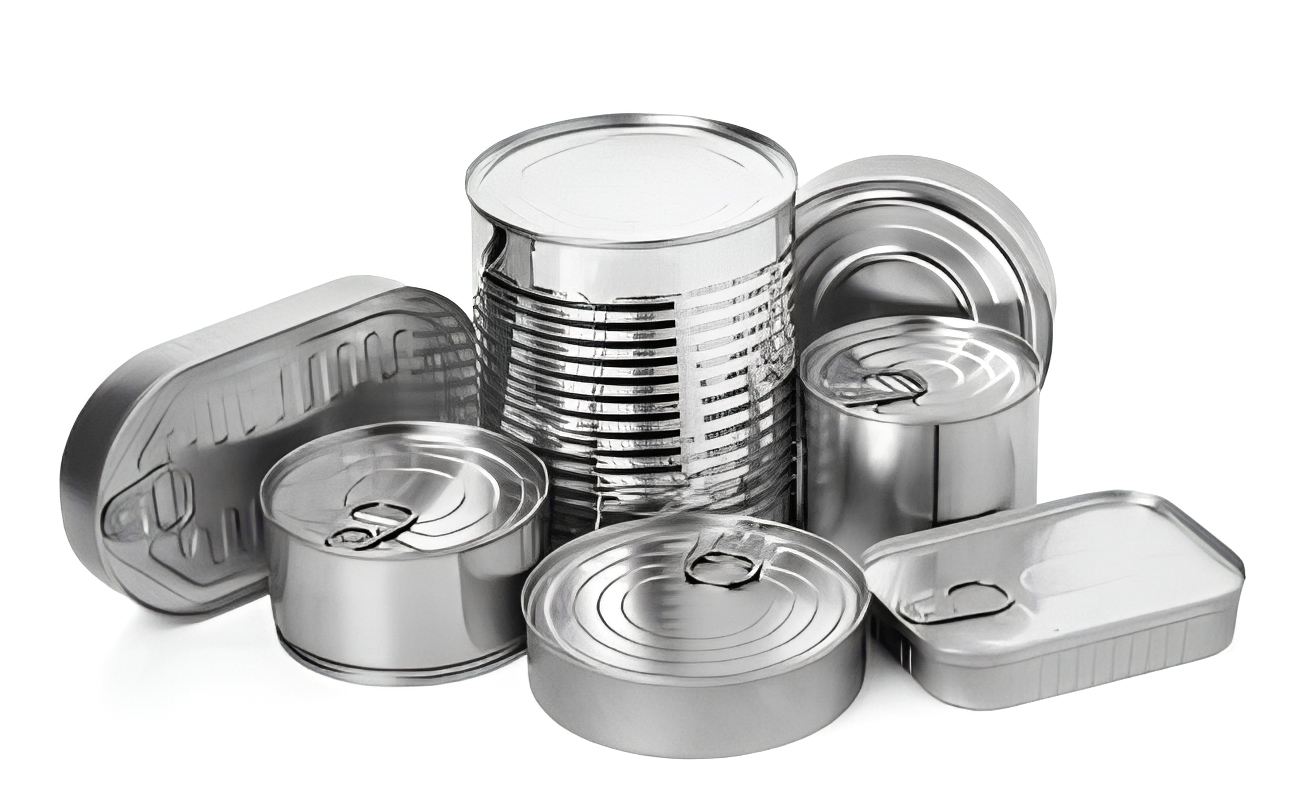
In the food and beverage industry, the tinplate cut to length machine is a critical component in ensuring the safety and aesthetic quality of food packaging. By utilizing specialized technologies—such as rubber-coated roller systems, high-precision flying shears, and air-cushion stacking—KINGREAL SLITTING helps customers boost production efficiency while perfectly preserving the surface quality of every sheet.
If you are looking for a high-performance tinplate cut to length line or require technical consultation, please contact KINGREAL SLITTING directly!