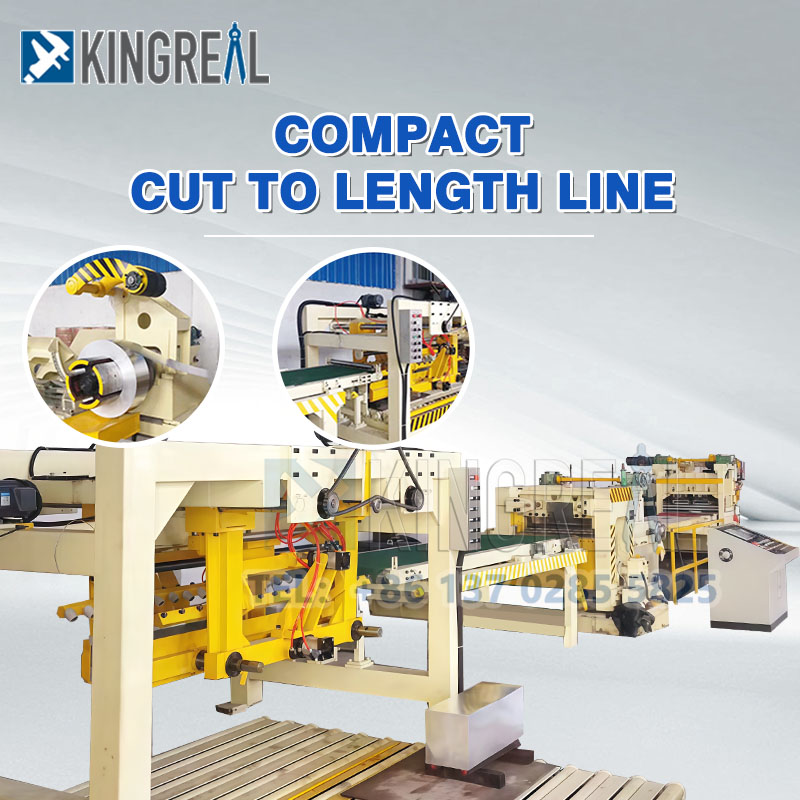
As global manufacturing shifts toward lightweight, compact, and high-efficiency operations, the compact cut to length line has become a preferred choice for small-to-medium-sized metal processing enterprises and startups, thanks to its outstanding advantages: a small footprint, high cost-effectiveness, and stable performance.
This article provides a detailed introduction to the compact cut-to-length line, helping readers fully understand the core benefits of this efficient coil processing equipment.
What is a Compact Cut to Length Line?
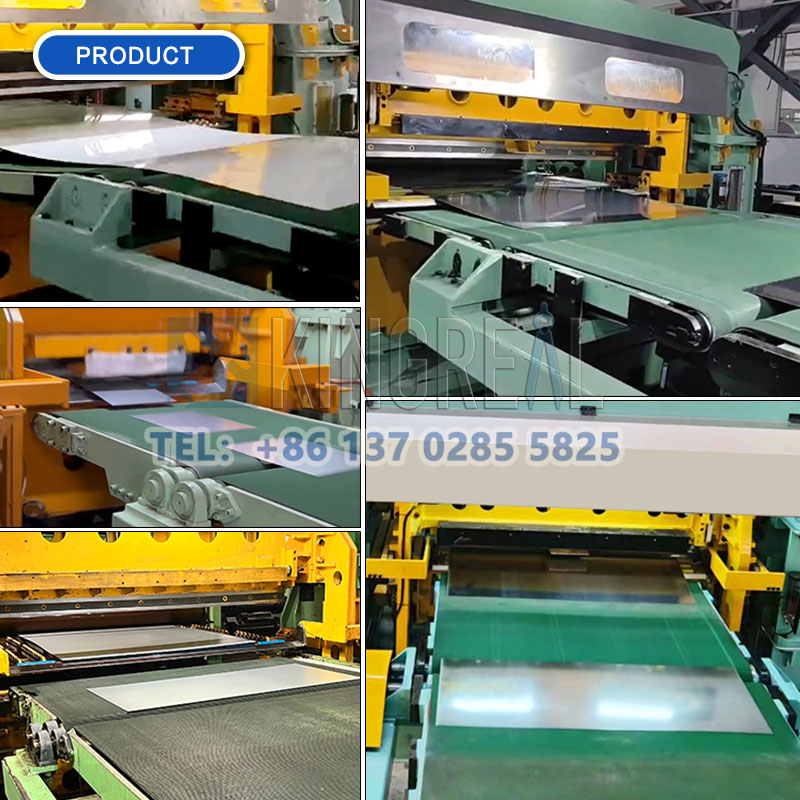
The primary function of a compact cut-to-length line is to process coiled metal raw materials through standardized steps—including uncoiling, leveling, cutting, and automatic stacking—to produce flat, precision-cut sheets.
By optimizing the structure, integrating the layout, and consolidating control systems, the compact cut to length line eliminates the redundant designs found in traditional cut to length machine, achieving a breakthrough that combines a compact footprint with full functionality and stable performance.
The core advantages of the compact cut to length line are threefold:
Small footprint,
Low investment threshold,
Simple operation and ease of use
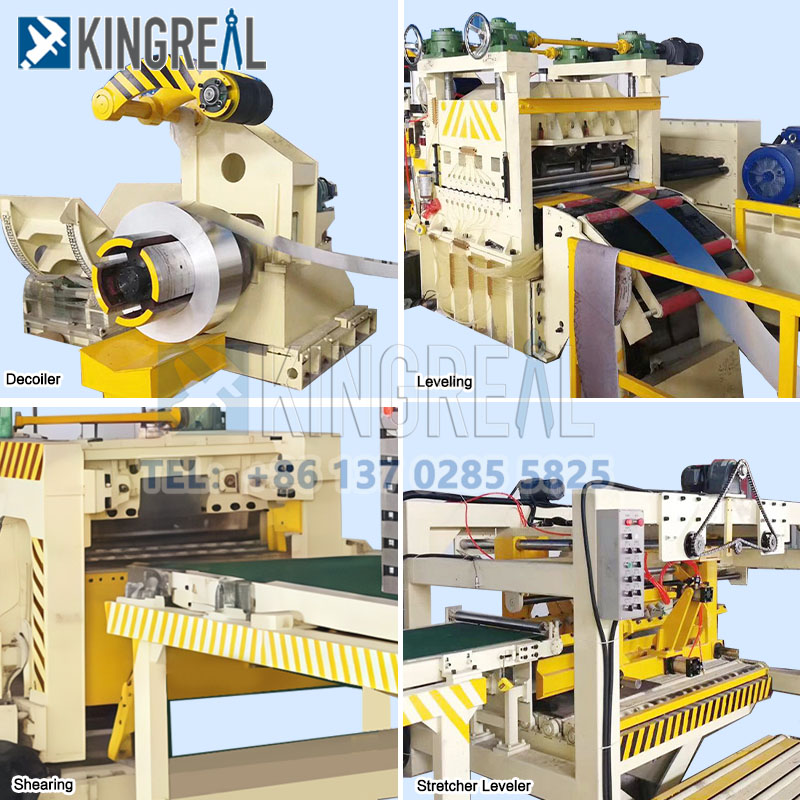
Despite its highly streamlined structure, the compact cut-to-length line retains the four key modules of a standard cut to length machine: uncoiling, leveling, shearing, and stacking.
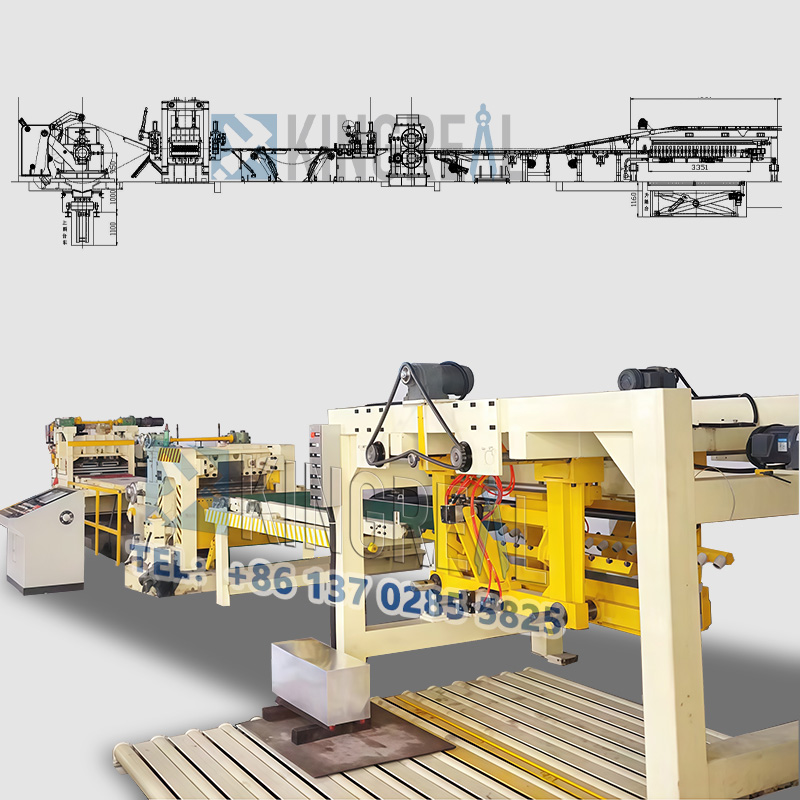
Features of Compact Cut to Length Line
1. Wide compatibility with various materials and thicknesses
The compact cut-to-length line handles a standard thickness range of 0.2mm to 3mm, covering the vast majority of lightweight metal materials commonly used in the market.
The compact cut to length line is specifically optimized for processing thin sheets, effectively preventing common issues such as deformation, scratching, and warping, thereby ensuring exceptional processing stability.
Currently, the compact cut-to-length line is widely used to meet production needs in industries such as decorative building materials, home appliance casings, lightweight structural components, and small hardware accessories.
2. A production model balancing speed and precision
Traditional large-scale, high-speed cut to length machines can reach speeds exceeding 80 m/min, making them better suited for massive, standardized production runs.
In contrast, the compact cut-to-length line is designed with stability and cost-effectiveness as core priorities, maintaining a steady operating speed of 15–20 m/min. This moderate-speed processing mode balances production efficiency with a significantly higher pass rate for finished products.
3. Ultra-low costs for floor space, investment, and O&M
Traditional standard cut to length machines can span tens of meters in total length, requiring factory modifications and dedicated production zones, which entails high costs for space and infrastructure.
In contrast, the compact cut-to-length line features an integrated, compact design with a total length of only 5–8 meters. It saves over 50% of production space compared to traditional cut to length machine and can be installed directly in standard factory buildings without additional modifications.
Furthermore, the compact cut to length line offers an affordable price point, a simple structure, and a low failure rate, significantly reducing the burden of equipment investment and long-term maintenance for enterprises.
Complete Process Flow of Compact Cut-to-Length Line
Step 1: Uncoiling
The compact cut to length line comes standard with a single-head cantilever decoiler capable of handling metal coils weighing 3 to 10 tons, perfectly suiting small-to-medium batch production needs.
The compact cut-to-length line uses a hydraulic mechanism to expand and grip the coil's inner diameter, securing the raw material in place.
A variable frequency drive then precisely regulates the discharge speed, ensuring smooth, steady material release and consistent tension.
Step 2: Leveling
The compact cut to length line is equipped with a leveling unit featuring an 11-roll or 19-roll staggered configuration. This unit subjects the unrolled sheet to repeated alternating bending corrections, thoroughly releasing and eliminating residual stress.
Sheets processed by the compact cut-to-length line are uniformly flat, free from wavy edges or warping, and meet high-precision sheet processing standards.
Step 3: Cutting
The compact cut to length line utilizes a high-precision servo feeding system. Servo motors precisely control feeding length and speed, allowing for flexible customization of sheet dimensions based on production requirements.
Optional hydraulic or pneumatic shearing mechanisms are available to suit the cutting needs of various thin-gauge materials. Length precision reaches ±0.2mm or better, effectively ensuring the accuracy and quality of the finished sheets.
Step 4: Stacking
Finished sheets are smoothly transported via conveyor belt to the stacking area. The compact cut-to-length line features a pneumatic side-push positioning mechanism that automatically corrects sheet alignment, ensuring neat and precise stacking on the pallet.
The automated sheet stacking design not only improves the uniformity of the finished product but also greatly simplifies downstream processes—such as packaging, transport, and warehousing—thereby effectively boosting the overall operational efficiency of the entire production line.
Who Needs Compact Cut-to-Length Line the Most?
With a precise market positioning, the compact cut to length line is specifically designed for enterprises requiring precision processing and small-to-medium batch production. It is ideally suited for three types of users:
1
Low-to-medium volume processing enterprises
These companies have limited monthly production capacity and do not require the continuous, full-load operation of large-scale, high-speed equipment.
The compact cut-to-length line allows for optimal equipment utilization, preventing idle machinery and resource waste.
2
Manufacturers with limited factory space
Amidst high rental costs in industrial parks, the compact footprint of this line saves valuable floor space and maximizes the utilization of the facility.
3
Startups and enterprises undergoing transformation with limited budgets
Many small and medium-sized factories aim to reduce reliance on outsourced processing and achieve in-house production.
With its low initial investment and short payback period, the compact cut to length line effectively enhances the company's return on investment.
In an era where manufacturing is shifting toward greater flexibility and precision, the compact cut-to-length line—thanks to its excellent cost-performance ratio and versatility—has become a key asset for small and medium-sized metal processing plants looking to cut costs, boost efficiency, and strengthen market competitiveness.
For more information about compact cut to length lines, please contact KINGREAL SLITTING directly!