In the metal processing sector, stainless steel is widely used in the manufacturing of home appliances, precision instruments, architectural decorations, and automotive components, thanks to its excellent corrosion resistance and aesthetically pleasing surface finish.
However, surface quality is still a major operational concern for metal producers using cut to length lines to manage stainless steel. Given the great cost of stainless steel—especially mirror-finish, brushed, or high-hardness precision-grade sheets—any scratches, indentations, or dents happening during feeding, leveling, shearing, or stacking might totally erase the material's worth, therefore causing major financial damage.
Thus, choosing a well-configured cut to length machine is critically important if one is to satisfy the strict criteria of precision manufacturing.
Manufacturers must create a configuration plan fit for the particular qualities of their materials when buying a cut to length line. Precision control during feeding and shearing, surface protection during transportation, and an effective stacking system are the main points of interest. A laminating device is an essential, albeit optional, part for stainless steel processing in this situation
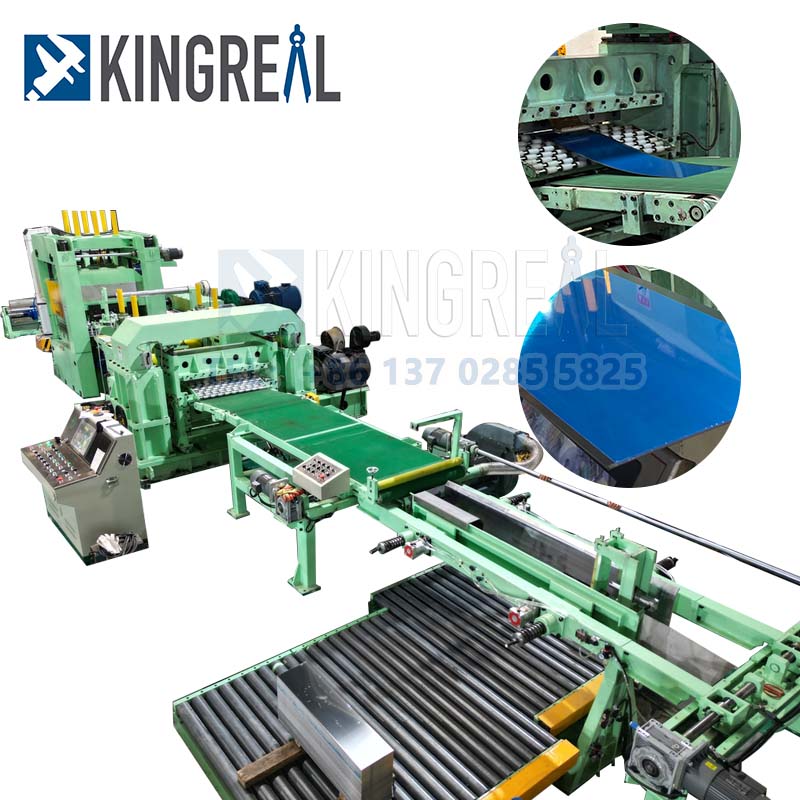
1. Core Configuration: Automatic Laminating Device
In a cut to length machine, the laminating device is typically positioned upstream of the cut-to-length machine, acting as a vital safeguard to ensure a defect-free surface on the processed sheets.
1.1 Equipment Composition and Working Principle
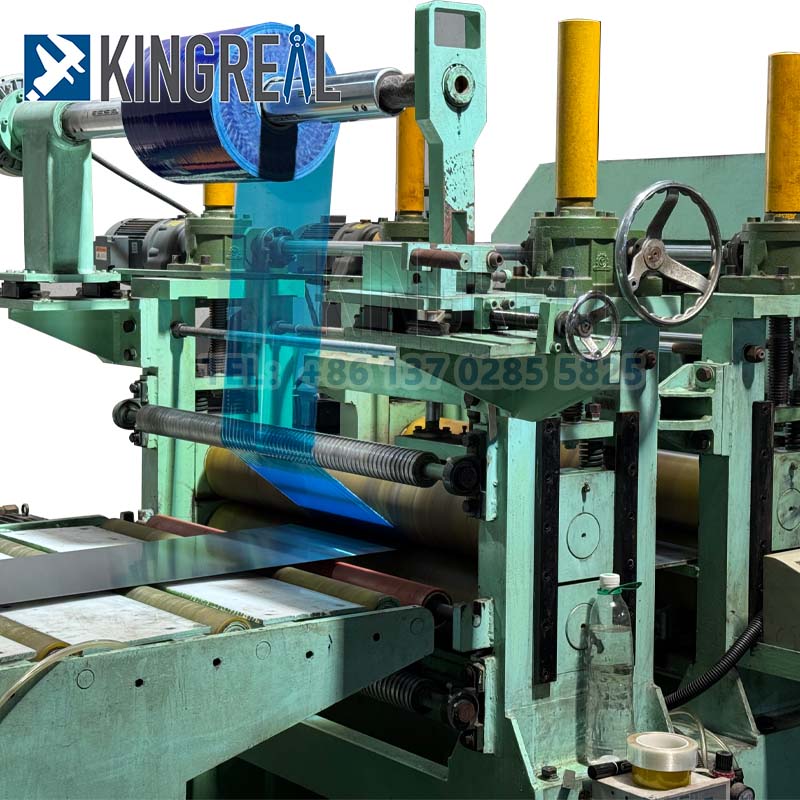
As an optional feature of a cut to length line, the laminating device generally consists of a film-spreading roller (expander), a tension-adjustment mechanism, a pressure roller, and a film-support frame.
After the metal sheet passes through the leveling machine and enters the cut-to-length stage, the unit uses a specialized spreading roller to pre-stretch the protective film (typically made of PE or PVC) and remove any wrinkles. Subsequently, a rubber-coated pressure roller applies uniform pressure to ensure the film adheres smoothly and evenly to the top and/or bottom surfaces of the sheet.
1.2 Automation and Precision Control
Modern cut to length machines are equipped with highly automated laminating devices. The system can automatically match the film application process to the input sheet width and the pre-set cutting length. It typically operates in synchronization with the shearing mechanism, utilizing an NC system to coordinate film cutting with the sheet-shearing process. This automated film application—based on specific sheet dimensions—ensures complete edge-to-edge coverage while eliminating excess film waste.
High-performance cut to length lines include tension sensors to stop bubbles or wrinkles created by inconsistent tension during the application process from forming for precision manufacturing applications requiring tight adhesion and strict adherence to film dimensions.
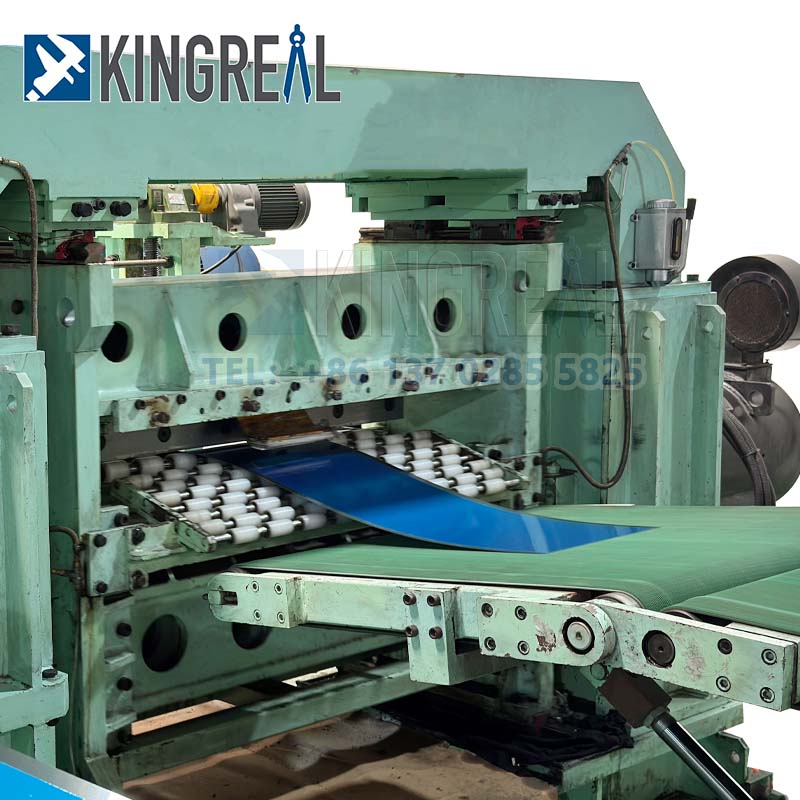
2. Configuration of High-Precision Cut-to-length Machine
Shearing is the core stage of the cut-to-length process. Because stainless steel is harder than standard carbon steel, it places higher demands on both shearing force and blade quality.
2.1 Shearing Actuation Mechanism
For stainless steel processing, cut to length machine usually use hydraulic motor-driven shears. Hydraulic drive systems guarantee clean, burr-free edges by offering a more consistent shearing force. An NC-controlled measuring device precisely determines the length; once the target dimension is met, the control system activates the shearing instruction to allow high-frequency, high-speed cutting.
2.2 Blade Clearance Adjustment and Cost-Efficiency
Stainless steel sheets differ greatly in thickness, from thin gauges to medium-heavy plates. The gap between the shear blades has to be exactly set to fit various sheet thicknesses while in use. Technical specifications guide manual adjustment mechanisms to guarantee best cut quality and extend blade life as they enable quick setup.
Furthermore, to maximize economic efficiency, the shears are equipped with four-sided blades that can be rotated and reused, significantly reducing consumable costs.
2.3 Upward-Shearing Logic
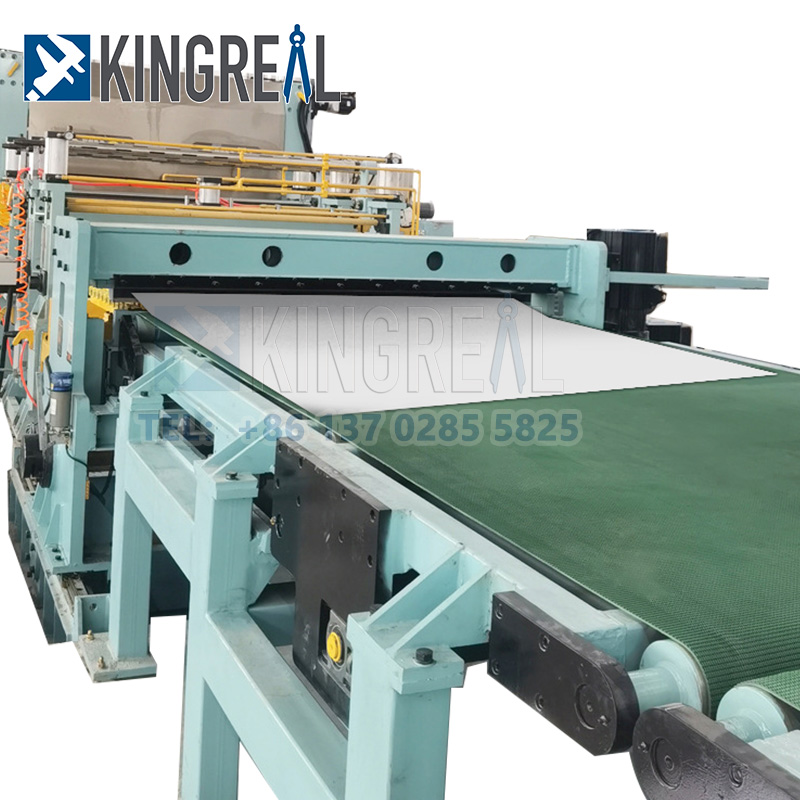
To prevent damage to conveyor belts and protect the surface of the sheets, advanced cut to length lines utilize an upward-shearing (bottom-up) configuration. This design ensures that any scrap or debris falls downward, while also preventing the shearing action from exerting a harsh impact on the downstream conveyor system. After being cut, the finished sheets move along a conveyor belt into the stacking unit, ensuring they are stacked neatly without jamming.
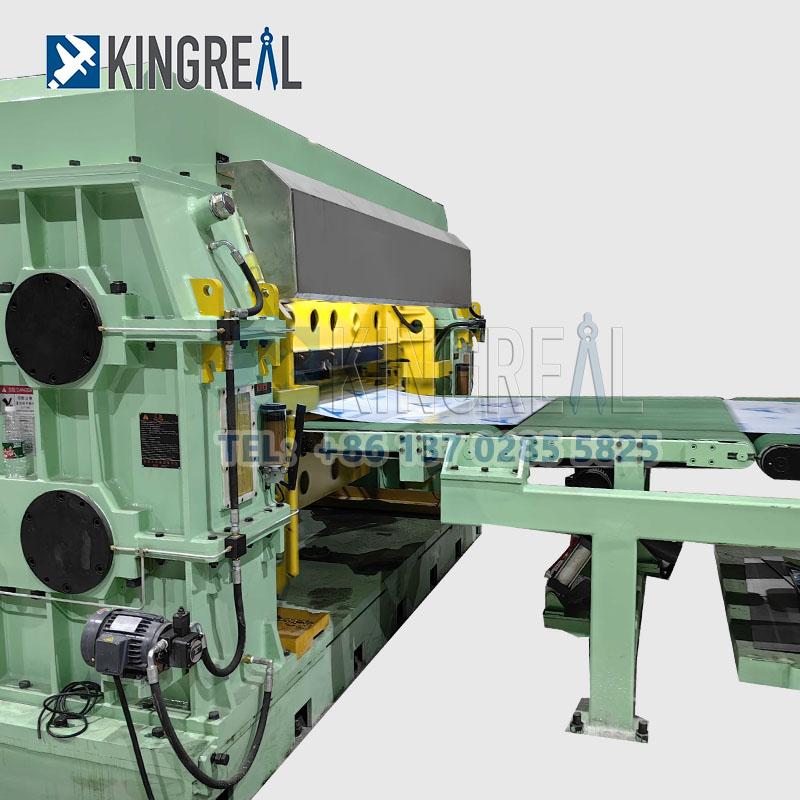
3. Anti-Scratch Conveyor System
Once stainless steel sheets are cut, they must be rapidly transferred from the cut-to-length machine to the stacking area—a process highly prone to friction-induced scratches.
3.1 Drive Mechanism and Material Selection
The conveyor in a cut to length machine utilizes a belt-drive mechanism rather than traditional rollers. The belt surface is typically covered with high-strength felt or soft rubber, allowing it to make contact with the sheets without scratching their surfaces.
3.2 Speed Synchronization
The conveyor is driven by a motor with a Variable Frequency Drive. This allows the conveying speed to be synchronized in real-time with the overall operating speed of the cut to length line—specifically the cutting speed of the shear. At the moment a sheet is cut, the conveyor provides the necessary acceleration to move it away from the cutting zone, preventing collisions with the following sheet.
4. Stacker
Stacking is the final stage of the cut to length machine process. Because stainless steel sheets are heavy, allowing them to drop directly would result in impact between sheets or scratches on the bottom surfaces.
4.1 Automated Stacker
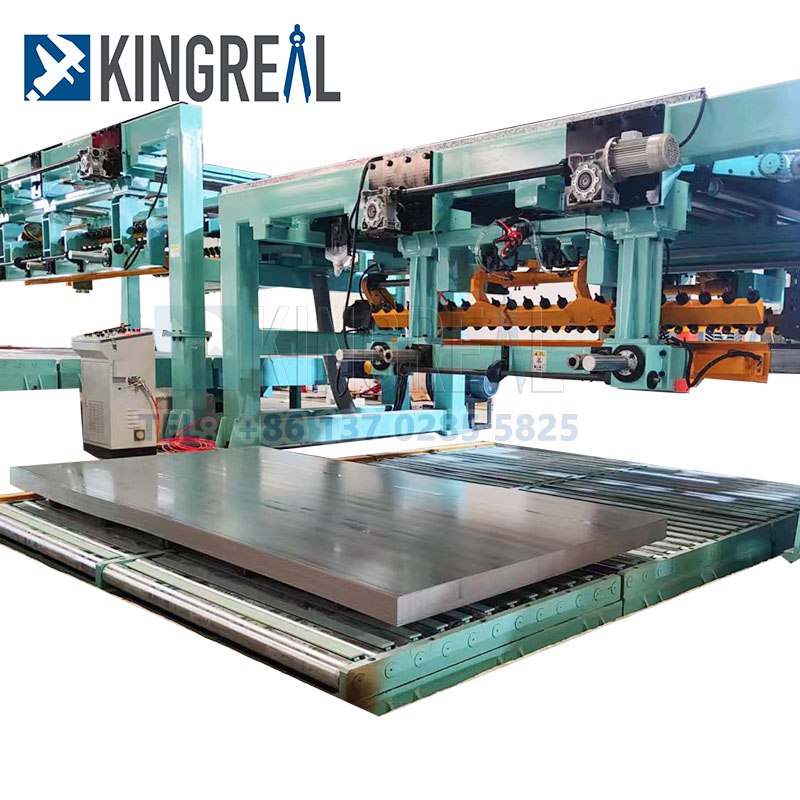
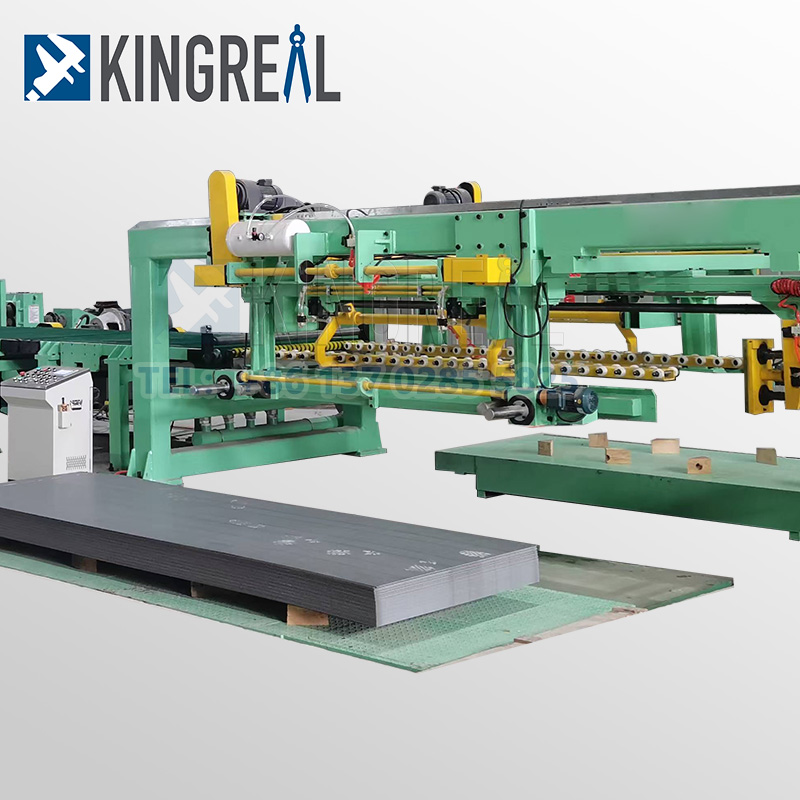
The stacking unit collects the incoming sheets. It employs a combination of pneumatic and hydraulic systems, along with lateral guides and rear positioning mechanisms, to automatically stack the sheets in an orderly fashion.
4.2 Surface Protection: Air-Cushion Support Technology
This is a critical feature to consider when selecting a cut to length line for stainless steel. As a sheet descends, the equipment releases a high-pressure airflow to create an air cushion, allowing the sheet to land slowly and gently. This non-contact cushioning effectively protects the sheet surface—whether film-coated or bare—from impact damage.
4.3 Lifting Platform Control
The stacking unit is equipped with photoelectric sensors that monitor the stack height in real-time and control the descent of the lifting platform. This ensures that the stacking platform remains at an optimal distance from the working level, minimizing the drop distance for the sheets and resulting in a perfectly neat stack.
Precision manufacturing of stainless steel places extremely high demands on sheet quality. When selecting a cut to length machine, one should not focus solely on operating speed; rather, it is essential to evaluate how effectively the equipment protects the material surface throughout the entire process—from feeding and leveling to film application, cutting, and stacking.
KINGREAL SLITTING professional-grade cut to length lines are specifically optimized for various types of stainless steel, including 304, 403, and 316 grades. By integrating a high-precision automatic laminating device, a stacking unit, and an NC-controlled precision cutting system, our lines produce high-precision sheets with pristine, scratch-free surfaces.
If you require a high-quality cut to length machine to meet your demanding requirements for premium-grade sheet production, please contact KINGREAL SLITTING directly! We provide comprehensive, turnkey solutions—transforming raw coils into finished, high-quality sheets.