In the metal processing industry, the steel slitting machine is a critical piece of equipment used to process wide coils of material into narrower strips of specific widths.
For steel service centers and downstream manufacturers, slitting precision directly determines the yield rate of subsequent secondary processing. Strict tolerance requirements are not merely about meeting product specifications; they are essential to ensure that, during high-speed automated stamping or forming, the material does not cause die jams, blade chipping, or structural failure due to dimensional fluctuations.
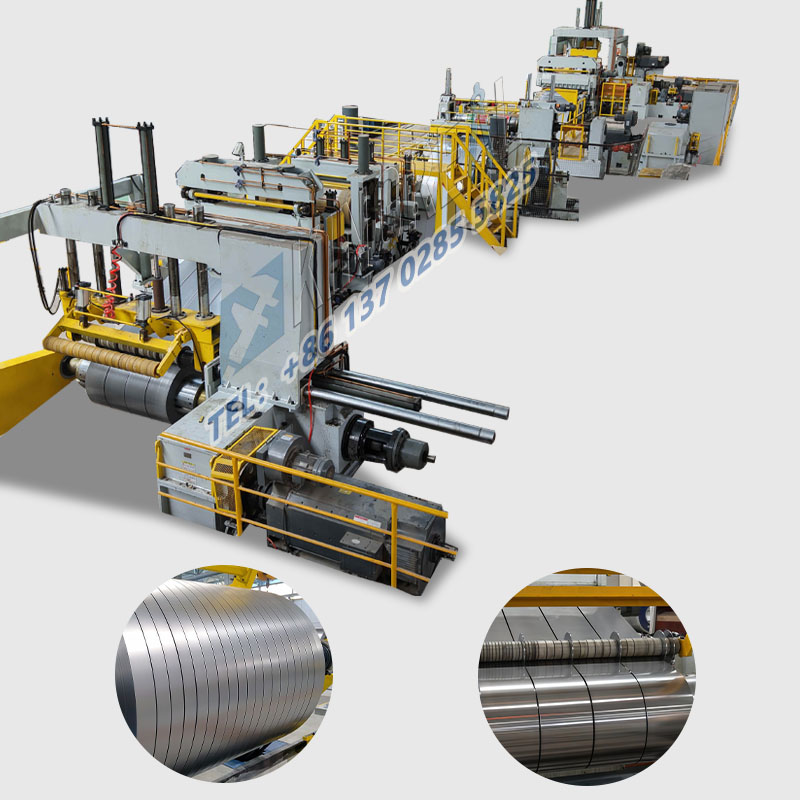
Specific Components of Steel Slitting Line Tolerance Requirements
The processing precision of a steel slitting machine is typically measured by three core indicators:
Width Tolerance
Refers to the deviation between the actual width of the slit strip and the target setting.
In high-precision applications, width tolerance is usually required to be within ±0.05 mm or even tighter.
Burr Height
Slitting is a shearing process; the compression of the material by the blades creates tiny protrusions along the edges.
Burr height is generally required not to exceed 5%–10% of the material thickness. Excessive burrs can damage the surface during subsequent recoiling and compromise welding or assembly precision.
Camber
Refers to the deviation from straightness along the length of the strip.
If tolerance control fails, the strip will curve, preventing it from smoothly entering downstream roll forming machines.
These tolerances are not static values; they are dynamically influenced by factors such as material thickness, tensile strength, equipment rigidity, and the setup condition of the tooling.
Only when the steel slitting line can consistently achieve these tolerances can the resulting high-quality strips be transformed into high-quality finished products during subsequent processing.
Key Measures for Achieving Strict Tolerances in Steel Slitting Lines
1. High-Precision Slitter Head
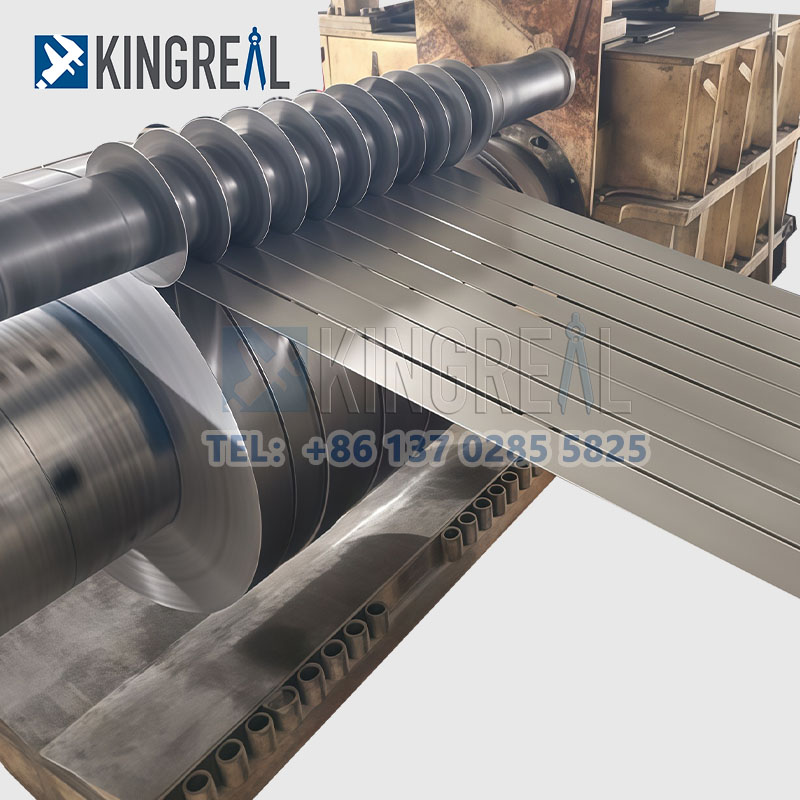
The cutting system within the slitter head is the core of precision; its mechanical structure and tooling arrangement directly determine width accuracy and burr quality.
●Arbor Precision and Runout Control: The radial runout and axial end play of the slitter arbor must be controlled within extremely tight limits (typically <0.005 mm). If the cutter shaft exhibits runout, the circular blades will shift during rotation, resulting in uneven cut edges and increased width errors. High-quality slitting machines typically utilize ultra-precision preloaded bearings to support the cutter shaft, ensuring stability at high rotational speeds.
●Blade and Spacer Fit: The thickness precision and parallelism of the circular blades, as well as the dimensional consistency of the spacers, are critical. If spacer thicknesses are uneven, cumulative errors can cause the width of the outer strips to significantly exceed tolerances. Advanced steel slitting machine currently employs ground carbide blades and precision shims to ensure absolute accuracy in the blade setup dimensions.
●Fine-tuning Side Clearance and Overlap: Lateral clearance and vertical overlap between blades must be precisely calculated based on the material's thickness and properties. Excessive clearance leads to significantly higher burrs, while insufficient clearance accelerates tool wear and causes cold welding.
Modern steel slitting lines are usually equipped with automated cutter shaft adjustment systems, allowing operators to adjust clearance in 0.001 mm increments to accommodate requirements ranging from 0.2 mm thin sheets to 6.0 mm thick plates.
2. Full-Feedback Tensioning System
Tension fluctuations during the winding process are a primary cause of material stretching, deformation, and width spring-back.
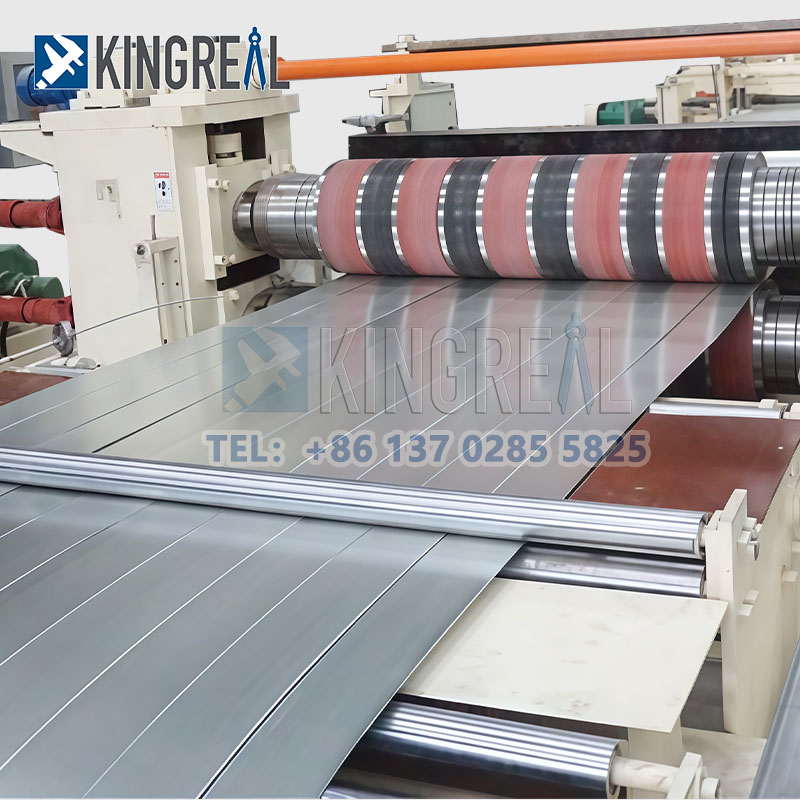
●Constant Tension Winding Logic: After slitting, variations in the master coil's thickness cause differences in the winding diameters of the individual strips. The tension stand functions by applying independent resistance to each strip, ensuring tight winding without generating cumulative internal stresses.
●Selection of Tensioning Mechanisms: For materials with stringent surface quality requirements, steel slitting machine tension stands typically utilize PU-coated rollers or belt bridles to prevent surface scratching.
Conversely, felt tension pads are commonly used for standard hot-rolled sheets. Through closed-loop pressure control, the system automatically adjusts resistance as the coil diameter increases. This ensures the narrow strip neither undergoes necking nor suffers from telescoping.
3. Edge Guiding and Centering Systems
The material must remain perfectly centered before entering the slitting head; otherwise, severe camber or uneven edge trimming may occur.
●Active Edge Guiding Technology: The steel slitting line’s guiding system uses ultrasonic or infrared sensors to monitor the strip edge position in real-time. When sensors detect the master coil deviating from the centerline, the system shifts the decoiler laterally or adjusts the guide roller angle to force the material back to the center.
●Vertical Feeding Control: High-precision steel slitting machine features side guides upstream of the slitting head, ensuring the strip enters the cutting zone perpendicular to the cutter shafts. This effectively eliminates width tolerance issues caused by skewed feeding.
4. Automation and Intelligent Control
Variations in manual expertise introduce uncertainty into tolerance control; automation technology aims to eliminate this variable.
●Integrated PLC Control: Using Programmable Logic Controllers and high-performance servo drives, the slitter achieves precise synchronization between line speed and recoiling speed. The system automatically calculates the coil diameter and dynamically adjusts motor torque.
●Recipe Management: Production parameters can be preset for different steel grades. When switching orders, the operator simply selects the recipe, and the steel slitting line automatically configures basic settings, reducing setup downtime and the scrap rate for the first coil.
●Intelligent Monitoring and Data Logging: Modern steel slitting machines feature online monitoring systems that record width data and equipment vibration frequencies in real-time. If tolerances approach limits, the system issues a warning, prompting the operator to check for blade wear or adjust process parameters.
External Factors Affecting Steel Slitting Line Tolerances
Beyond equipment-specific measures, environmental conditions and raw material consistency also play significant roles.
●Material Properties: Master coils with significant thickness variation are prone to internal stress release after slitting, which can cause the resulting narrow strips to twist.
●Tooling Maintenance: Dull blades significantly increase cutting resistance, leading to a dramatic increase in burr height. Regularly reconditioning blade edges using a precision grinder is essential for maintaining strict tolerances.
●Installation Environment: The flatness of the foundation and the leveling of the steel slitting machine directly impact the precision of the drive system. Large-scale steel slitting lines require deep foundations and vibration-dampening measures.
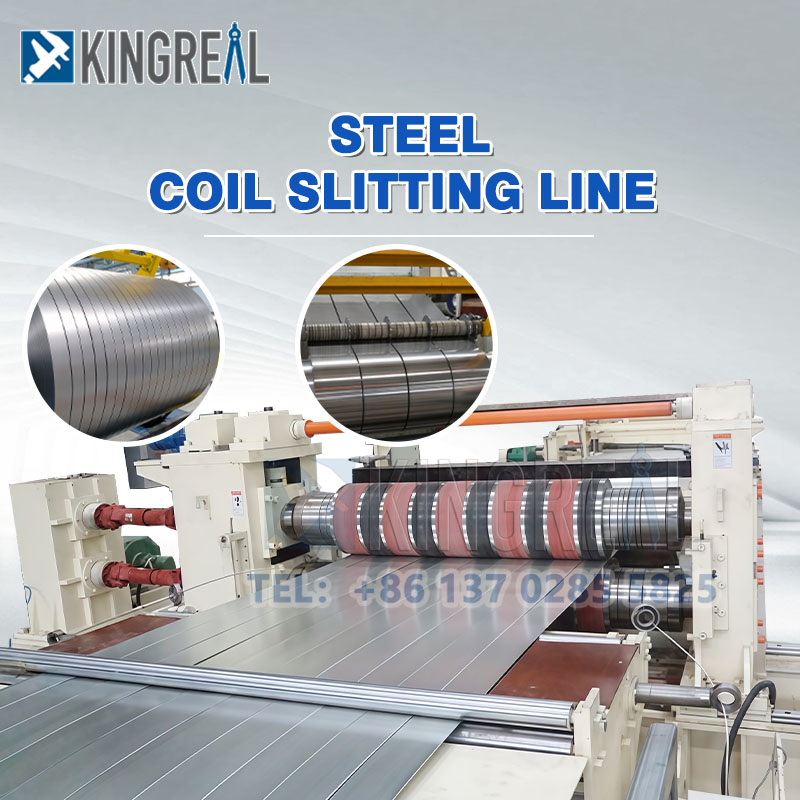
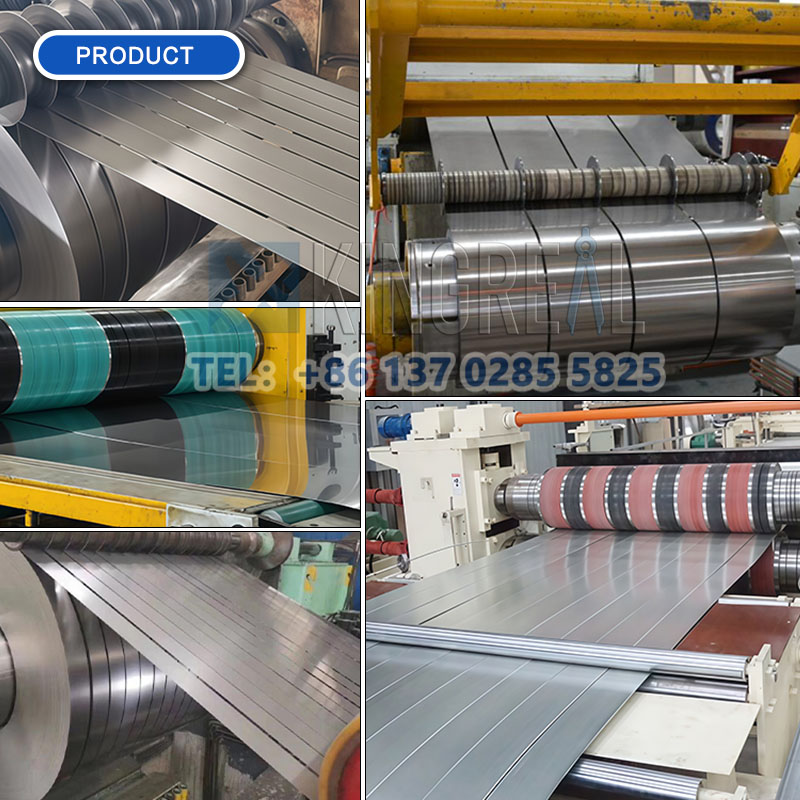
Achieving strict tolerances with steel slitting machines involves every aspect of the process, from mechanical design and tooling selection to automation control.
KINGREAL SLITTING possesses extensive technical expertise in the field of steel slitting machines.
If you would like more tips on machine selection, tolerance control, or maintenance, please contact KINGREAL SLITTING directly; our engineers are ready to provide you with tailored technical support!