In the metal coil processing industry, coil cut to length lines and steel coil slitting lines are the two most essential types of coil processing equipment.
For manufacturers or purchasers new to the industry, understanding the technical differences between these two is a prerequisite for selecting the right machine. While both utilize metal coils as raw material, they differ fundamentally in terms of processing direction, the form of the finished product, and their respective application areas.
In simple terms, a steel coil slitting line performs longitudinal cutting, dividing a wide coil into several narrower strips; a coil cut to length line, by contrast, performs transverse cutting, processing continuous strip material into flat sheets of a specific length.
Below, KINGREAL SLITTING provides an in-depth analysis of the differences between these two types of production lines.
Coil Cut to Length Line — Designed for Producing Sheets of Specific Lengths
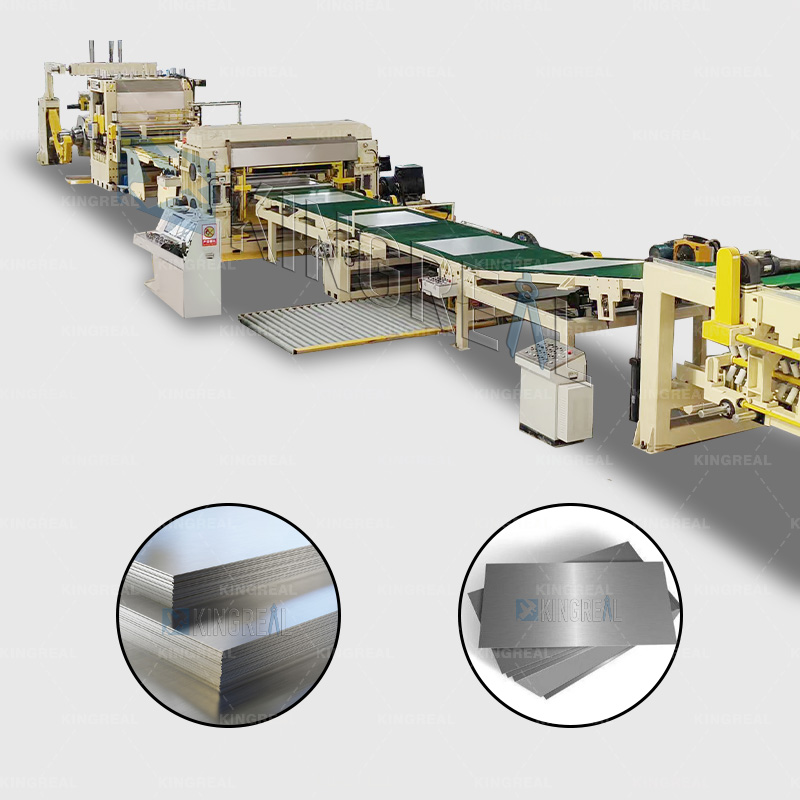
The core process of a coil cut to length line involves uncoiling, leveling, and cutting metal coils into sheets of a set length.
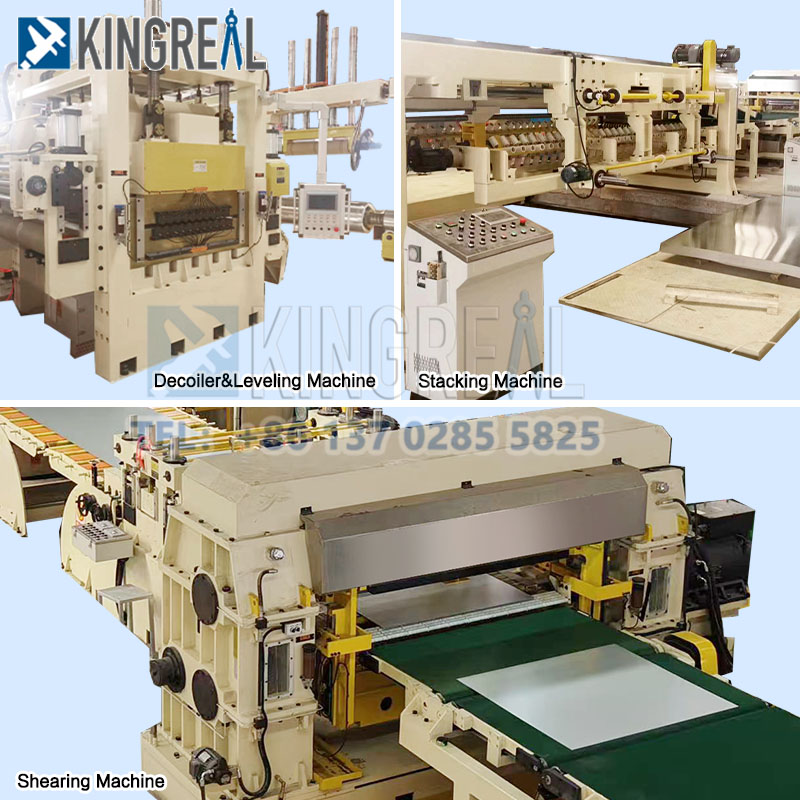
A typical line consists of a decoiler, a leveler, a shearing machine, a conveying system, and an automatic stacker.
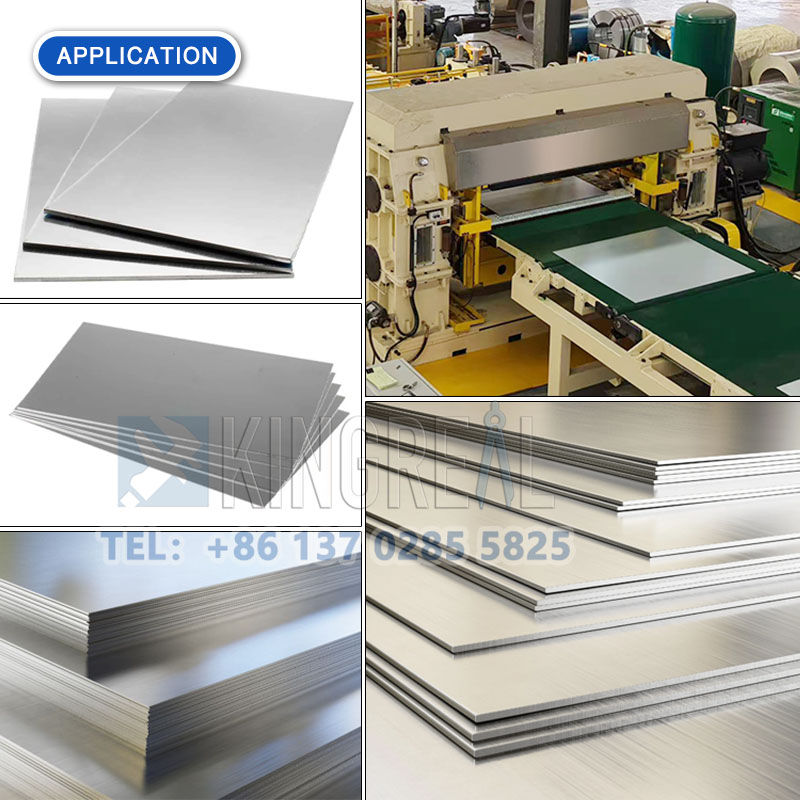
The quality of the output is measured by factors such as length tolerance, diagonal accuracy, and surface flatness.
1. Leveler: Determining Sheet Flatness
Leveling is the most critical stage in a coil cut to length line. During the coiling process, metal coils develop internal stresses, which can lead to defects like wavy edges or center buckle. The leveler eliminates these internal stresses by passing the material through multiple sets of staggered rollers, subjecting it to repeated bending.
●Structural Configuration: These coil cut to length lines typically feature a 4-Hi or 6-Hi leveling configuration. A 6-Hi leveler incorporates intermediate support rollers, which more effectively prevent the work rollers from deforming under load.
●Dual-Leveling Setup: For applications requiring exceptionally high flatness—such as panels for home appliances or aluminum curtain walls—KINGREAL SLITTING coil cut to length lines can be configured with two levelers to perform a two-stage, continuous leveling process.
2. Shearing Machine: Determining Precision and Production Speed
Depending on project output requirements and material thickness, a coil cut to length line can be equipped with various shearing systems. (Note: Each machine can be configured with only one type of shearing mechanism.)
●Flying Shear: The shear head moves in synchronization with the moving material to perform the cut. Its advantage lies in the fact that the material feed does not need to stop, resulting in maximum production efficiency—with line speeds reaching up to 80 m/min. This is ideal for the high-speed, high-volume production of thin to medium-gauge sheets.
●Start-Stop Shear: The feeding system stops once the material has reached the preset length; the cut is performed, and then the feeding resumes. This method features a simpler structure and higher cutting force, making it suitable for thick plates or projects where cost control is a priority.
●Swing Shear: The shear blade assembly can rotate within a specific angle, allowing for the production of parallelogram or trapezoidal sheets. This configuration is frequently used for processing stamped blanks in the automotive manufacturing industry.
3. Stacker: Determining the Speed of the Automated Process
An automatic stacking system ensures that the sheared sheets are stacked neatly, facilitating packaging and transport.
●Gantry-Style Stacker: Featuring an enclosed frame, this system is equipped with a pneumatic air-float mechanism and lateral alignment devices. Sheets are received and automatically stacked on a lifting platform located beneath the gantry frame; this is suitable for applications requiring high precision and scratch-free surfaces.
●Open-Style Stacker: This system has a simpler structure, using conveyor belts to transport sheets directly to the stacking area, where they are positioned and contained by manual or automatic side-stops.
●Dual-Stacker Design: To enable continuous, non-stop production, the coil cut to length line can be equipped with a dual-stacker switching system. Once the first stacker is full, the system automatically switches to the second, ensuring the coil cut to length line continues to operate steadily.
Steel Coil Slitting Line — Designed for High-Precision Narrow Strips
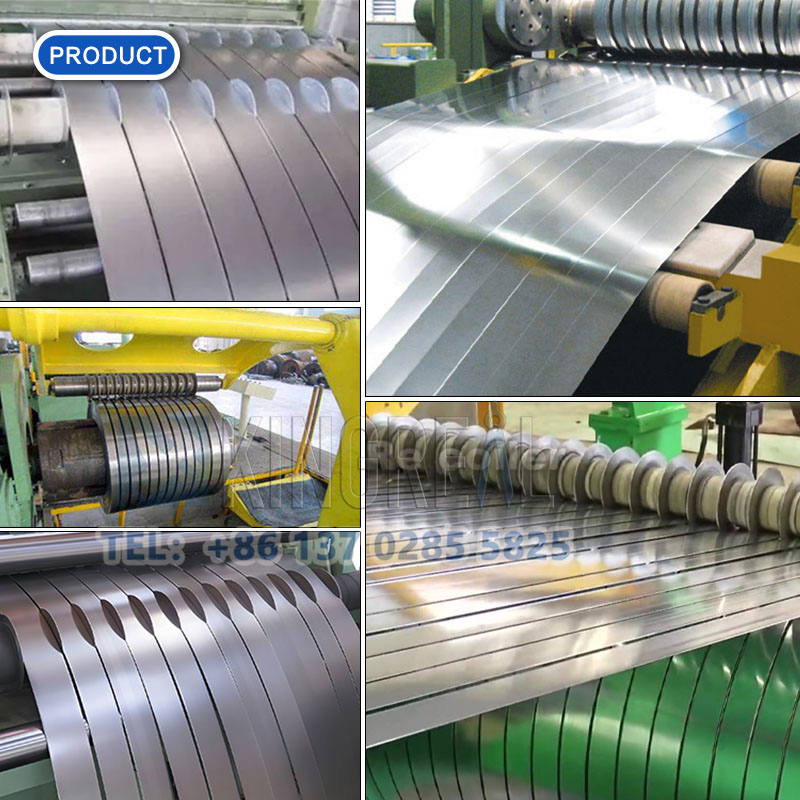
Unlike coil cut to length lines, the primary focus of a steel coil slitting line lies in the precise control of strip width and the neatness of the coil edges after rewinding.
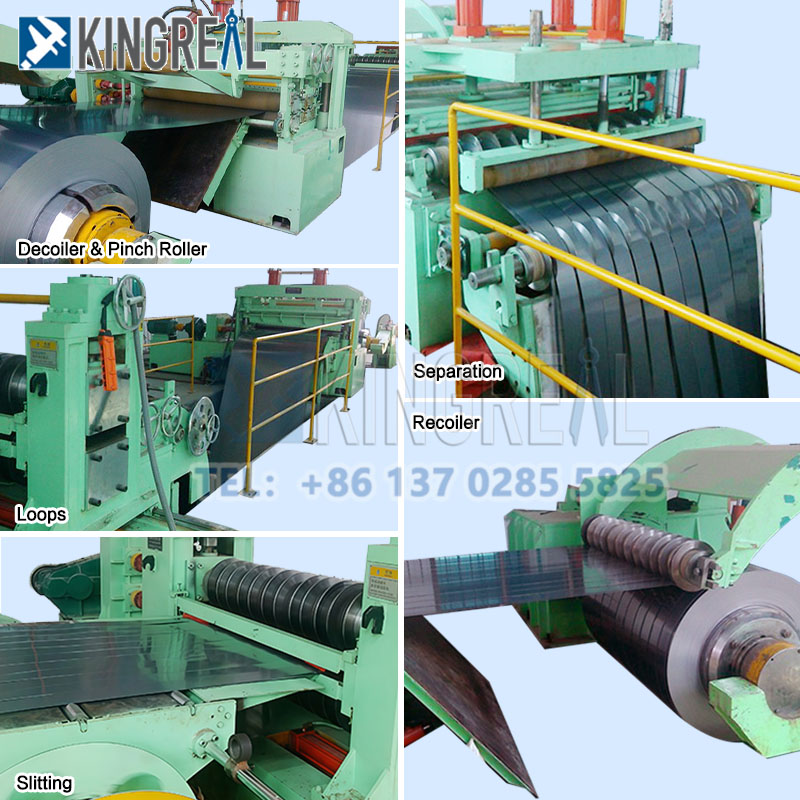
The steel coil slitting line consists of uncoiling, guiding, slitting, tension control, and rewinding units.
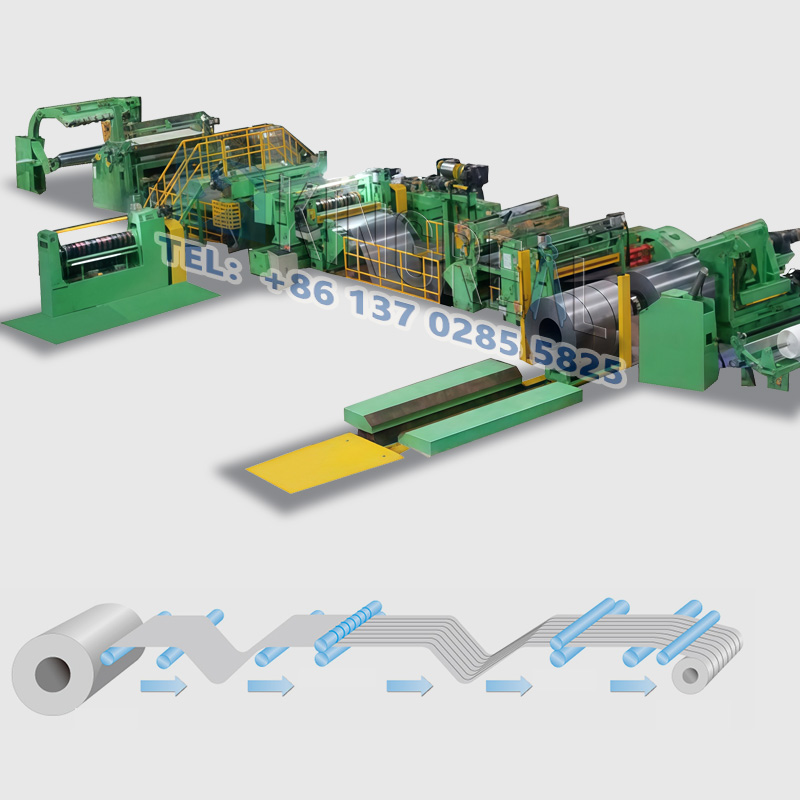
1. Guiding and Positioning Systems
To prevent the material from snaking (wandering laterally) during high-speed operation, a steel coil slitting line must incorporate precise positioning mechanisms:
●Side Guides: These use vertical rollers to constrain the edges of the strip. The width can be adjusted via a handwheel or motor, ensuring that the material's centerline remains aligned with the slitting knives.
●Centering Systems: These utilize photoelectric or hydraulic sensors to monitor material deviation in real-time, automatically adjusting the position of the decoiler or the guide frame to compensate for lateral drift.
2. Slitter Head
This is the core component of a steel coil slitting line. The slitter head features two precision arbors (upper and lower) equipped with a combination of circular disk blades and spacers to determine the slitting width.
●Precision Requirements: The radial runout and axial play of the arbors must be kept within extremely tight tolerances; otherwise, significant shearing burrs will occur.
●In-line Adjustment: Advanced slitter heads support rapid switching between two sets of tooling—one set can be configured offline while the other is in production—thereby significantly reducing downtime during product changeovers.
3. Tension Station
In a steel coil slitting line, minor thickness variations across the width of the material can lead to inconsistent tension—and thus varying tightness—among the individual strips during rewinding.
The tension station applies independent frictional resistance to each strip—using methods such as belt tensioning, pressure pads, or pneumatic tensioning mechanisms—to ensure that each coil is wound tightly and uniformly.
4. Loop Design
This is a specialized buffering feature unique to steel coil slitting lines. A loop pit—typically 3 to 5 meters deep—is usually required between the main slitter and the tensioning station.
The entry loop pit helps synchronize the speeds of the decoiler and the main slitter.
The exit loop pit is critical; it allows the slit strips to hang at varying depths within the pit. This compensates for inconsistencies in coiling speed caused by minor variations in material thickness, ensuring a consistent and tight coil.
How Do You Choose Between Coil Cut to Length Line and Steel Coil Slitting Line?
The choice depends entirely on your specific project requirements:
1
Output format
If your downstream processes (such as stamping, bending, or laser cutting) require flat, individual sheets, you should choose a coil cut to length line.
If you require narrower coils (for applications like welded pipe production or feeding stamping presses), you must opt for a steel coil slitting line.
2
Focus on processing precision
After creating a project, upload the icon coil cut to length lines prioritize cut-length accuracy and sheet flatness, whereas steel coil slitting lines focus on "slit-width" accuracy and the quality of the finished coils.
3
Material properties
For surface-sensitive materials—such as stainless steel—both types of lines require additional features, such as film-application systems and protective rubber rollers, to prevent surface scratching.
Coil cut to length lines and steel coil slitting lines are functionally complementary, forming the foundation of a modern metal processing center.
As a world-leading manufacturer and supplier of metal processing solutions, KINGREAL SLITTING brings over 20 years of R&D and production experience to the industry. We have successfully delivered customized production line solutions to clients across the globe, including in Turkmenistan, Italy, Brazil, India, Indonesia, Russia, Saudi Arabia, Mexico, and Canada.
KINGREAL SLITTING provides comprehensive, end-to-end services—from initial design and planning to installation and commissioning—tailored to your facility layout, production capacity, budget, and precision requirements.
For detailed technical specifications and price quotes regarding our coil cut to length line or steel coil slitting lines, please contact the KINGREAL SLITTING team directly.